Sold For $2,386
*Includes Buyers Premium
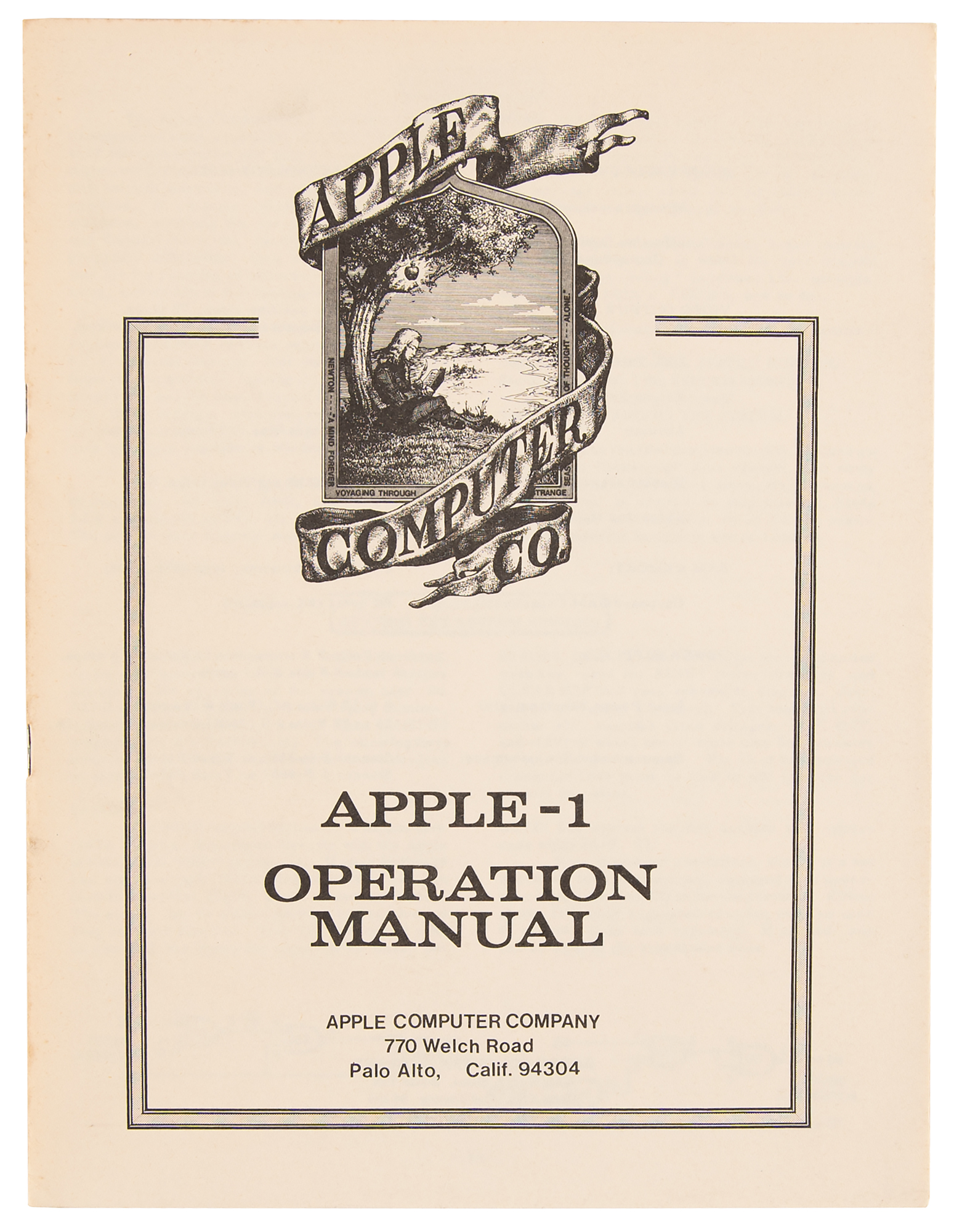
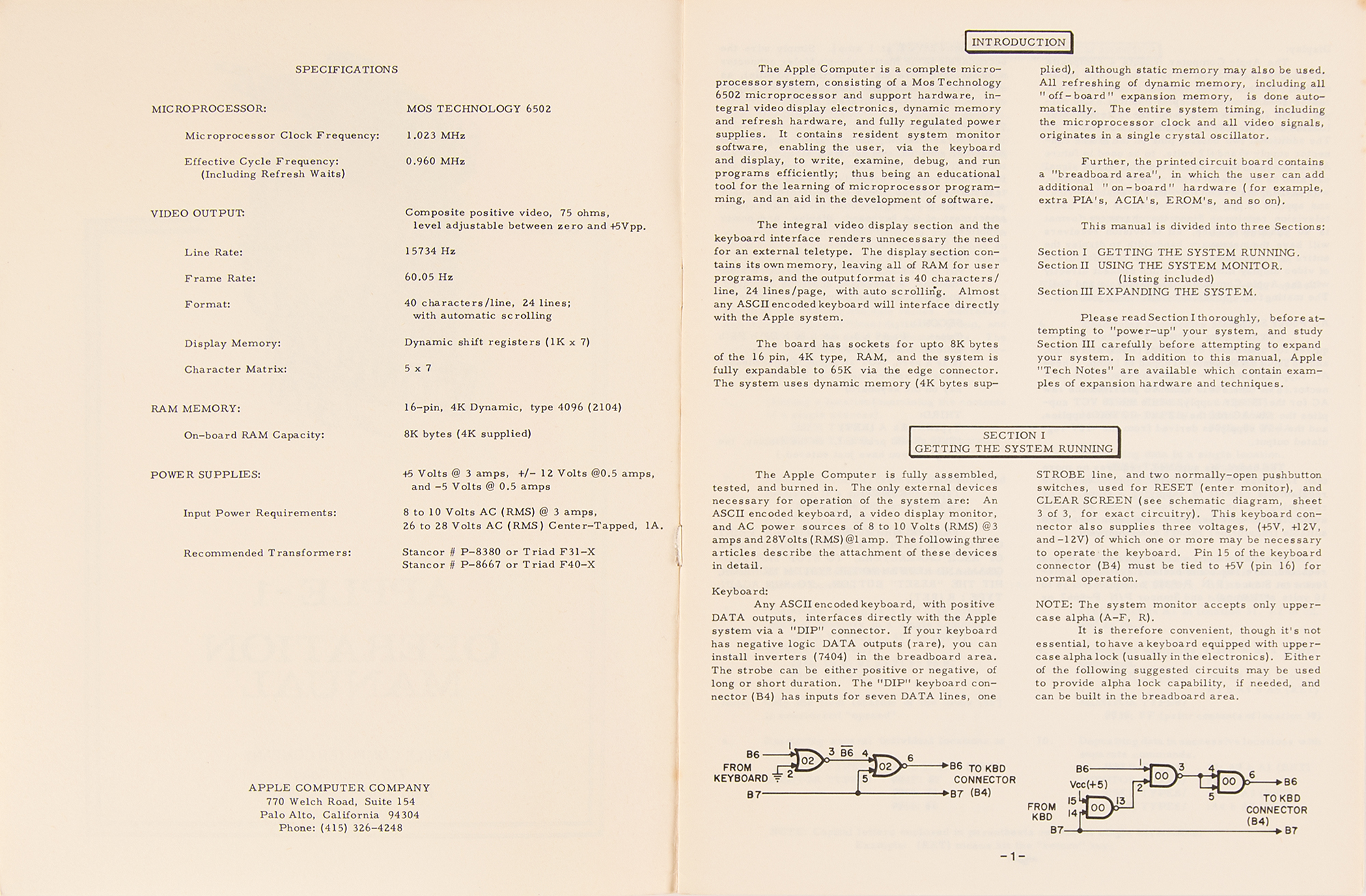
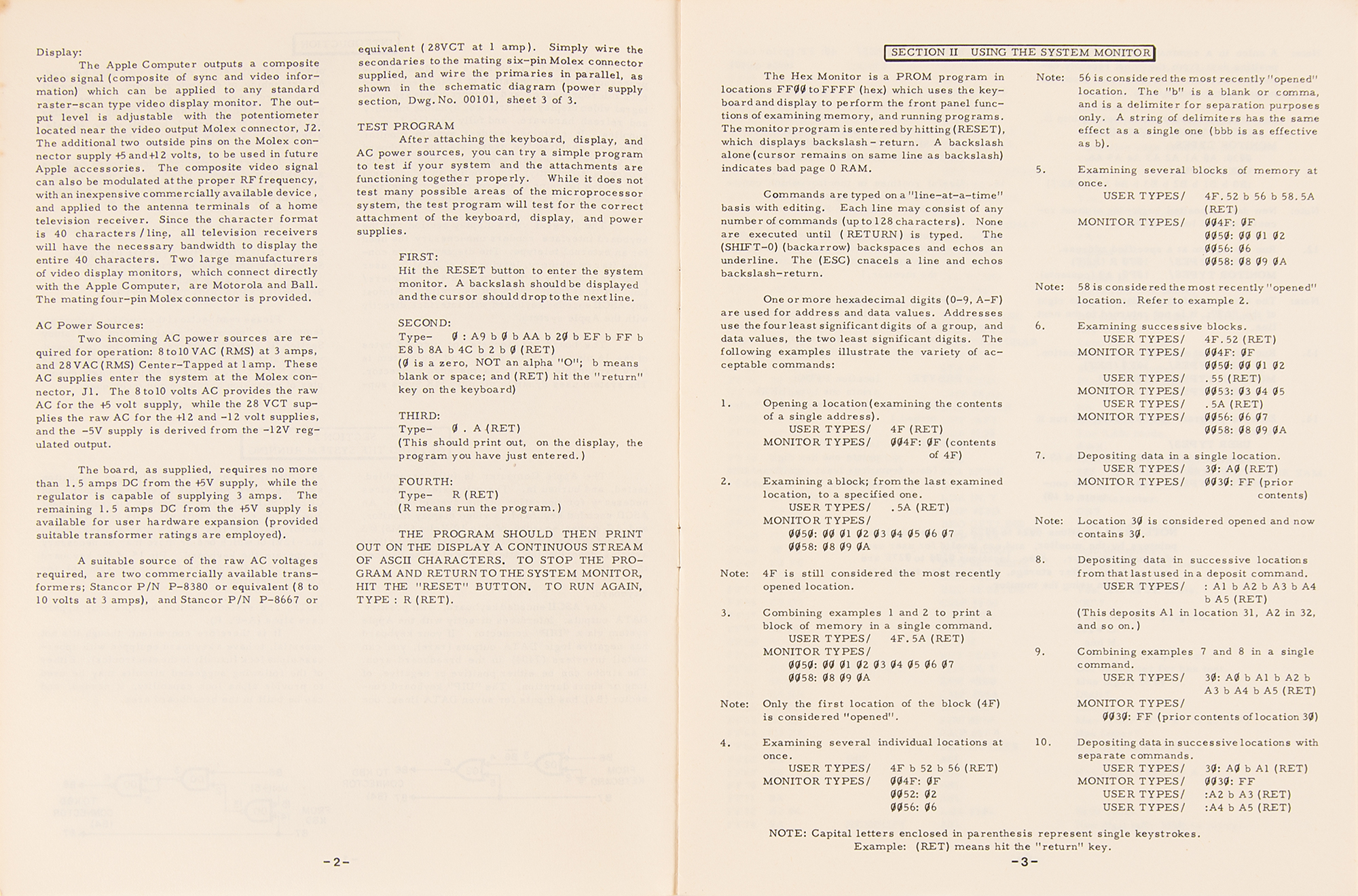
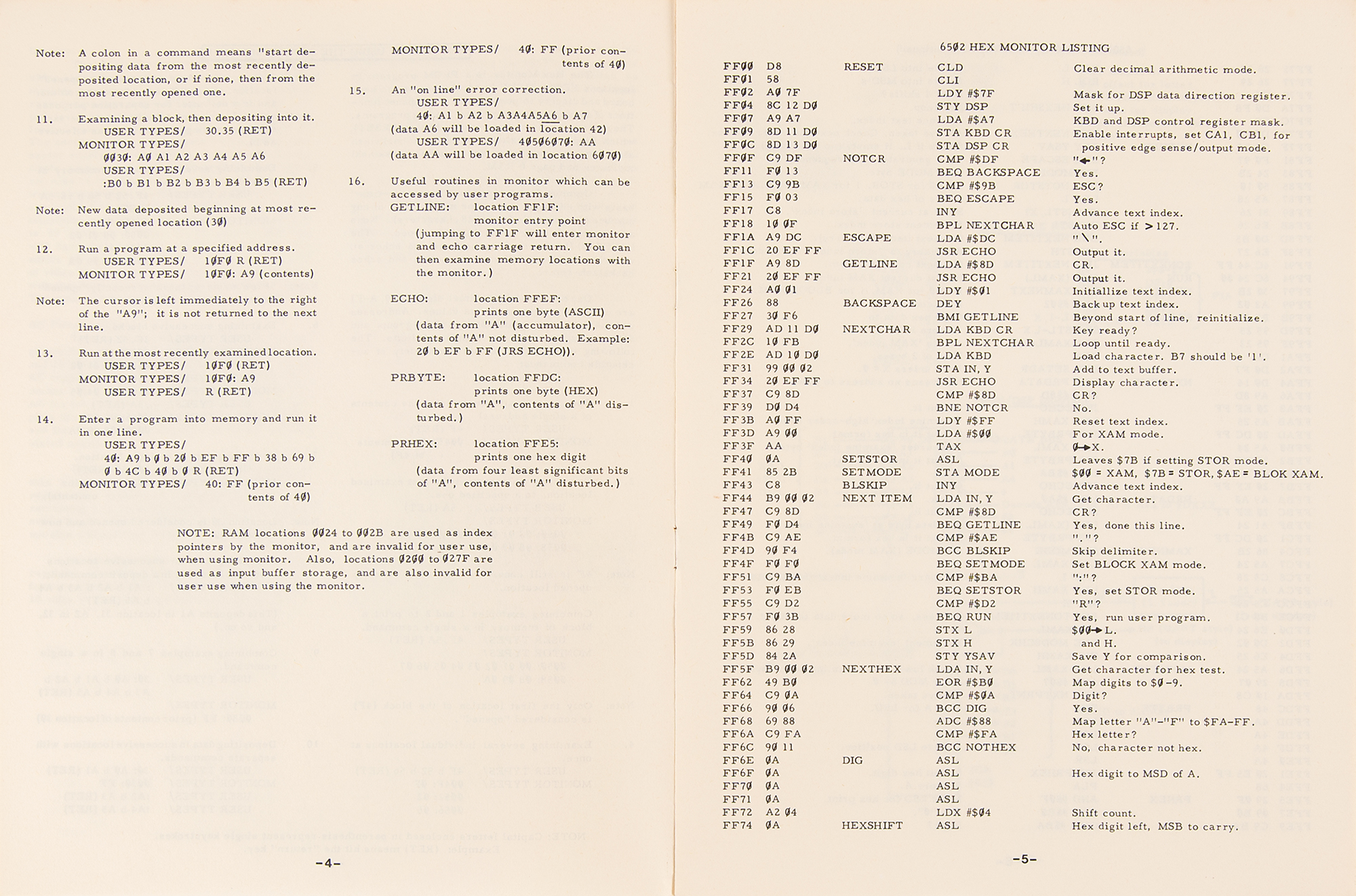
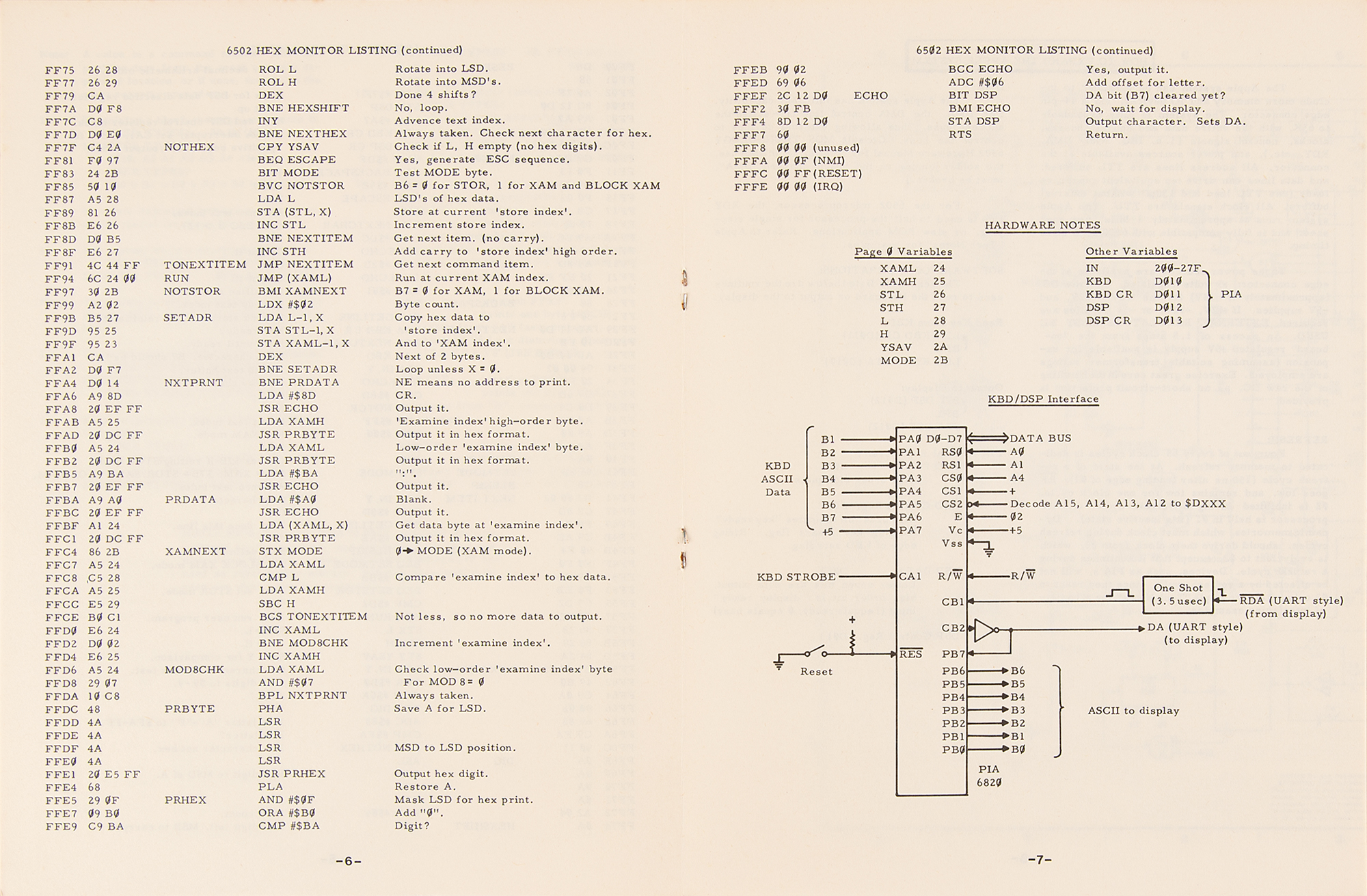
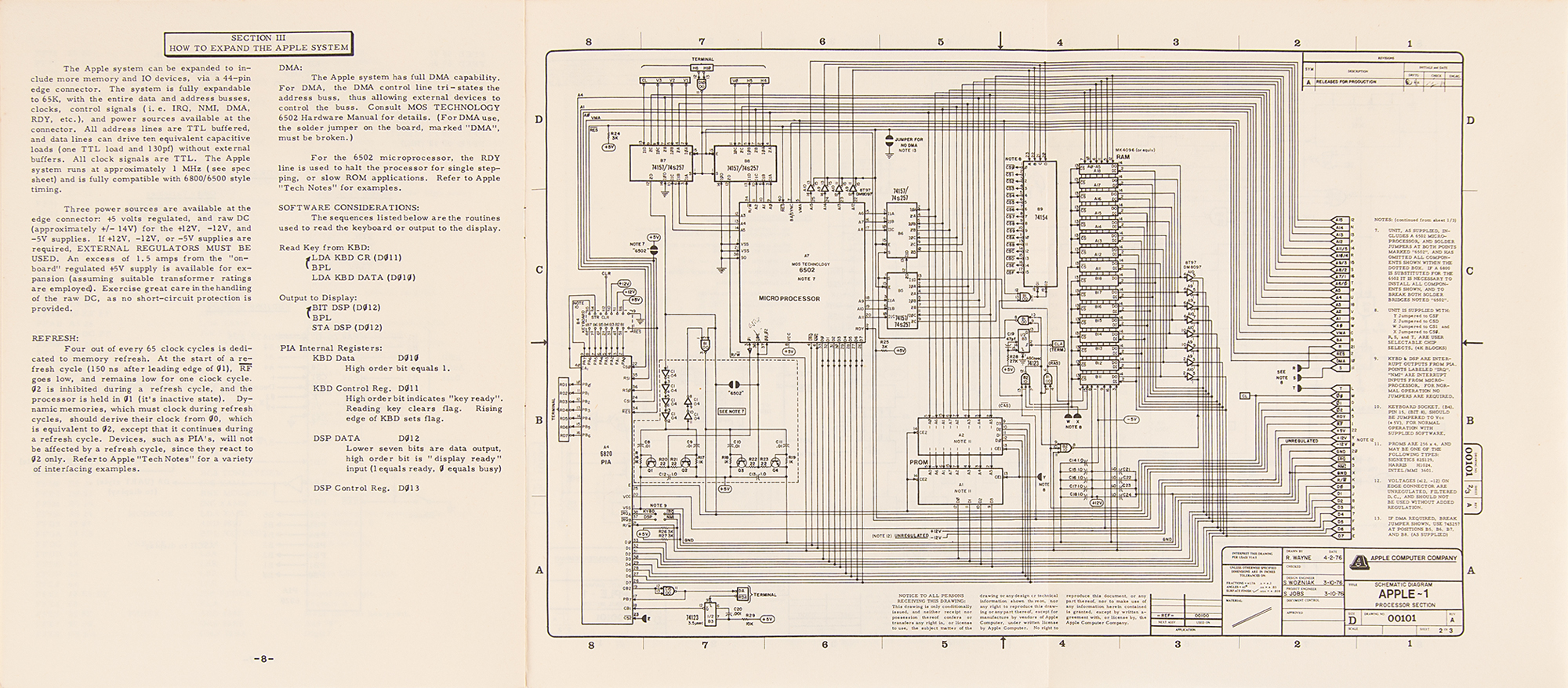
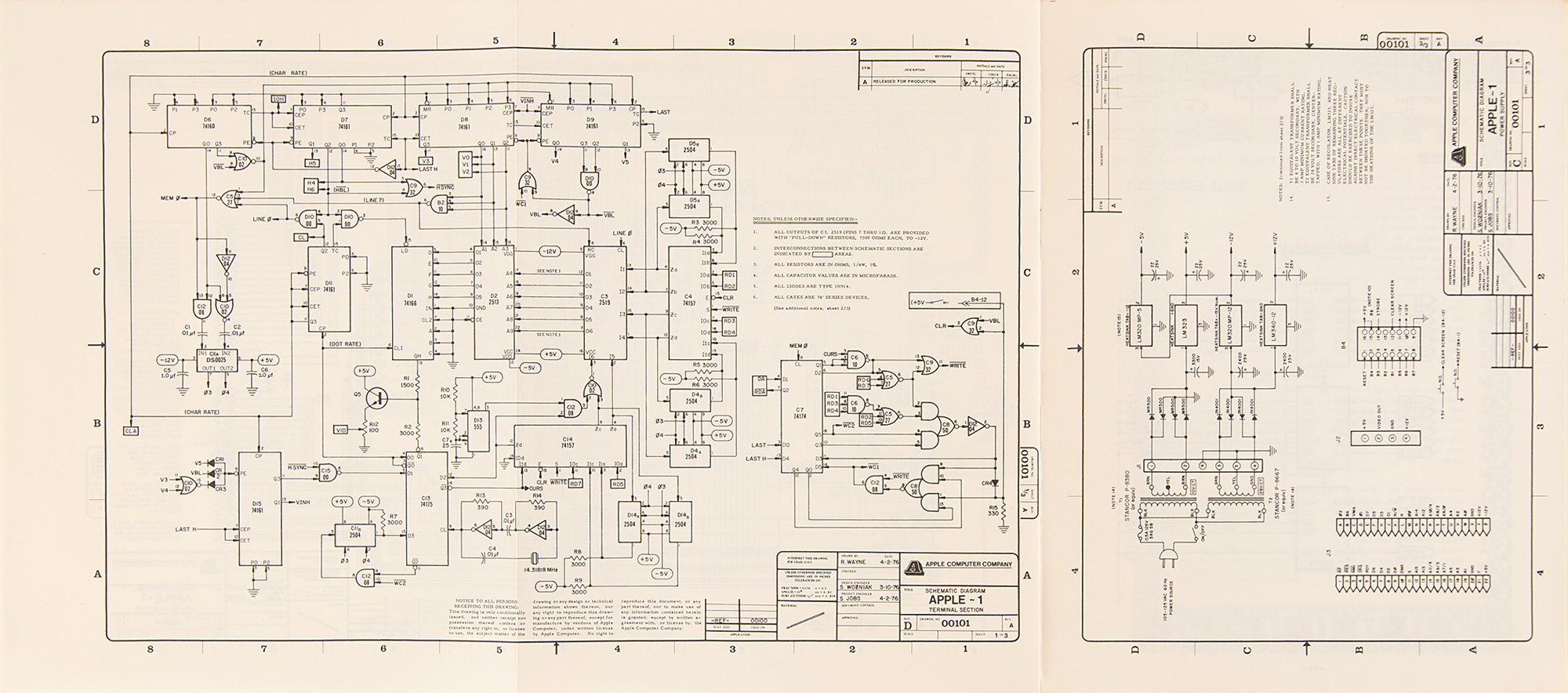
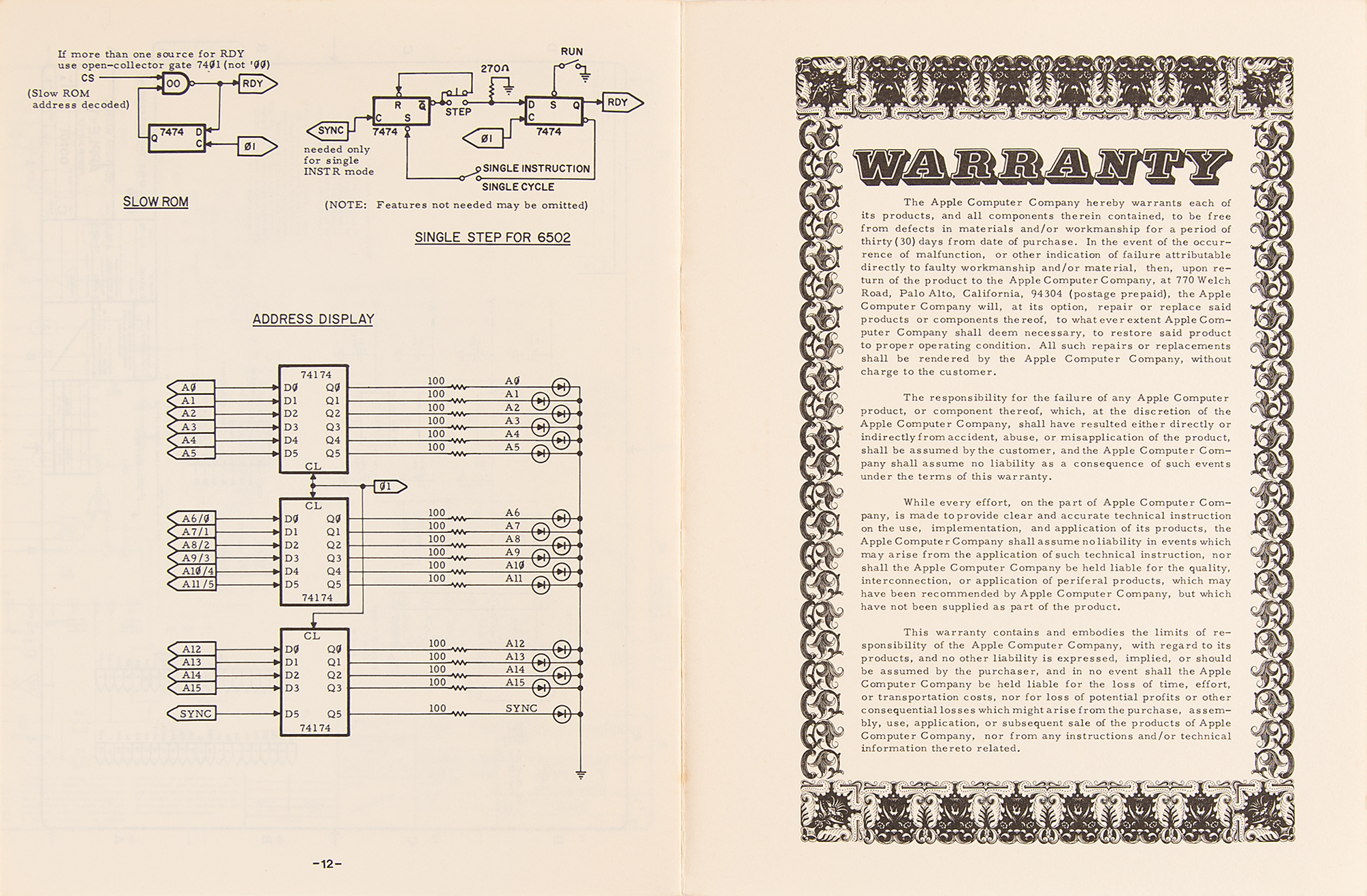
Early 1990s Apple-approved reproduction of the original vintage Apple-1 Operation Manual issued by the Apple Computer Company circa 1976, 12 pages, 8.5 x 11, printed exclusively for a German developers conference in Frankfurt, Germany, circa 1992. This manual was printed in a limited edition after Uwe Falk, the German head of Apple Developer Support, requested and received permission from Apple headquarters to reproduce the manuals with the same layout and matching paper quality as the originals. These ‘original’ manuals were offered at an Apple-1 showcase, but only a handful of attendees took one as a souvenir. Like the original, this facsimile features Apple's original logo on the front cover, designed by third Apple co-founder Ron Wayne and showing Isaac Newton thoughtfully seated beneath a tree, with a shining apple dangling overhead. The Operation Manual contains an impressive fold-out schematic of the Apple-1 computer and features information on getting the system up and running, using the system monitor, and expanding the Apple system. Three pages are headed "6502 Hex Monitor Listing" and detail an innovative memory program devised by Steve Wozniak that is commonly called the 'Woz Monitor.' In fine condition, with some light toning to edges.
The Apple-1 was originally conceived by Steve Jobs and Steve ‘Woz’ Wozniak as a bare circuit board to be sold as a kit and completed by electronics hobbyists, their initial market being Palo Alto’s Homebrew Computer Club. Seeking a larger audience, Jobs approached Paul Terrell, owner of The Byte Shop in Mountain View, California, one of the first personal computer stores in the world. Aiming to elevate the computer beyond the realm of the hobbyist, Terrell agreed to purchase 50 Apple-1 computers, but only if they came fully assembled. The Apple-1 thus became one of the first ‘personal’ computers that did not require soldering by the end user. Altogether, over about ten months, Jobs and Wozniak produced about 200 Apple-1 computers and sold 175 of them. The Apple-1 was not only a marvel of early computing ingenuity, but the pioneering product that launched what is today one of the most valuable and successful companies in the world.