The 30 Minute Rule begins April 15 at 7:00 PM EDT. An Initial Bid Must Be Placed By April 15 at 6:00 PM EDT To Participate After 6:00 PM EDT
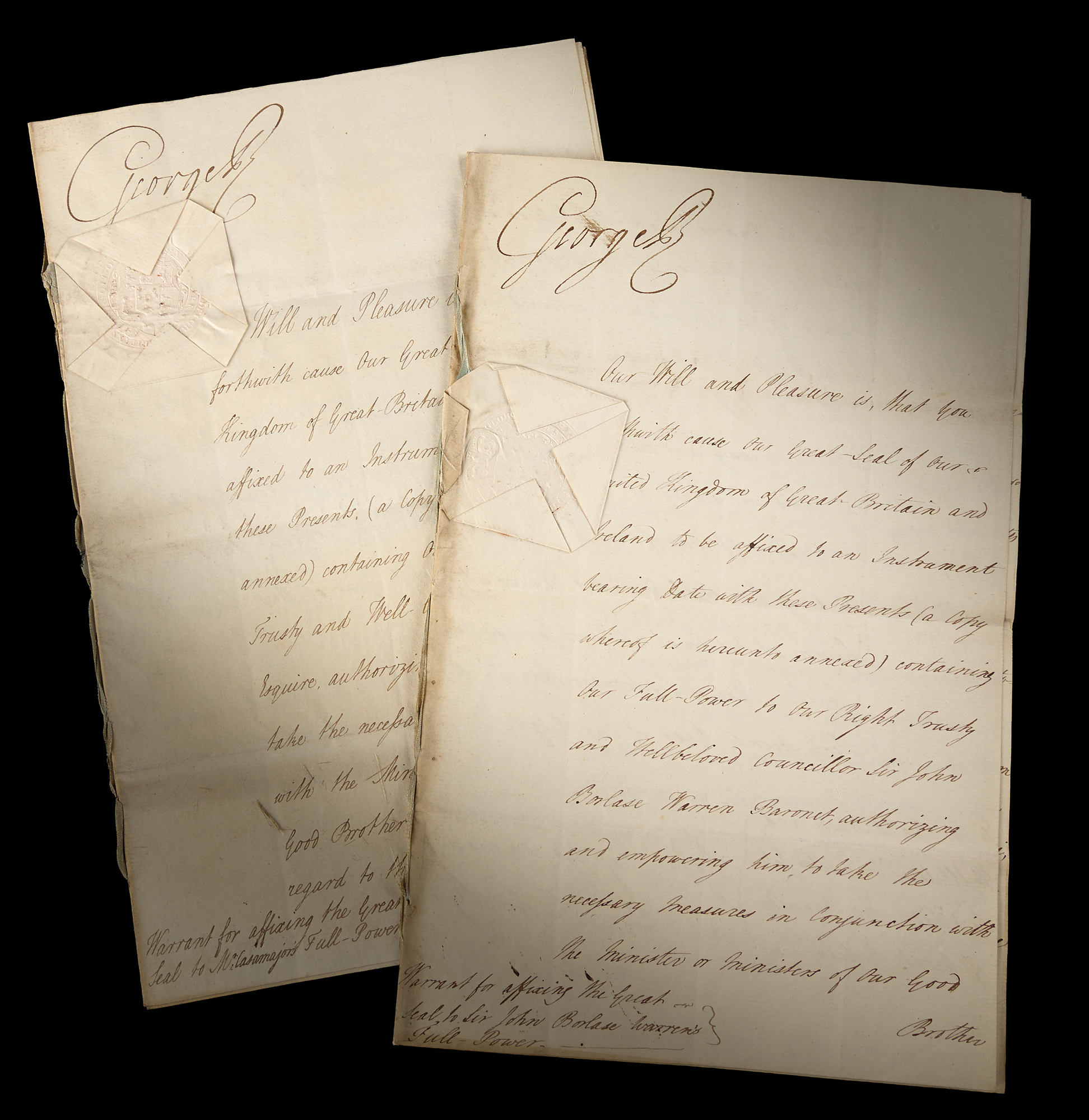
Significant pairing of documents signed by King George III, both pertaining to the Treaty of Amiens, which temporarily ended hostilities between France, the Spanish Empire, and the United Kingdom at the end of the War of the Second Coalition. It marked the end of the French Revolutionary Wars and set the stage for the Napoleonic Wars. Includes:
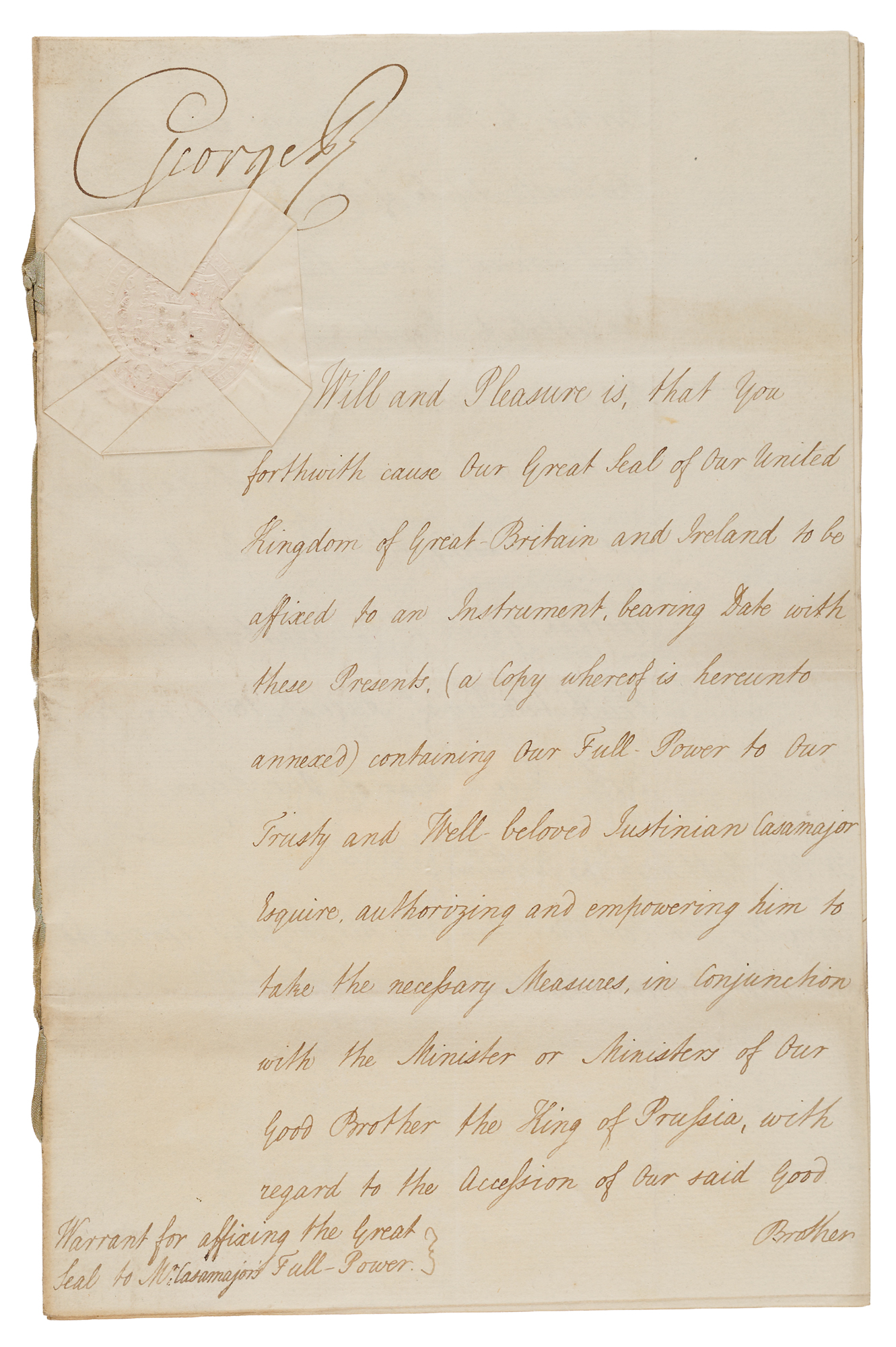
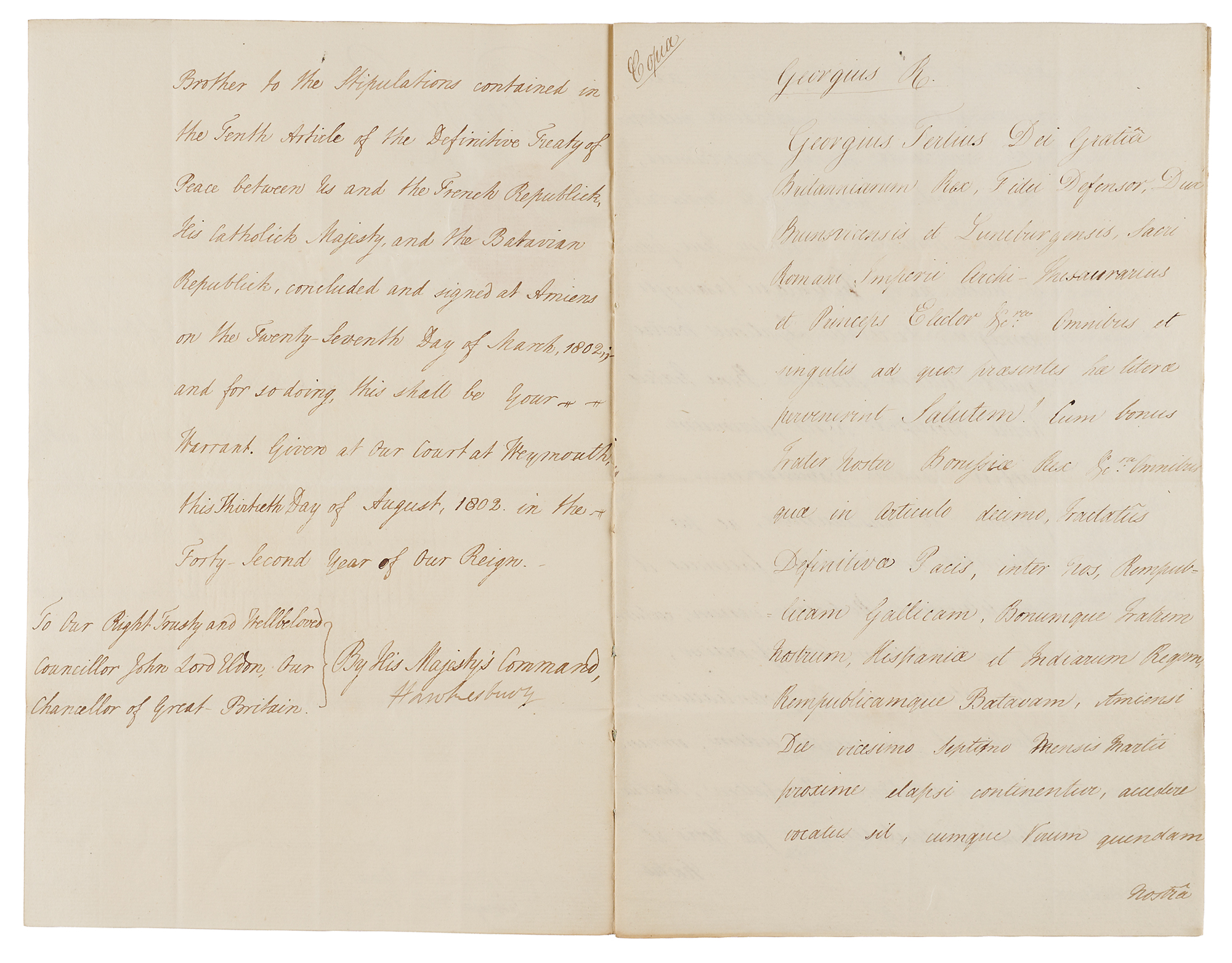
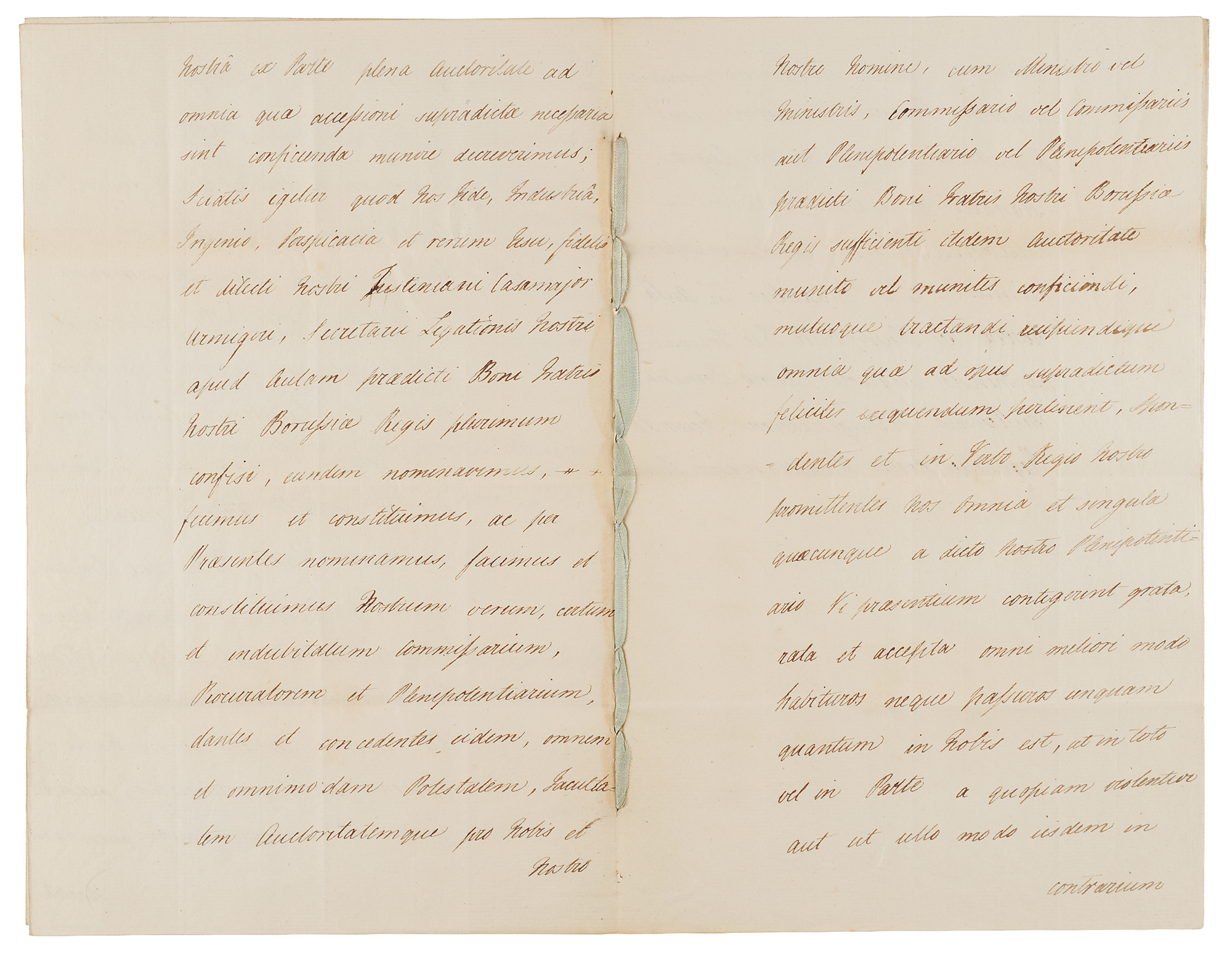
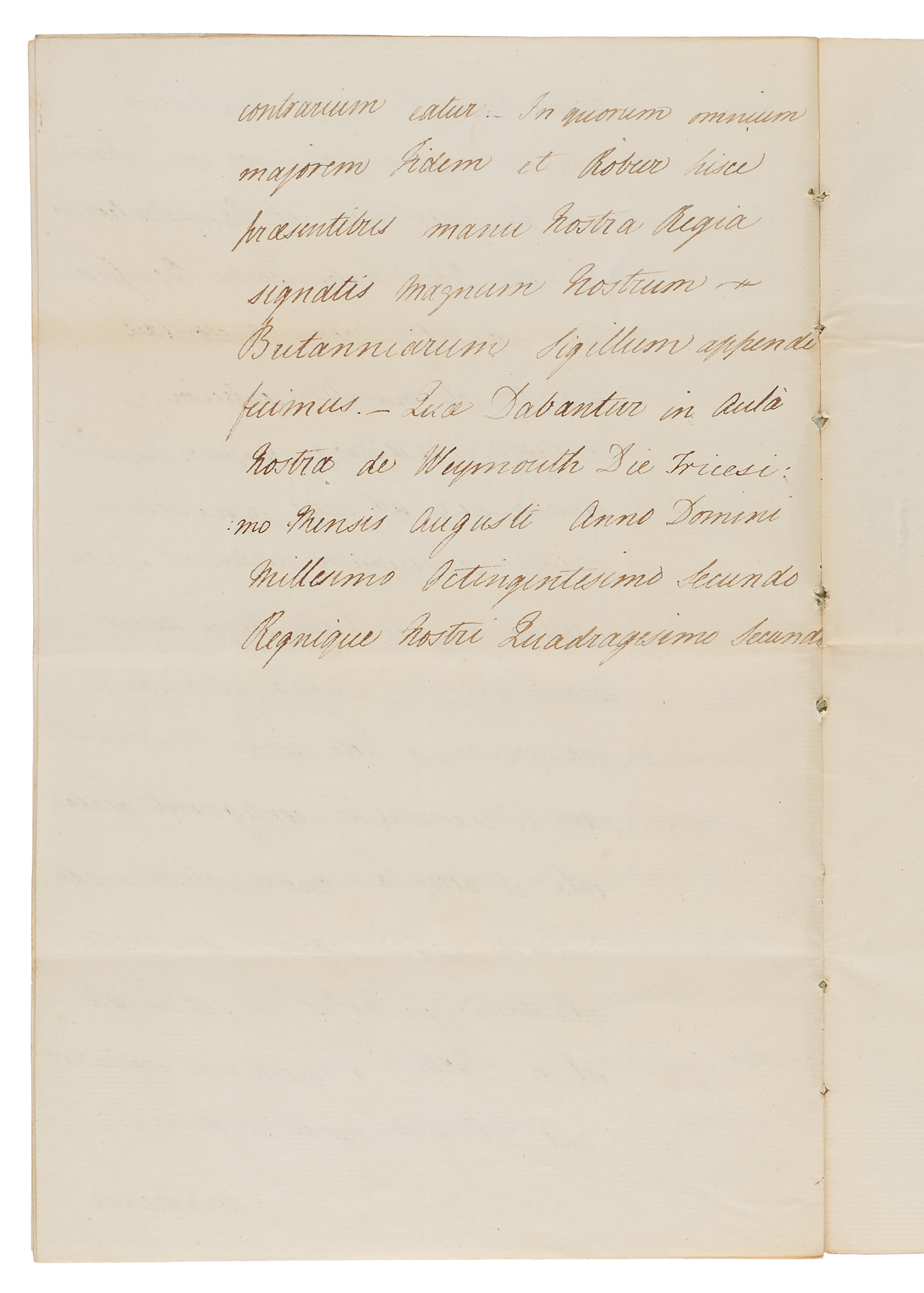
- a manuscript DS, signed "George R," one page both sides, August 30, 1802, being a warrant for affixing the Great Seal to Justinian Casamajor's full power to "take the necessary measures, in conjunction with the Minister or Ministers of our good brother the King of Prussia, with regard to the accession of our said good brother to the stipulations contained in the Tenth Article of the Definitive Treaty of Peace between us and the French Republick, His Catholick Majesty, and the Batavian Republick, concluded and signed at Amiens on the Twenty-Seventh Day of March 1802," with annexed four-page manuscript of the full power's text.
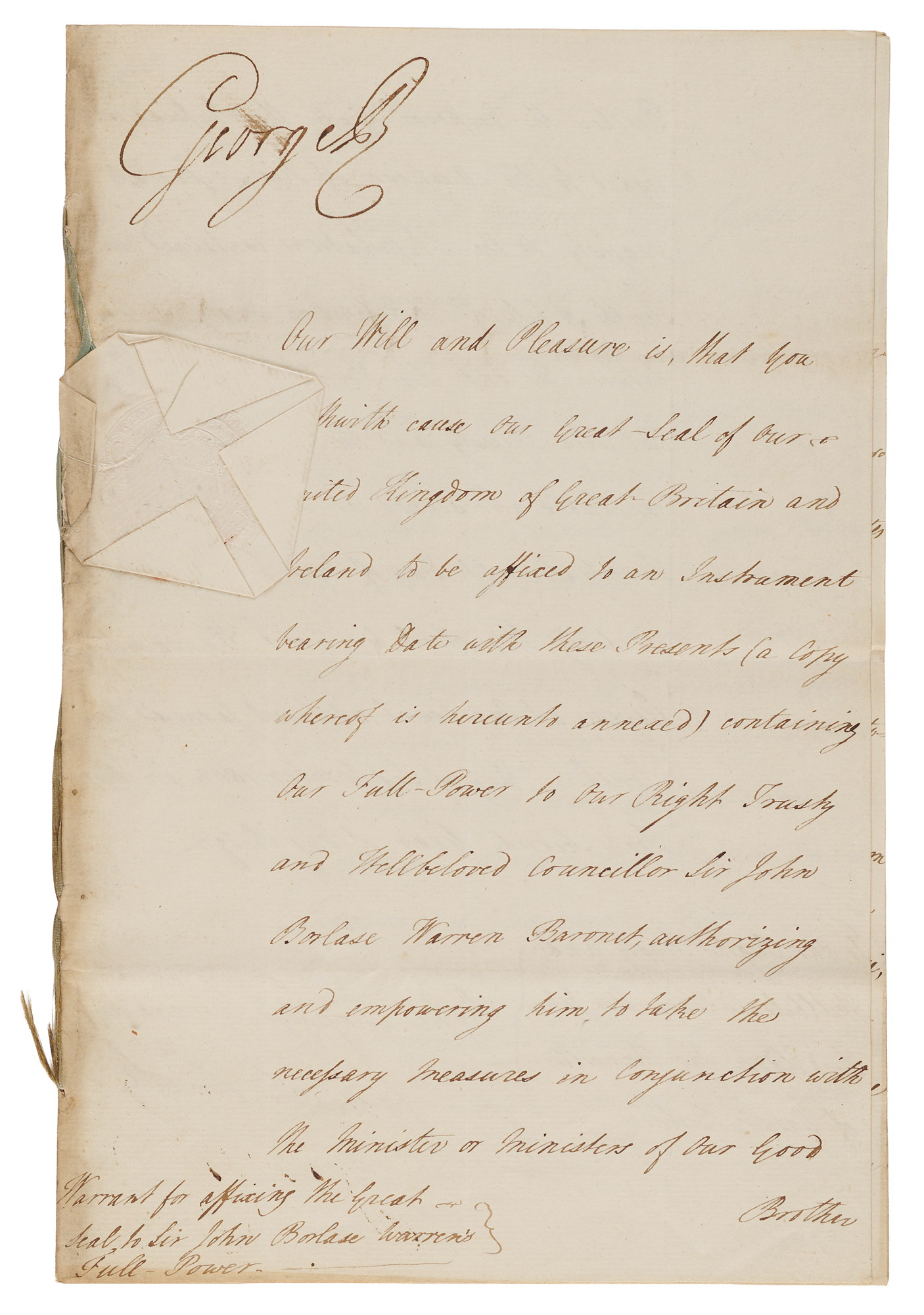
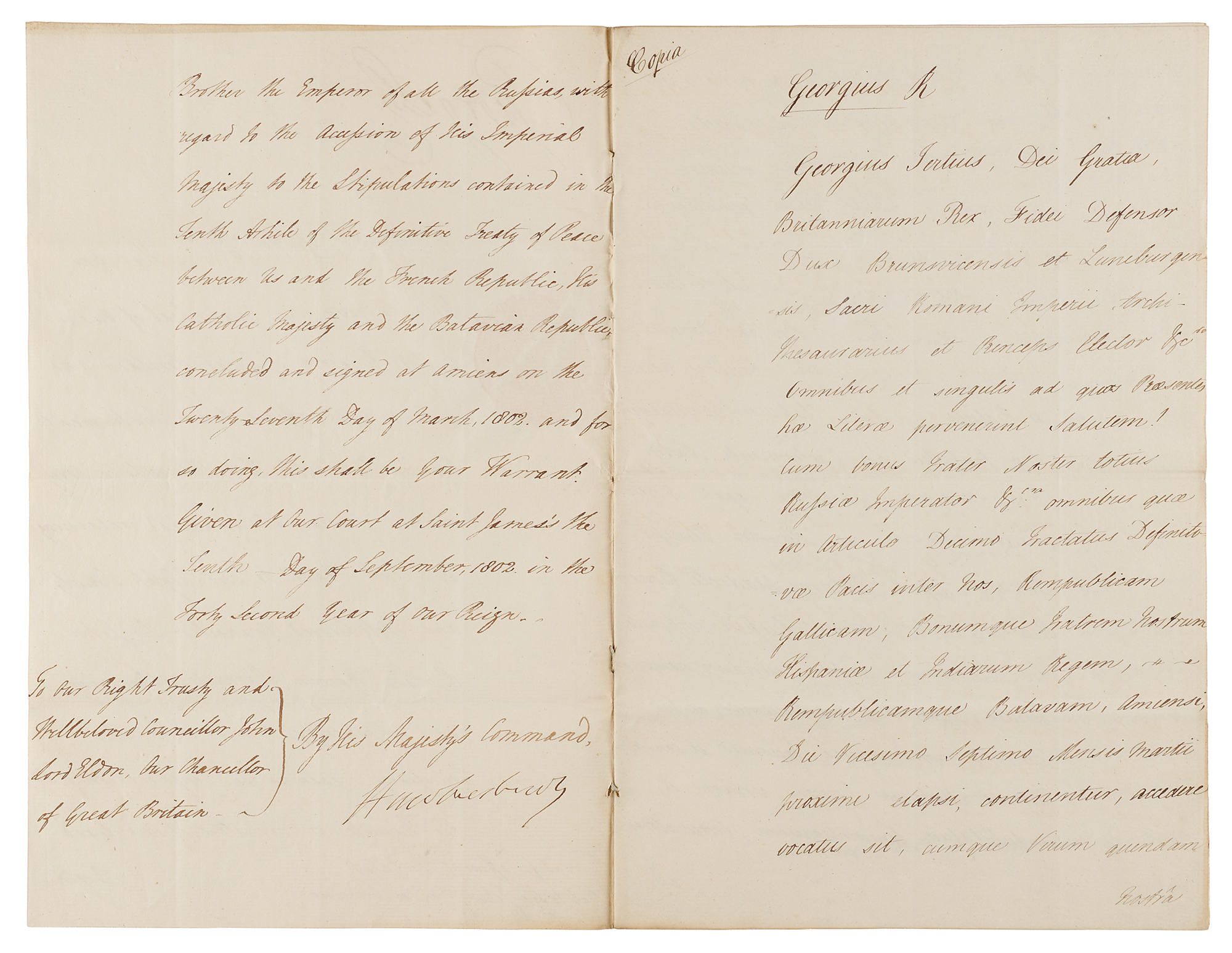
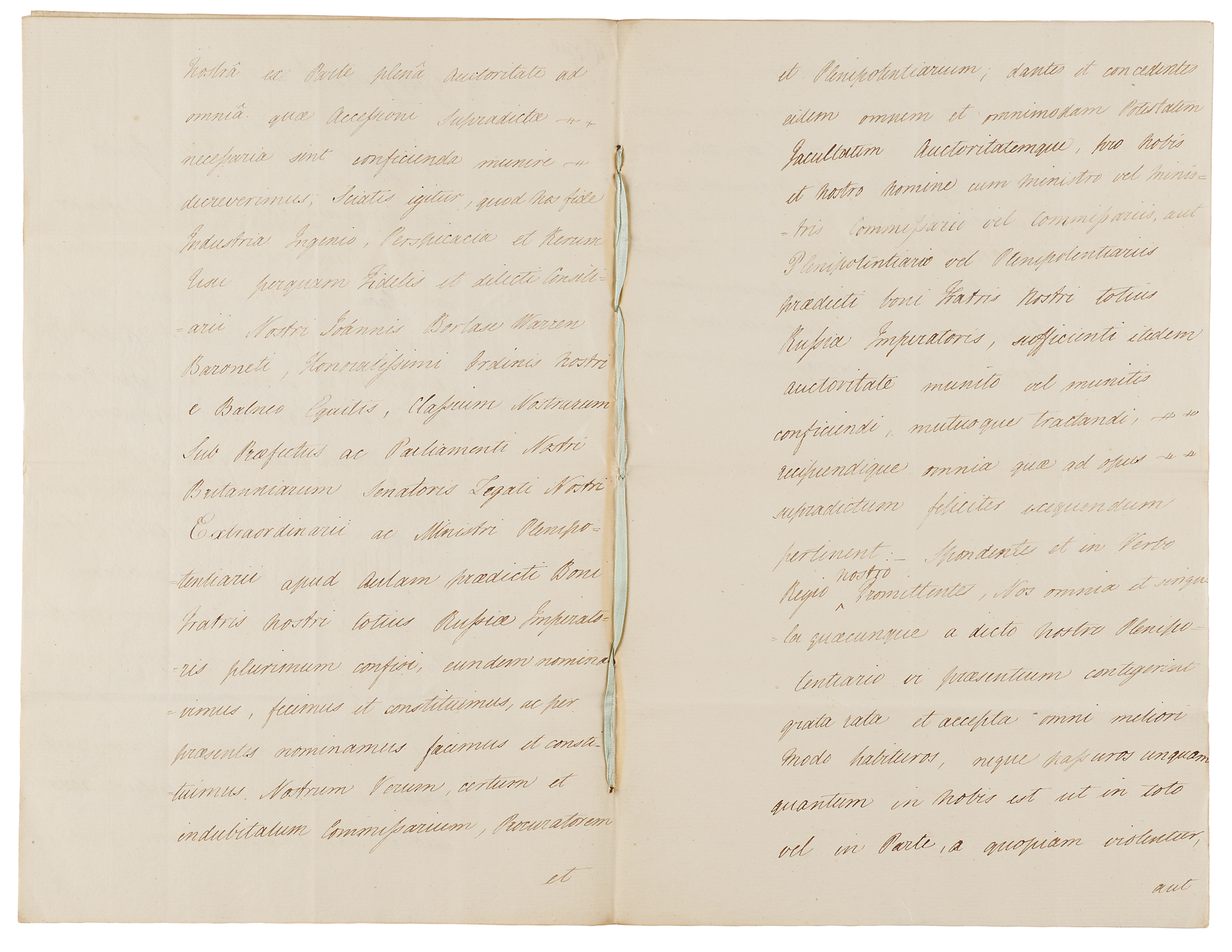
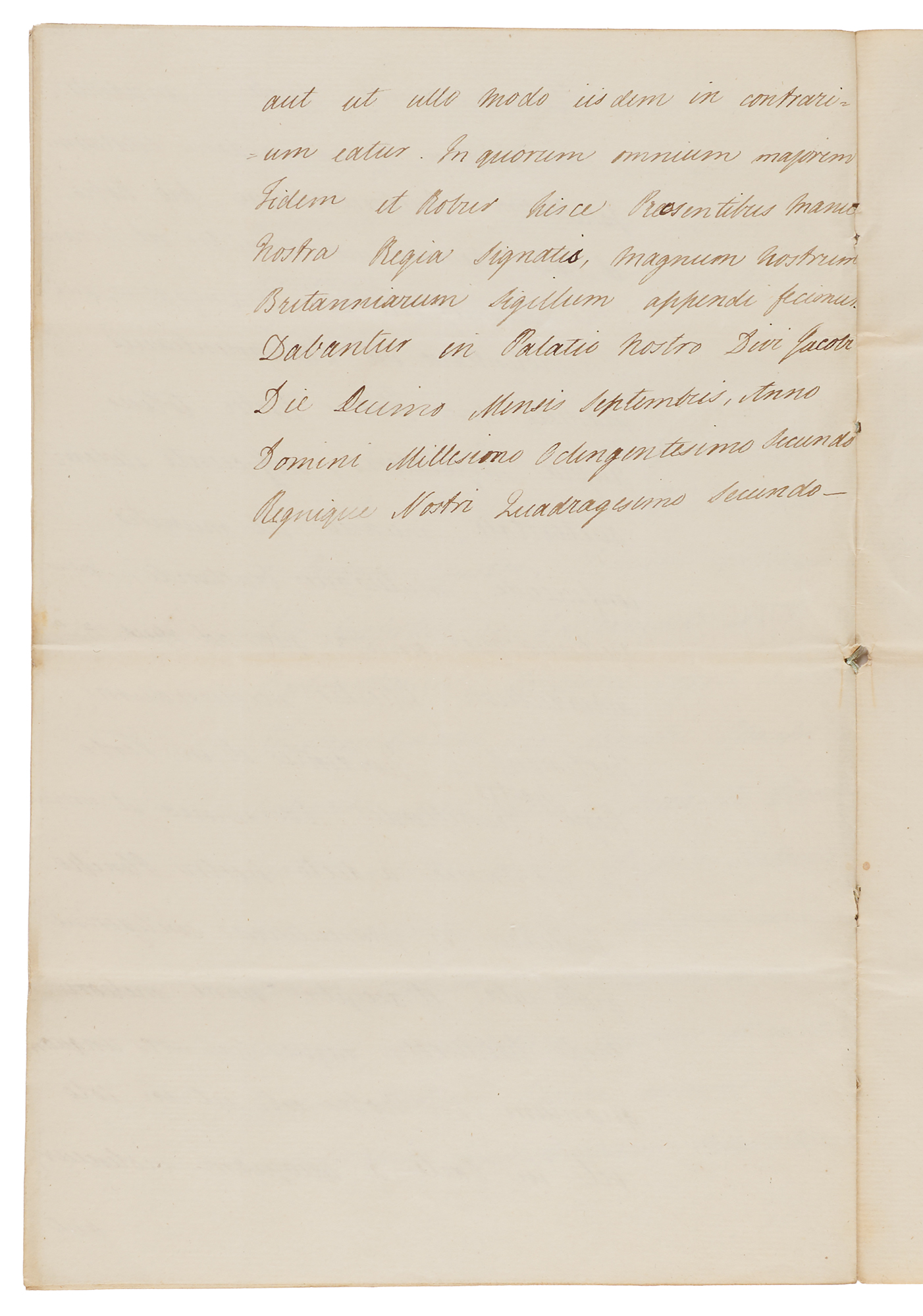
- manuscript DS, signed "George R," one page both sides, 7.75 x 12, September 10, 1802, being a warrant for affixing the Great Seal to Sir John Borlase Warren's full power to "take the necessary measures in conjunction with the minister or ministers of our good brother the Emperor of all the Russias, with regard to the accession of His Imperial Majesty to the stipulations contained in the Tenth Article of the Definitive Treaty of Peace between us and the French Republic, His Catholic Majesty and the Batavian Republic, concluded and signed at Amiens on the Twenty-Seventh Day of March, 1802," with annexed four-page manuscript of the full power's text.
Both retain their white paper seals affixed at the head. In overall fine condition.
Concluded on March 27, 1802, the Treaty of Amiens brought a rare and fragile peace to Europe after nearly a decade of continuous warfare following the French Revolution. For Great Britain, the agreement required difficult concessions, including the restoration of several colonial possessions, while for Napoleon Bonaparte—then First Consul—it represented both diplomatic recognition and a strategic pause to consolidate French power on the Continent.
The treaty’s Tenth Article, referenced in these documents, concerned the complex reordering of territories and guarantees involving other European powers, focused on the islands of Malta, Gozo, and Comino. The peace proved short-lived: mounting distrust, imperial rivalry, and Napoleon’s ambitions led Britain to declare war again in May 1803, ushering in the far-reaching Napoleonic Wars.