The 30 Minute Rule begins April 23 at 7:00 PM EDT. An Initial Bid Must Be Placed By April 23 at 6:00 PM EDT To Participate After 6:00 PM EDT
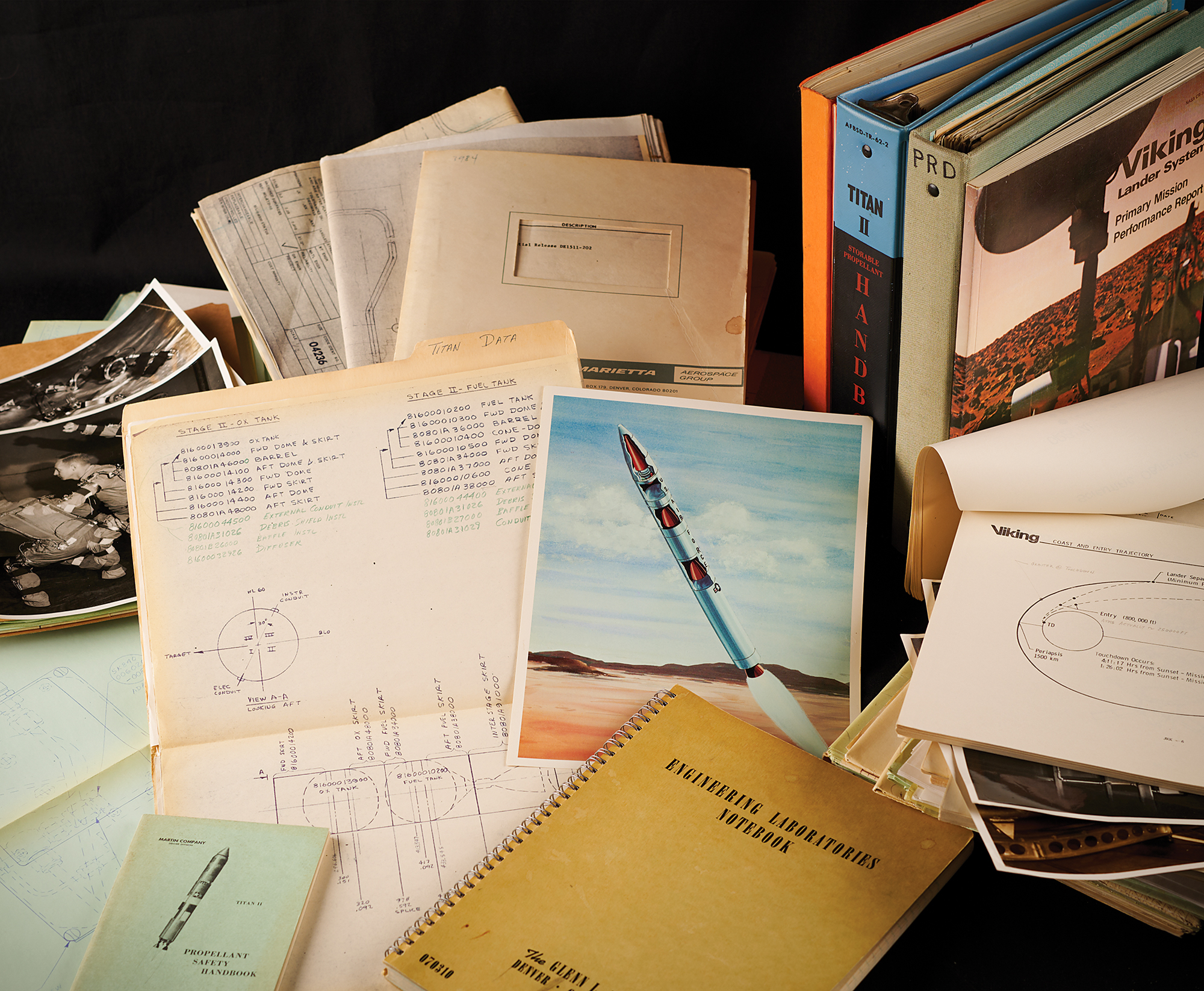
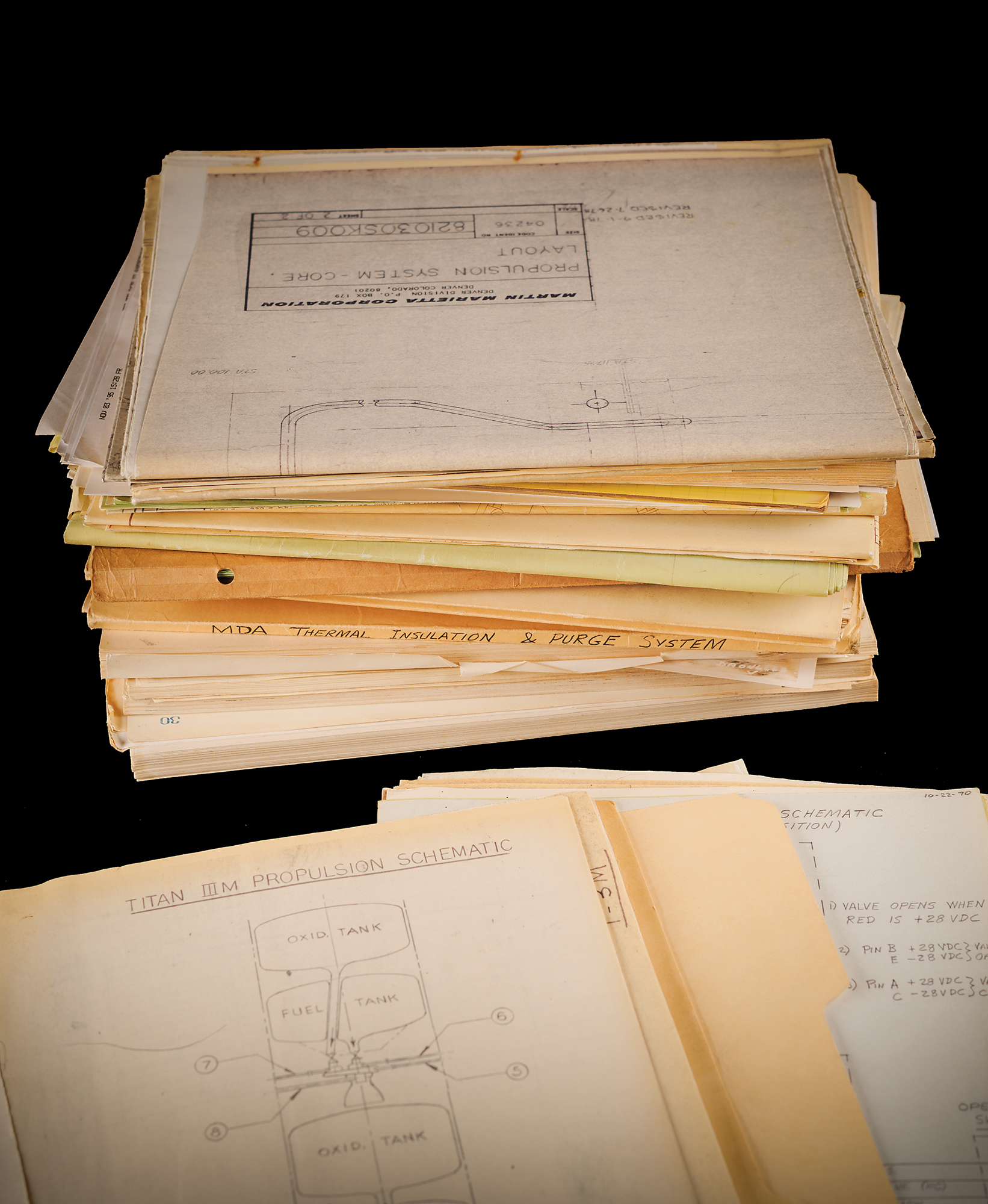
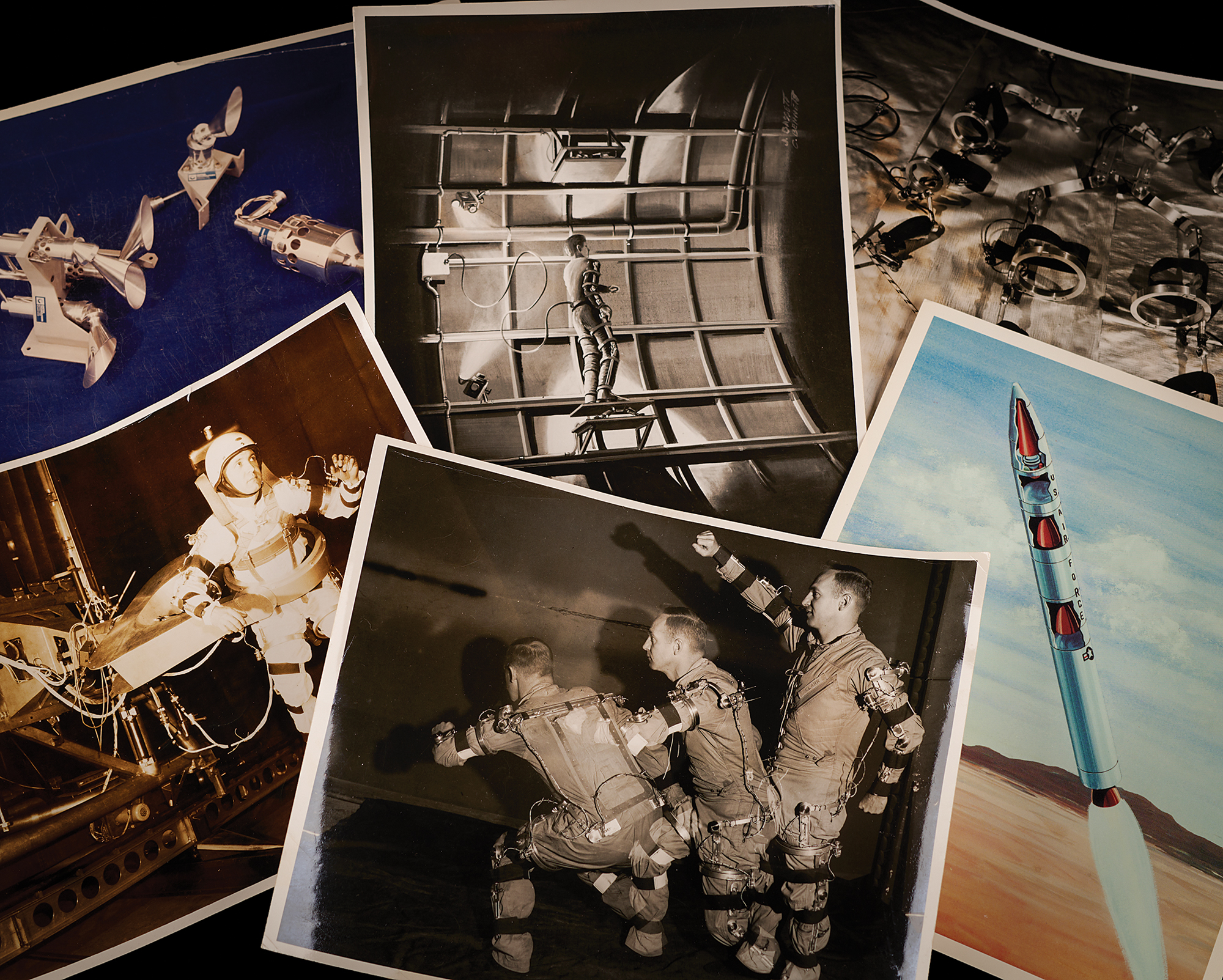
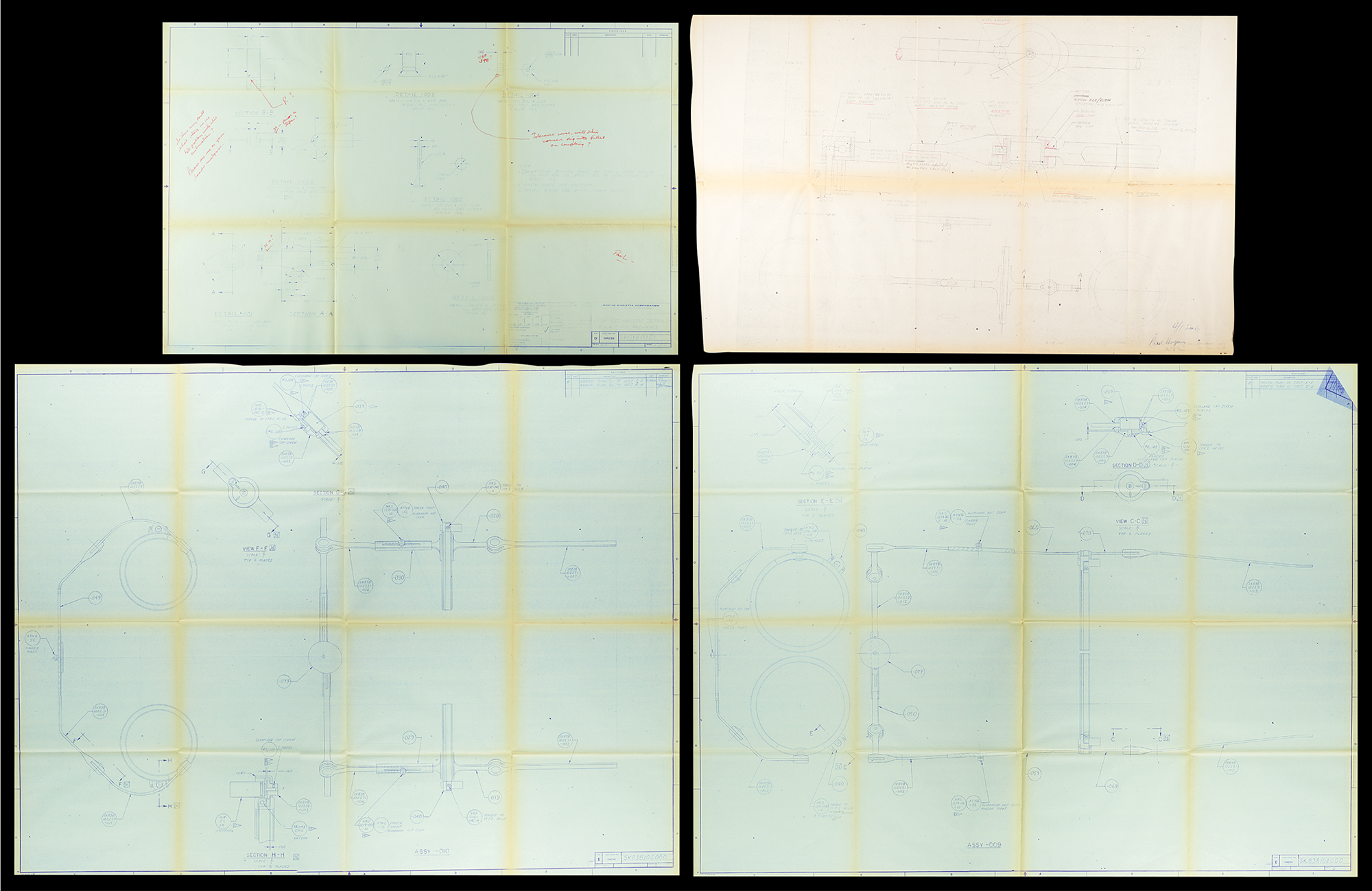
Extensive technical archive of Paul E. Hogan, a propulsion and mechanical engineer at Martin Marietta Corporation, documenting his involvement in several formative space programs including Titan, Viking, Skylab, and the Space Shuttle, circa 1962–1982. The archive contains a massive body of technical schematics, blueprints, internal memoranda, proposal materials, engineering reports, and handwritten working notes relating to some of NASA's most significant aerospace projects.
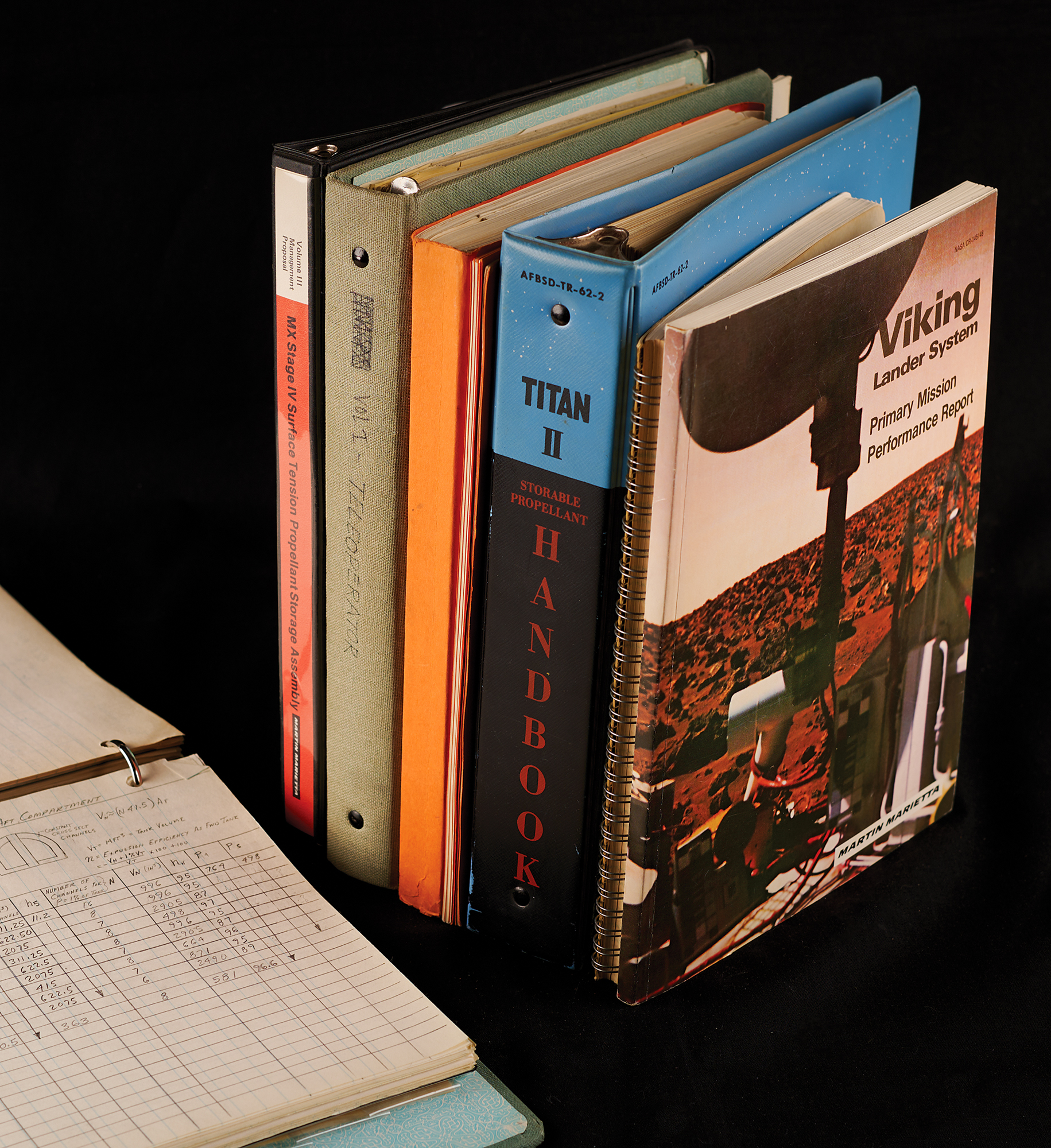
Material on the Titan rocket family includes a Bell Aerosystems Titan II Storable Propellant Handbook (March 1962), documentation related to the Titan IIIM and the canceled Manned Orbiting Laboratory program, and additional technical reference materials. Viking program content is particularly strong, featuring a softcover Viking Orbiter 1975: Propulsion Hardware, Part 2, Final Report (February 20, 1974); packets titled Viking Project Reference Information and Viking 75: Project Familiarization Course; a Weight and Power Requirements Report (May 15, 1972); and a Viking Lander System: Primary Mission Performance Report booklet.
Space Shuttle materials include a 1973 binder on the Shuttle Reaction Control System (RCS) and a Space Shuttle System Summary (July 1973), as well as documentation related to the Teleoperator Retrieval System, an uncrewed space tug ordered by NASA in the late 1970s to re-boost Skylab using the Space Shuttle. Skylab materials consist of packets for Experiment T-013, ‘Crew/Vehicle Disturbances,’ including a March 1970 Preliminary Design Review for experiment hardware and a July 1972 Skylab: Leak Detector Presentation and Review. Also present is Volume III of a Management Proposal for the ‘MX Stage IV Surface Tension Propellant Storage Assembly,’ dated July 1982.
The archive offers a detailed, engineer-level perspective on propulsion systems development and spacecraft hardware during the height of the American space program, providing insight into both manned and unmanned missions from the early Titan era through post-Apollo initiatives. In overall fine condition.