The 30 Minute Rule begins April 23 at 7:00 PM EDT. An Initial Bid Must Be Placed By April 23 at 6:00 PM EDT To Participate After 6:00 PM EDT
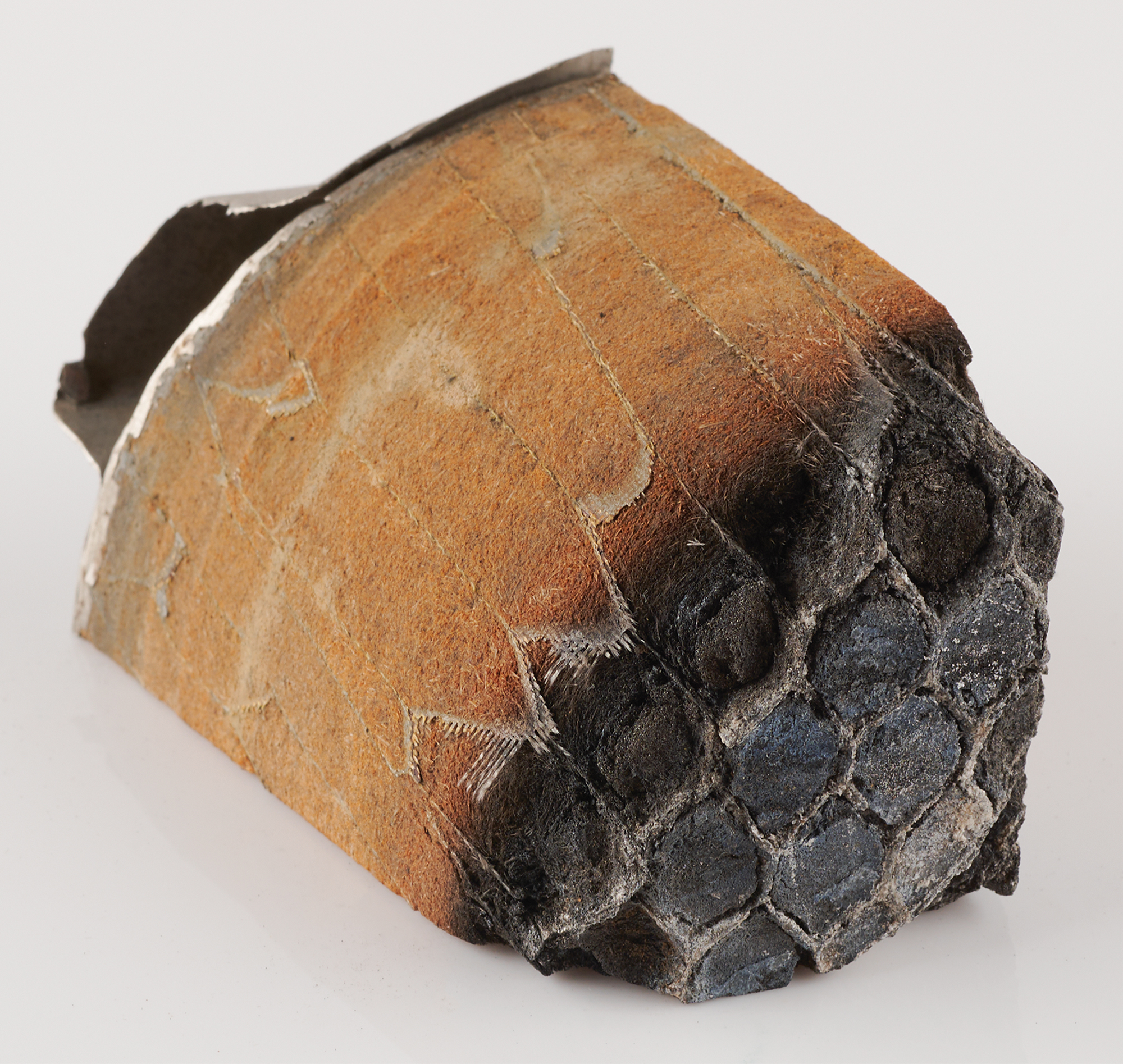
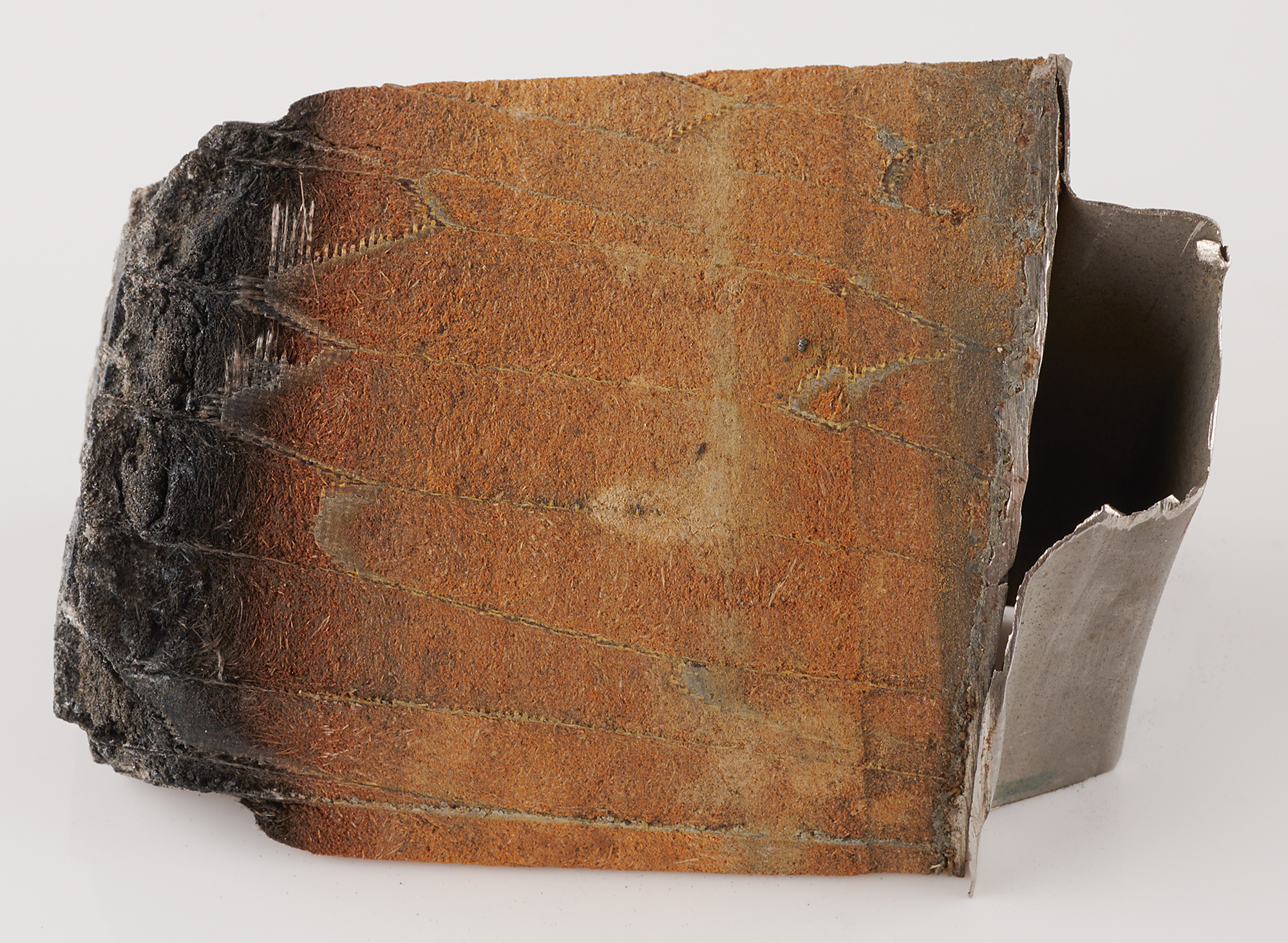
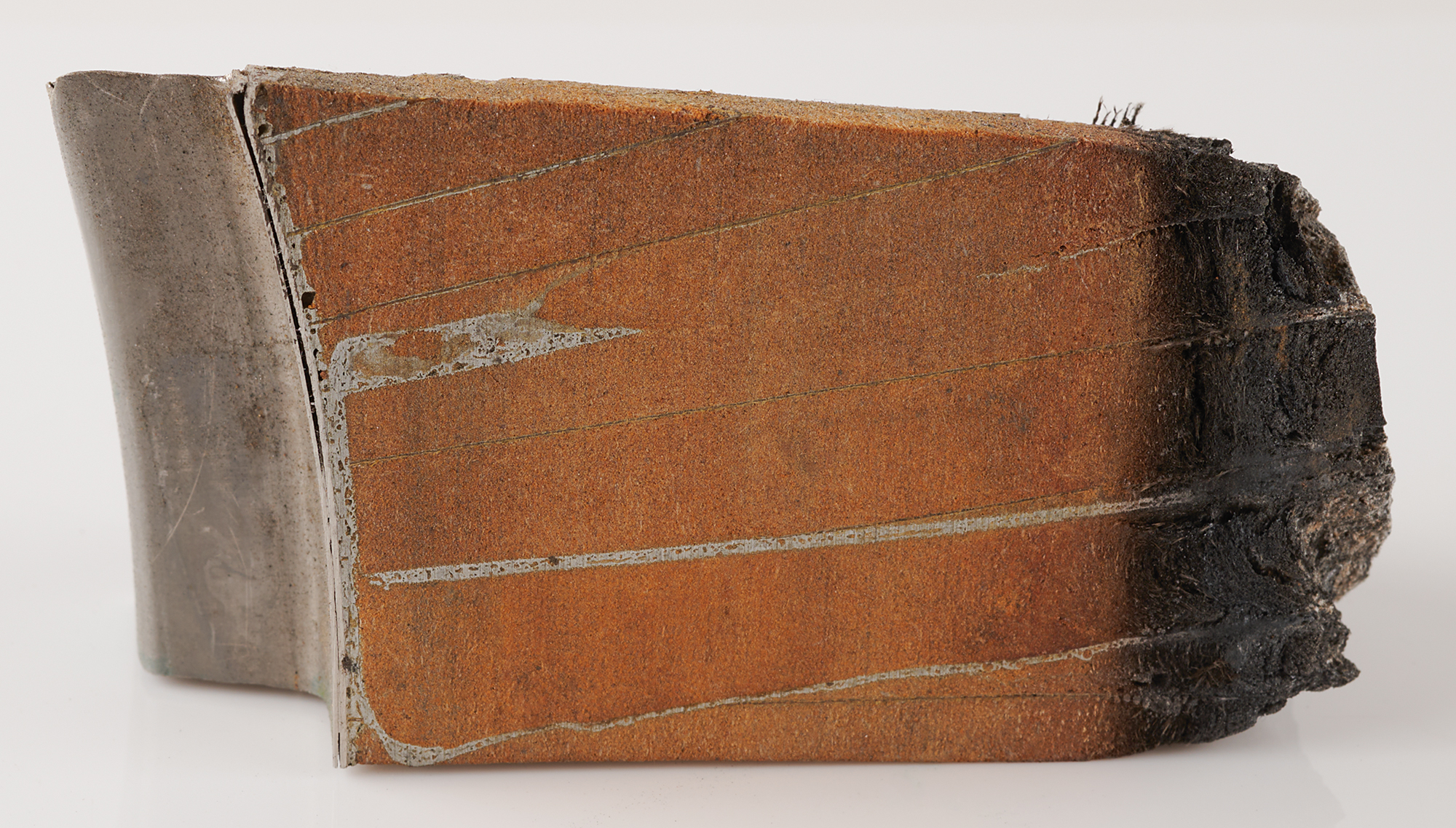
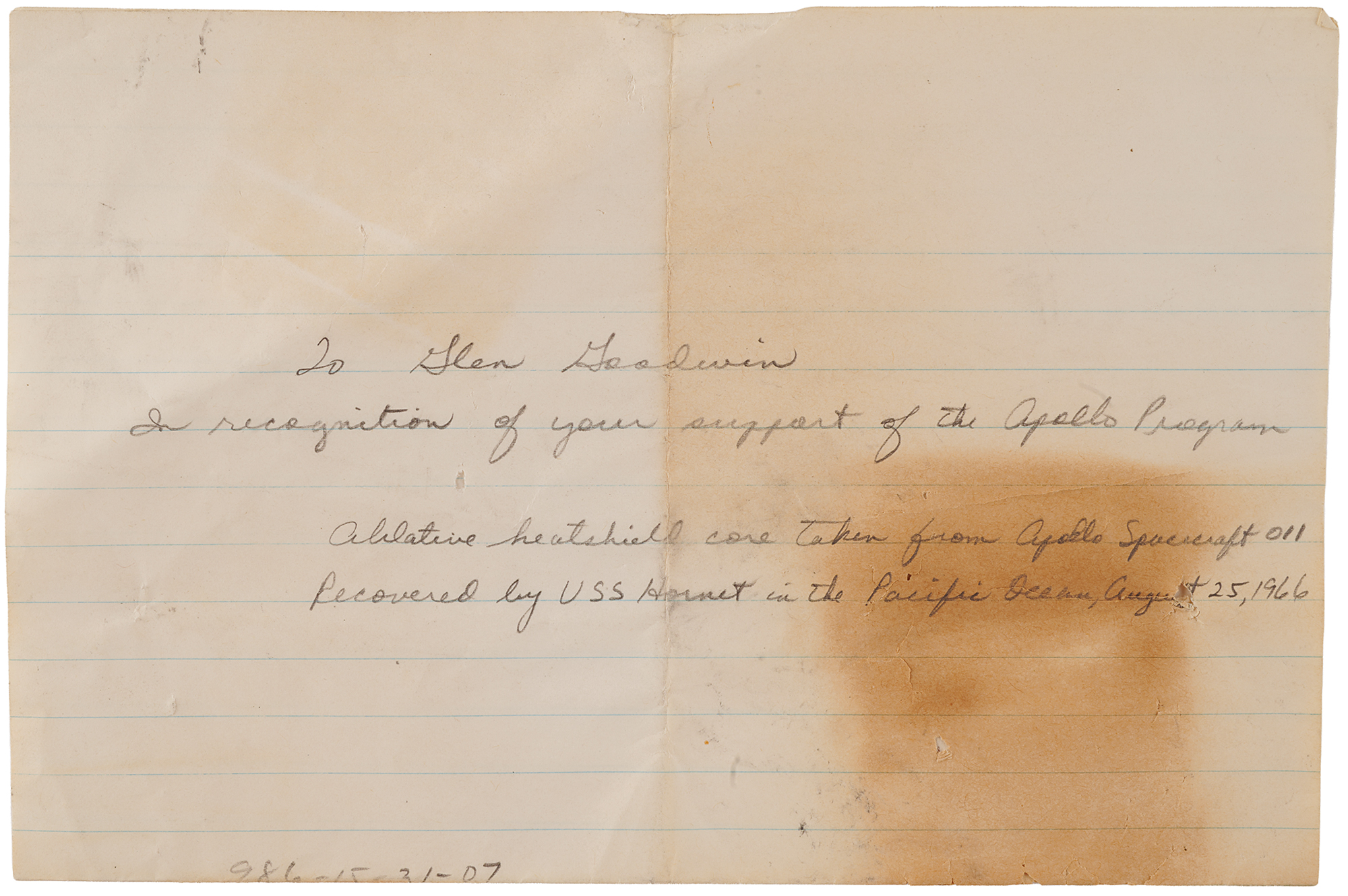
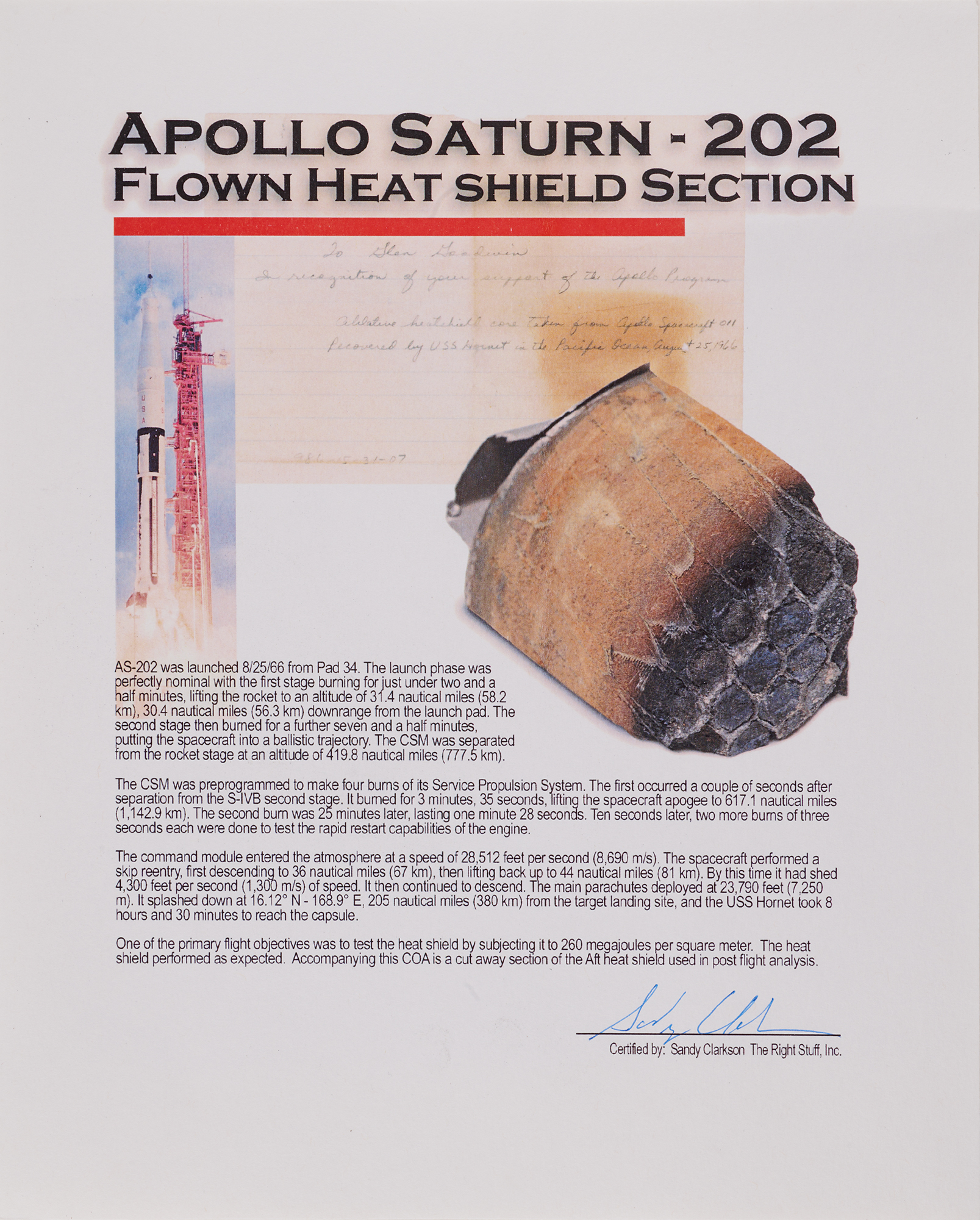
Impressive section of the command module heatshield of AS-202, the second uncrewed, suborbital test flight of a production Block I Apollo command and service module launched with the Saturn IB launch vehicle. The robust pie-shaped fragment measures 1.75˝ x 3.25˝ x 1.75˝ and exhibits significant reentry burn marks that reveal the structural honeycomb core. Accompanied by a detailed certificate of authenticity signed by Sandy Clarkson of The Right Stuff, Inc., and by a contemporary transmittal letter presenting the heatshield to “Glen Goodwin, In recognition of your support of the Apollo Program.”
Launched on August 25, 1966, AS-202 was the third test flight of the Saturn IB and the first to fly an Apollo spacecraft equipped with the full guidance, navigation, and control system and fuel cells. Delayed by the readiness of spacecraft 011, the mission flew higher and lasted twice as long as AS-201, with the command and service module (CSM-011) performing four engine firings to more thoroughly test both the rocket and spacecraft. The flight also stressed the heat shield by exposing it to 260 megajoules per square meter during reentry—an energy level comparable to powering Los Angeles for over a minute in 1966. Although lacking crew couches and some displays, CSM-011 was otherwise a production-level spacecraft, and the mission’s success demonstrated that the Block I Apollo spacecraft and Saturn IB were ready to carry astronauts into orbit on the next mission, AS-204.
Glen Goodwin was a pioneering NASA engineer whose work at NASA Ames Research Center played a key role in advancing space flight. After earning a mechanical engineering degree from the University of Washington in 1942, he joined the National Advisory Committee for Aeronautics and transferred to Ames in 1946.
At Ames, Goodwin became a leading innovator in heat transfer research, helping develop specialized facilities to study high-speed vehicles under low-density atmospheric conditions. He led and conducted tests using low-density wind tunnels, helium tunnels, and early arc jet facilities, work that directly supported the development of space flight technologies, including research contributing to the X-15 rocket plane.
During his 30-year NASA career, Goodwin held numerous senior technical and managerial positions, including chief of the Heat Transfer Branch, chief of the Thermo and Gas Dynamics Branch, and director of astronautics. He also played a major role in acquiring one of Ames’ first supercomputers, an IBM 360/67, enabling early networked numerical simulations.