The 30 Minute Rule begins April 23 at 7:00 PM EDT. An Initial Bid Must Be Placed By April 23 at 6:00 PM EDT To Participate After 6:00 PM EDT
NASA career archive of Joe L. ‘Jack’ Day, a pioneering bioinstrumentation engineer in the Crew Systems Division at NASA’s Manned Spacecraft Center in Houston, Texas, whose work supported astronaut health monitoring across the Mercury, Gemini, Apollo, Skylab, and Space Shuttle programs. Working under Dr. Charles A. Berry, Chief of Medical Operations, Day specialized in the development of long-duration biomedical monitoring systems designed to safeguard astronauts in space, continuously tracking vital signs such as heart rhythm, respiration, and other key physiological functions and transmitting that data to flight surgeons on the ground.
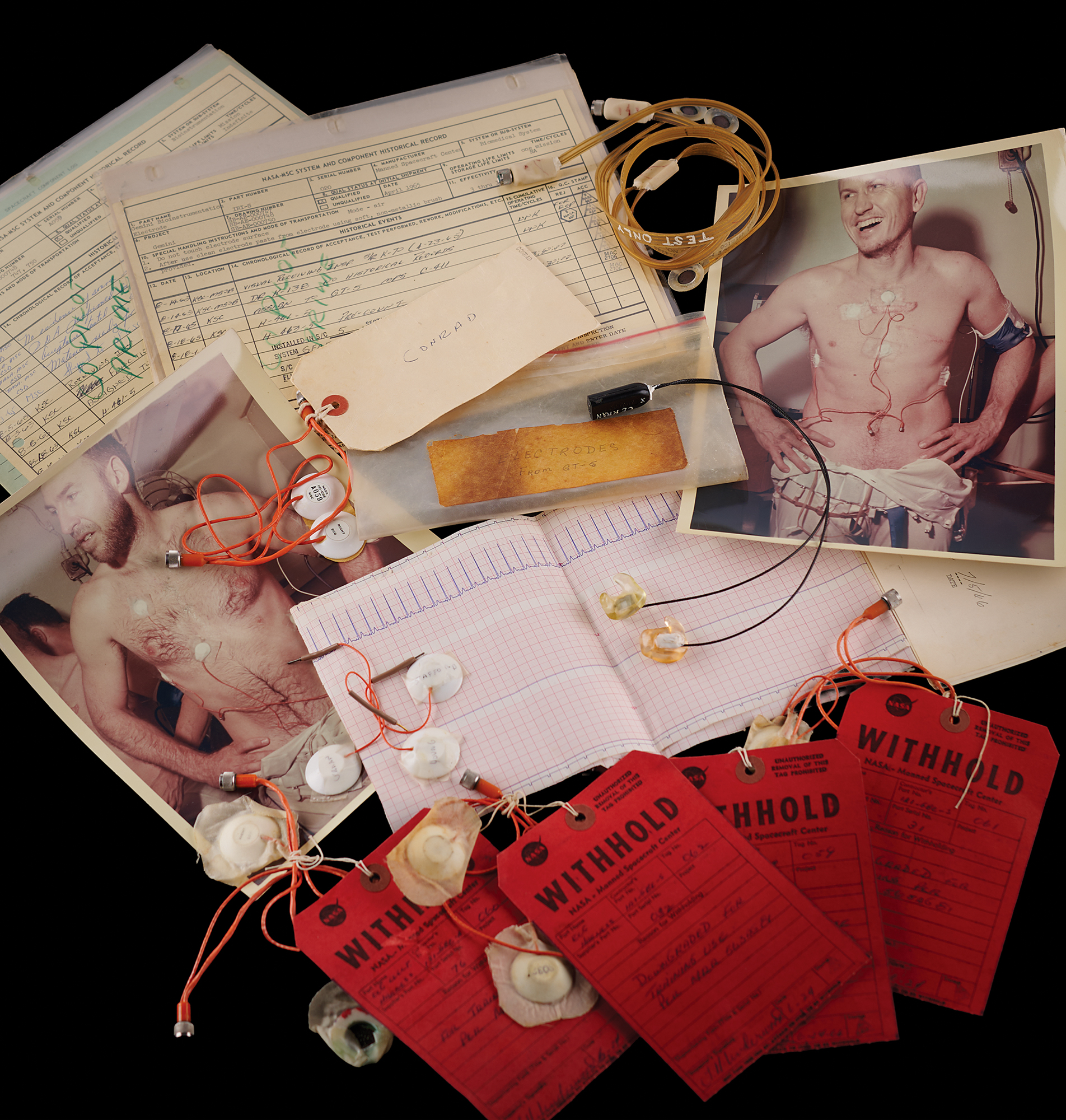
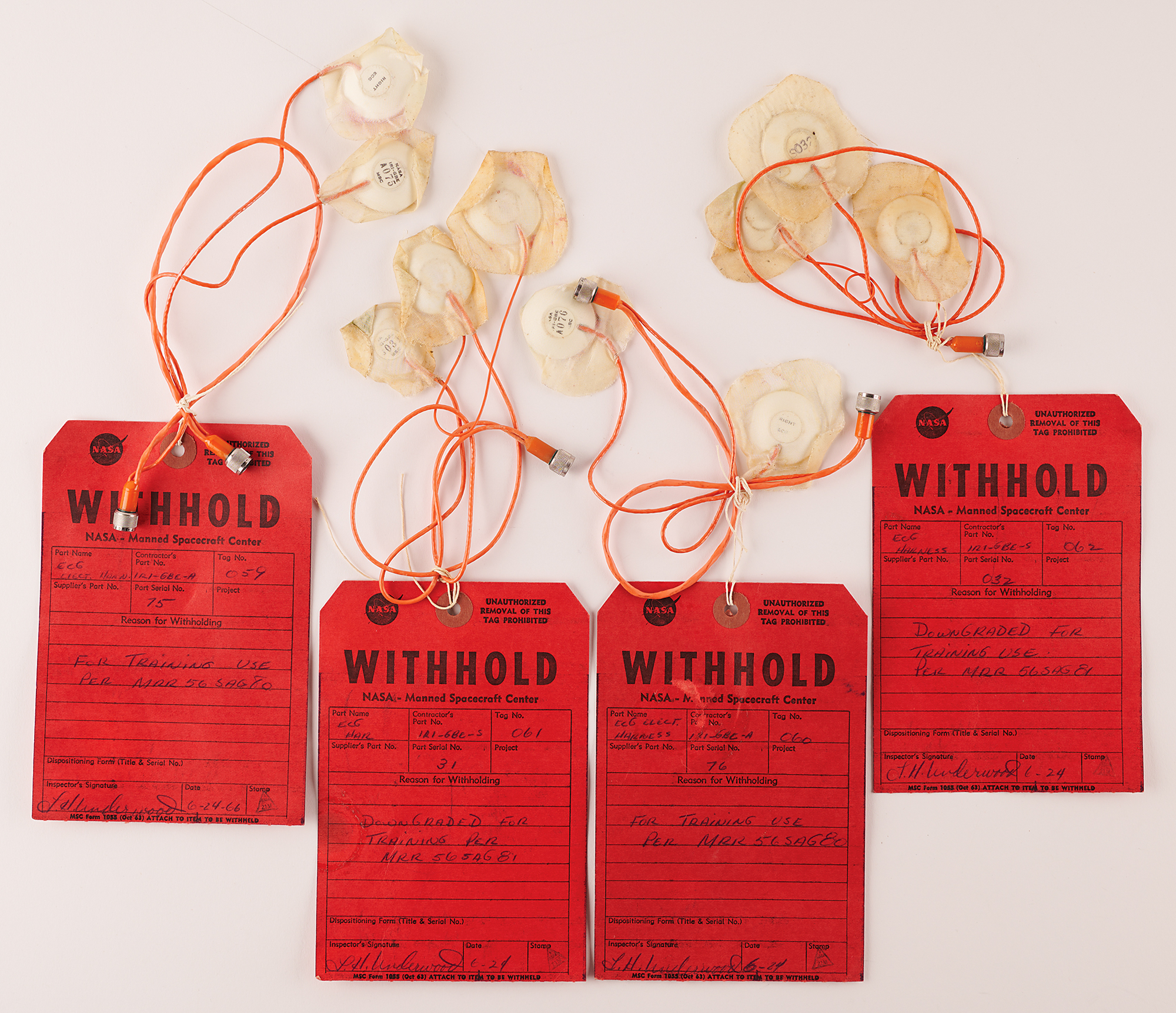
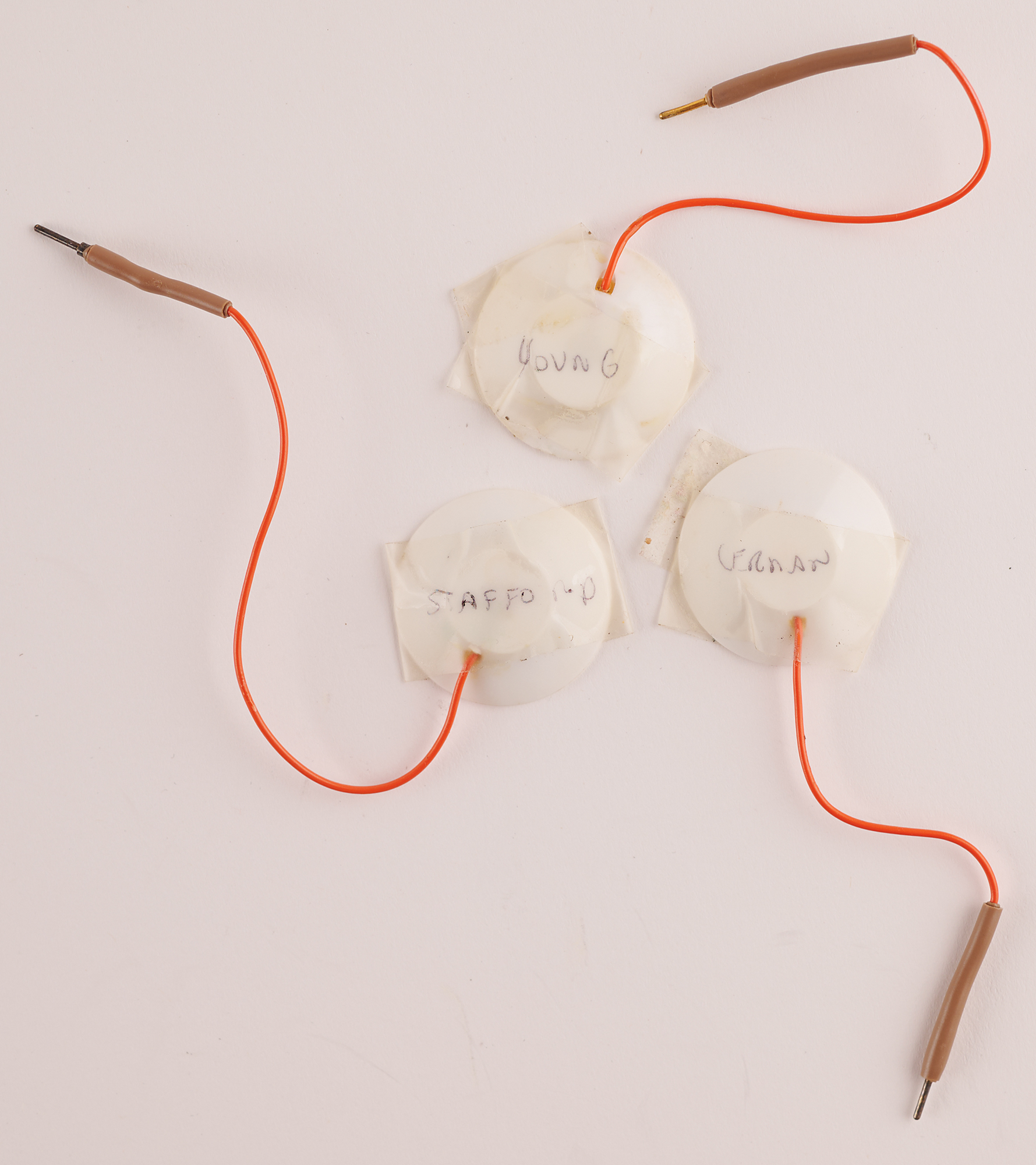
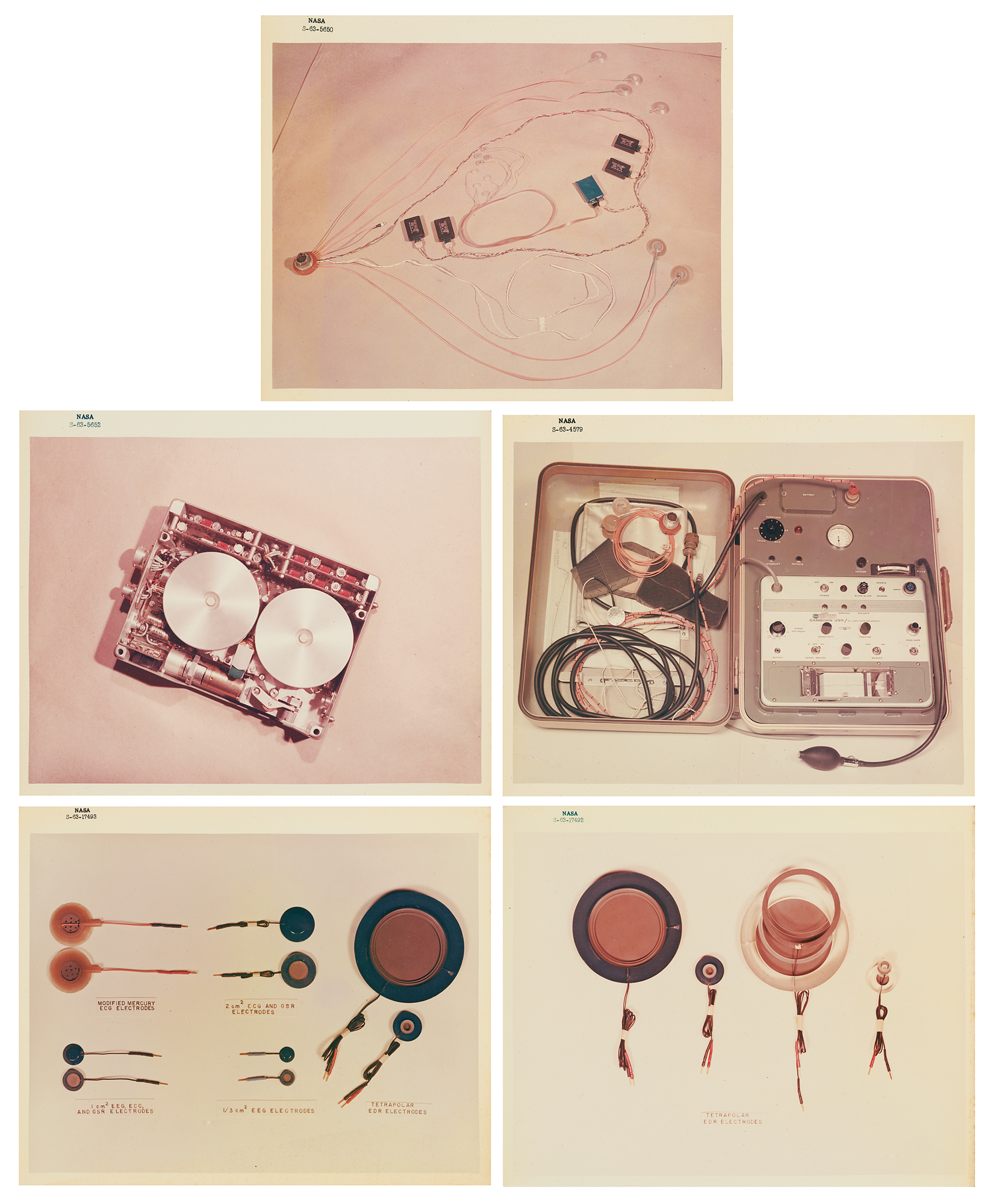
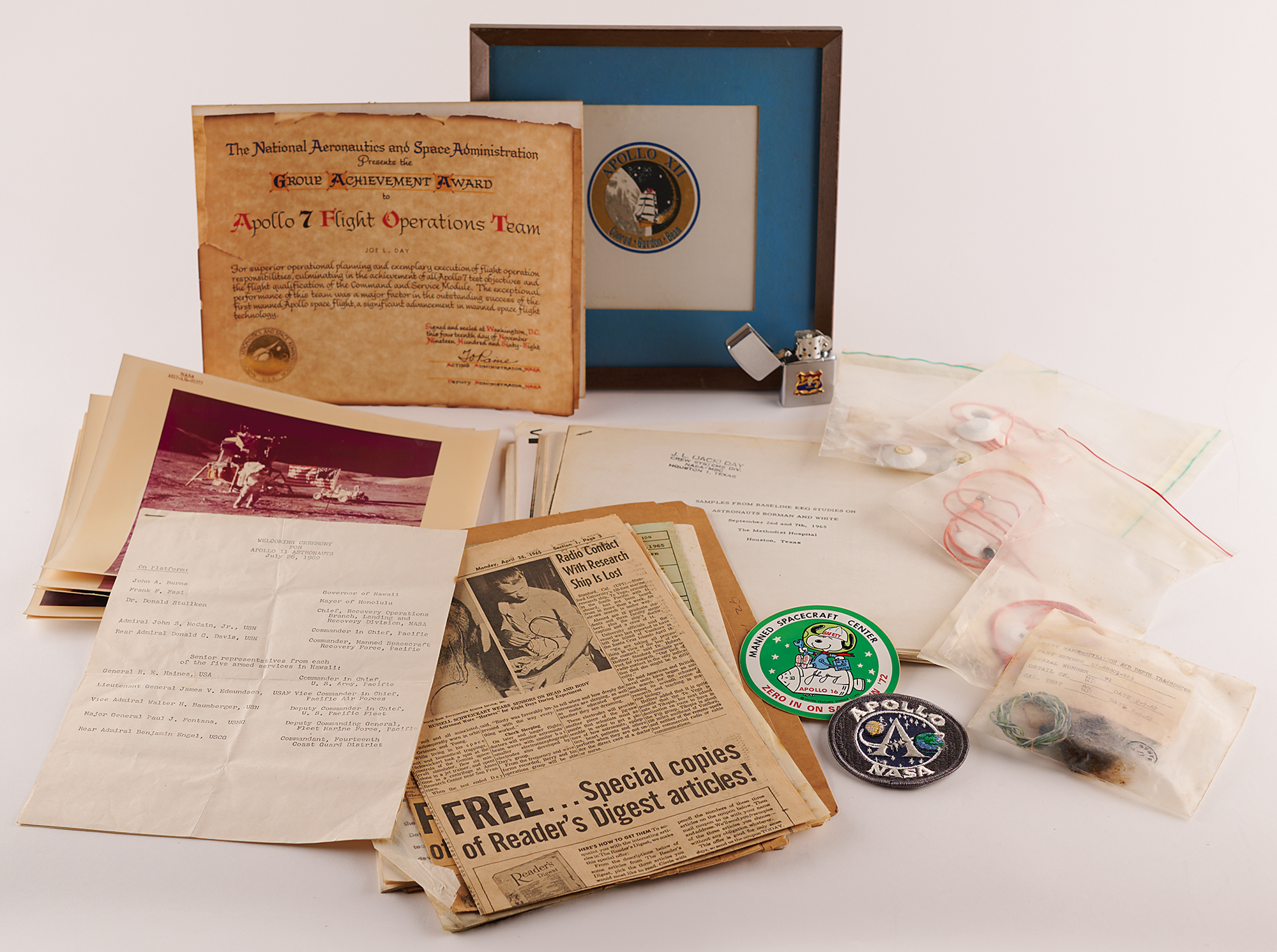
The archive contains Day’s various accolades, photographs, books and manuals, Beta swatches, NASA ephemera, and sundry papers and documents. The highlight, however, is Day’s collection of biomedical monitoring hardware developed for the Apollo 10 and Gemini 5 astronauts, which includes personalized EEG sensor sets labeled for Apollo 10 astronauts Gene Cernan, John Young, and Tom Stafford, custom-molded communication earplugs for Cernan, and four electrode assemblies with red NASA Manned Spacecraft Center “WITHHOLD” tags noting downgrade for training use.
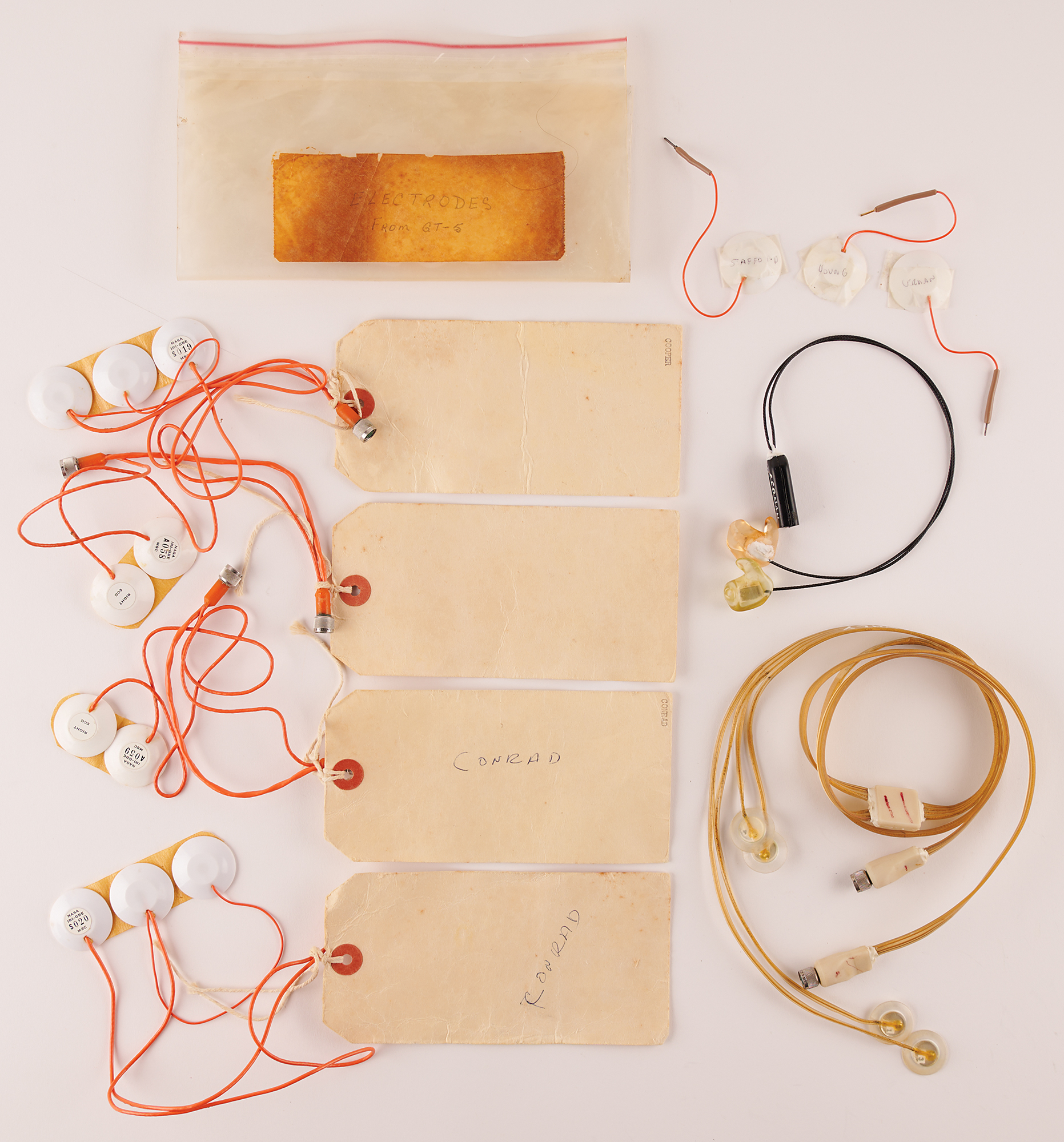
The Gemini 5 mission is represented by a bag marked “Electrodes from GT-5,” which contains several EEG electrode assemblies grouped with manila identification tags labeled “Conrad” and “Cooper,” indicating that these astronaut-specific sets were developed for Charles Conrad and Gordon Cooper. Complemented by additional biomedical monitoring equipment, including multiple adhesive-backed disc electrode clusters, reusable gold-toned disc electrodes, suction-style cup electrodes, multi-lead test cables, packaged left/right-labeled sensor sets, two storage cases of assorted electrodes and wired assemblies, and a sealed 1962 “Respiration and Depth Transducer.”
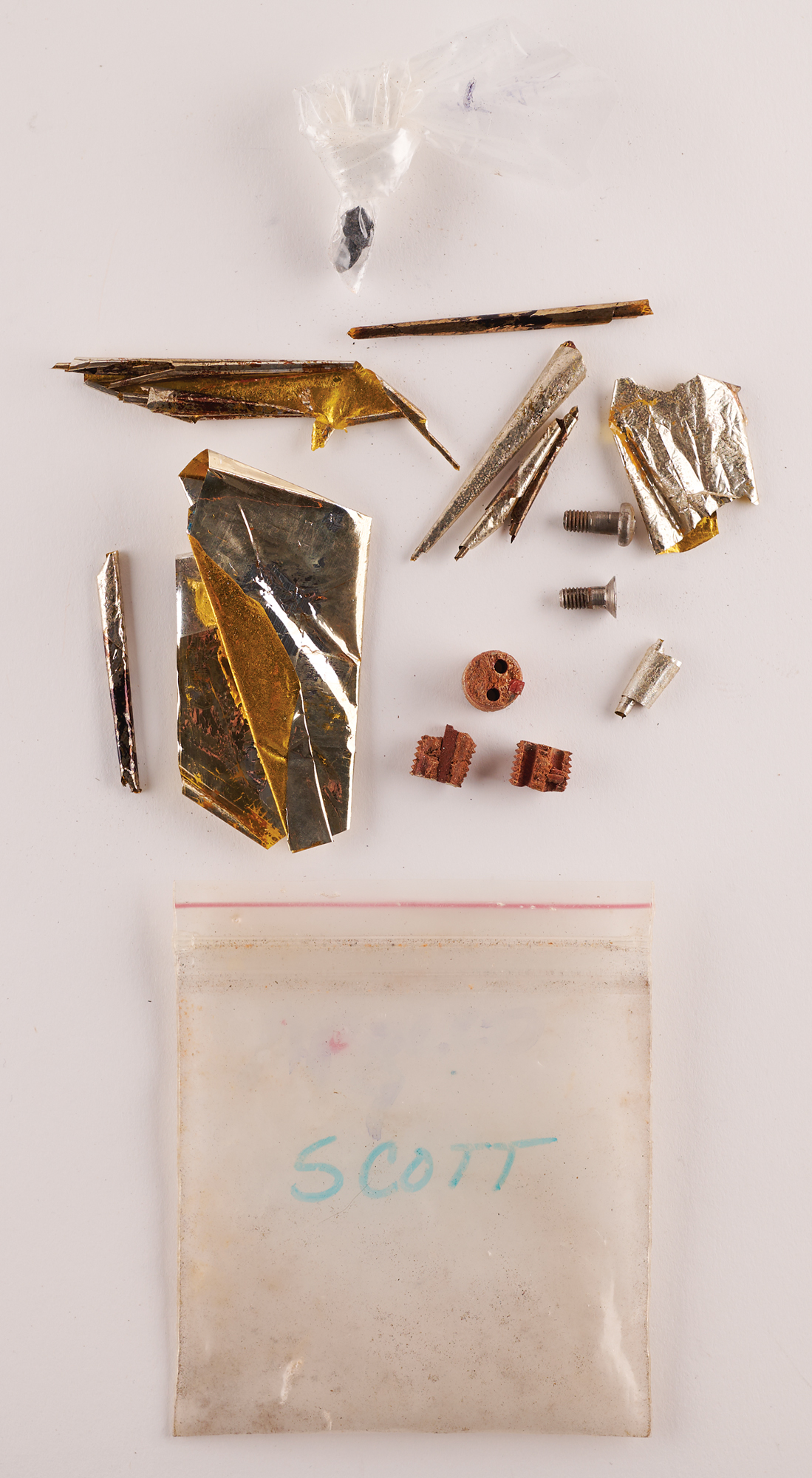
These components are accompanied by an original analog output from a biomedical recording system, and four “NASA-MSC System and Component Historical Record” sheets for “Project Gemini,” which confirm “Qualified” status for “Axilliary ECG Electrodes,” dated March 13, 1965, with effectivity “GT-5” (2); and “Gemini Bioinstrumentation Electrode,” dated April 1965, with effectivity “3 thru 12.” These are stapled with photocopied discrepancy sheets from McDonnell Aircraft indicating that they were “Flown on GT-5 mission.” Also present is a small bag marked “Scott,” ostensibly astronaut Dave Scott, which contains various swatches of gold-colored Kapton foil, screws, and fragments that resemble ablative heat plugs; flown status is unknown.
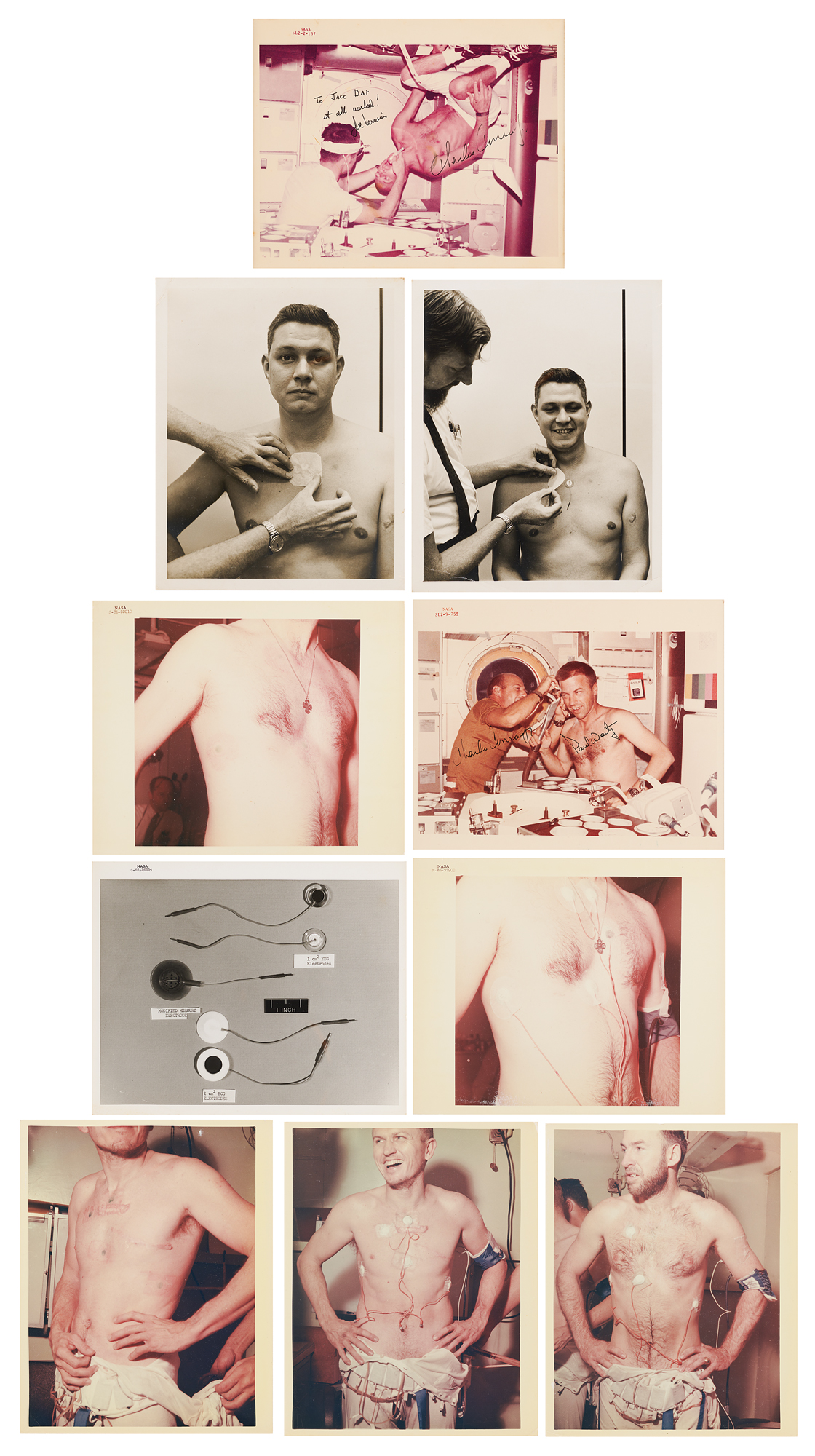
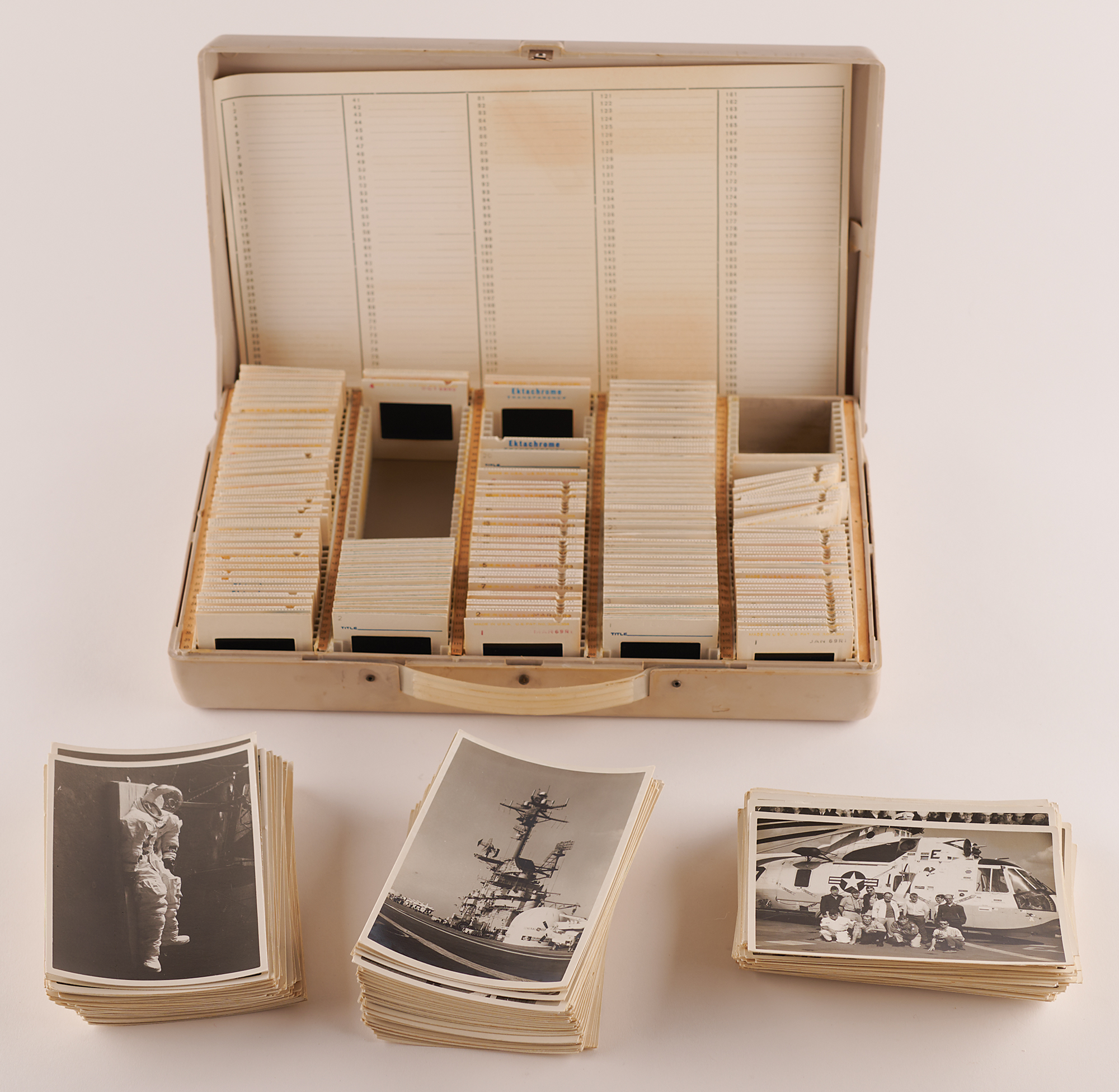
Beyond the biomedical hardware, the archive features an extensive photographic record of NASA’s human spaceflight era. This includes two official color Skylab 2 photographs signed by Charles Conrad (one additionally signed by Joe Kerwin and the other by Paul Weitz), and a binder of official NASA images documenting Day’s experimental work, which includes photographs of Gemini 7 astronauts James Lovell and Frank Borman wearing biomedical harnesses. Also present are more than 250 candid photographs documenting the ocean recoveries of Apollo 7 and Apollo 9, accompanied by original 35mm film negatives and a case containing over 200 color transparency slides.
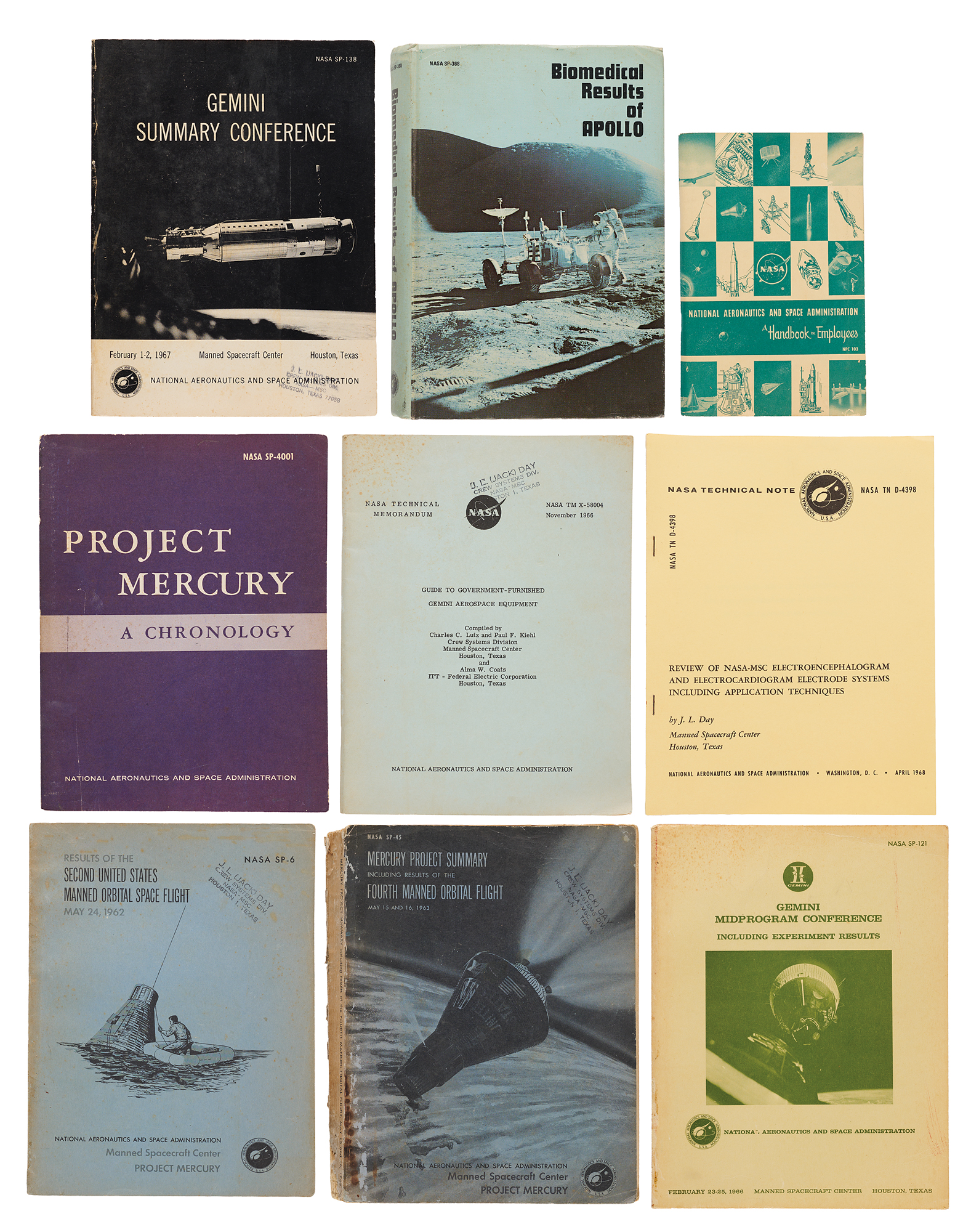
The archive also includes a selection of NASA books and manuals—several bearing Day’s ownership stamp and signature—such as early Mercury and Gemini mission reports (1962–1967), technical memoranda on Gemini aerospace equipment, his own 1968 NASA Technical Note reviewing MSC electroencephalogram and electrocardiogram electrode systems, and the landmark 1975 volume Biomedical Results of Apollo. Day’s numerous awards and commendations span from the Gemini to the Space Shuttle eras, and include Group Achievement Awards for Apollo and Skylab teams, long-service recognitions, certificates honoring his biomedical electrode innovations, an Apollo 8 medallion certificate, and a congratulatory letter from Robert Gilruth for his role in Apollo 11.
Rounding out the archive is NASA ephemera and recovery-force memorabilia, including embroidered mission patches, Beta cloth swatches from Apollo missions 7 through 14, astronaut safety stickers, recovery ship Zippo lighters, a certificate from the Apollo 9 recovery aboard the USS Guadalcanal, and a colorful “Shellback” certificate issued aboard the USS Hornet during the Apollo 11 recovery. In overall very good to fine condition.