The 30 Minute Rule begins April 23 at 7:00 PM EDT. An Initial Bid Must Be Placed By April 23 at 6:00 PM EDT To Participate After 6:00 PM EDT
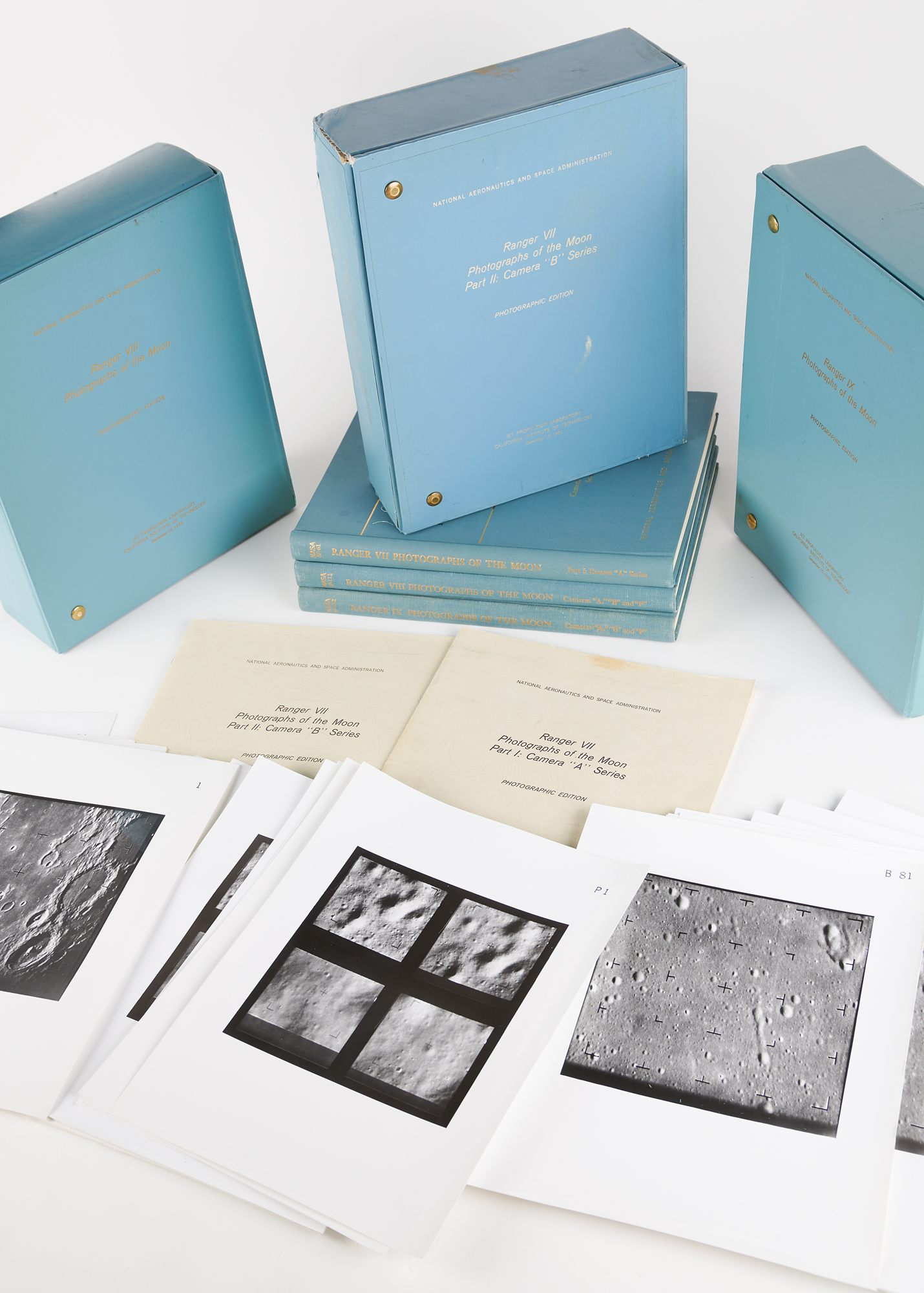
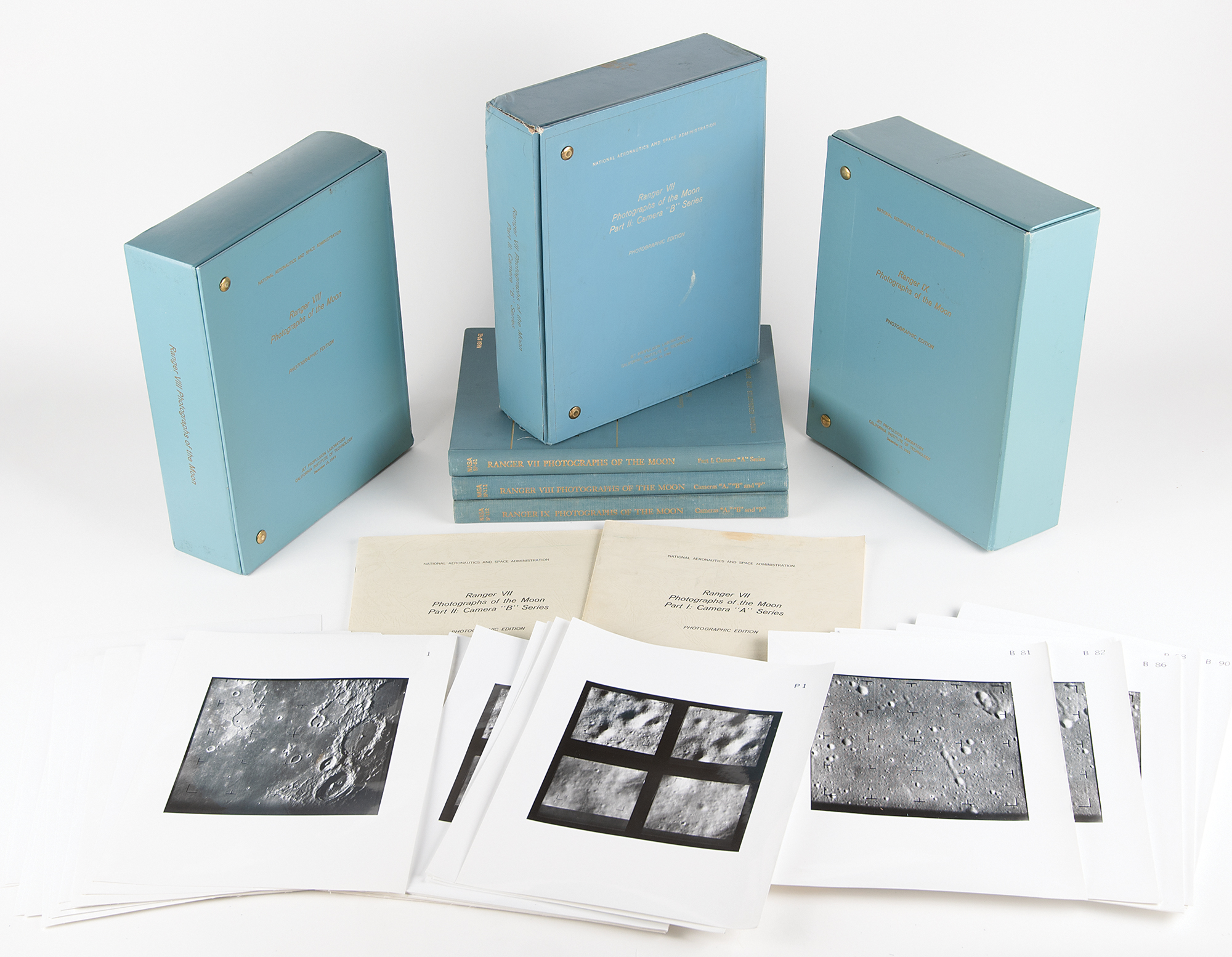
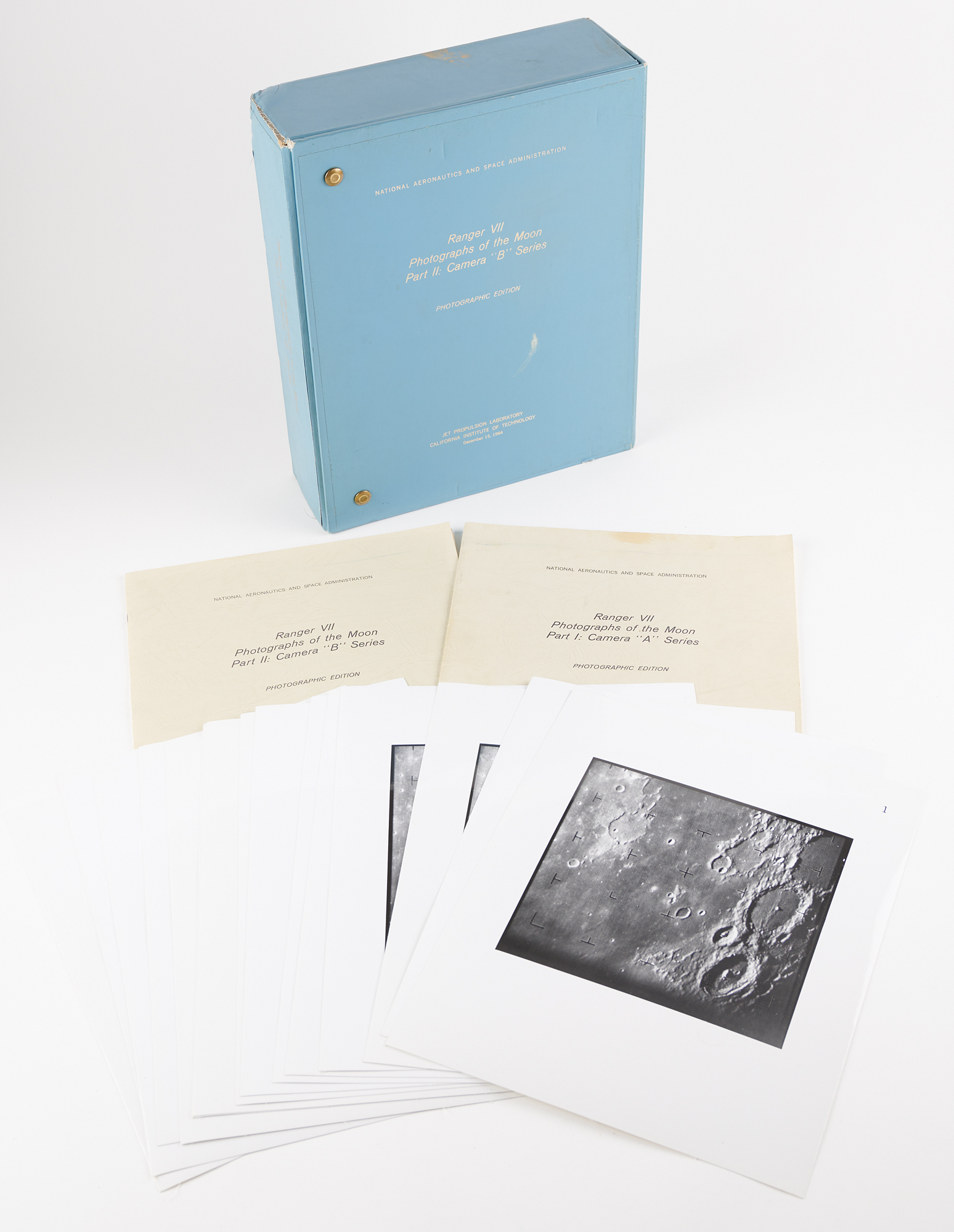
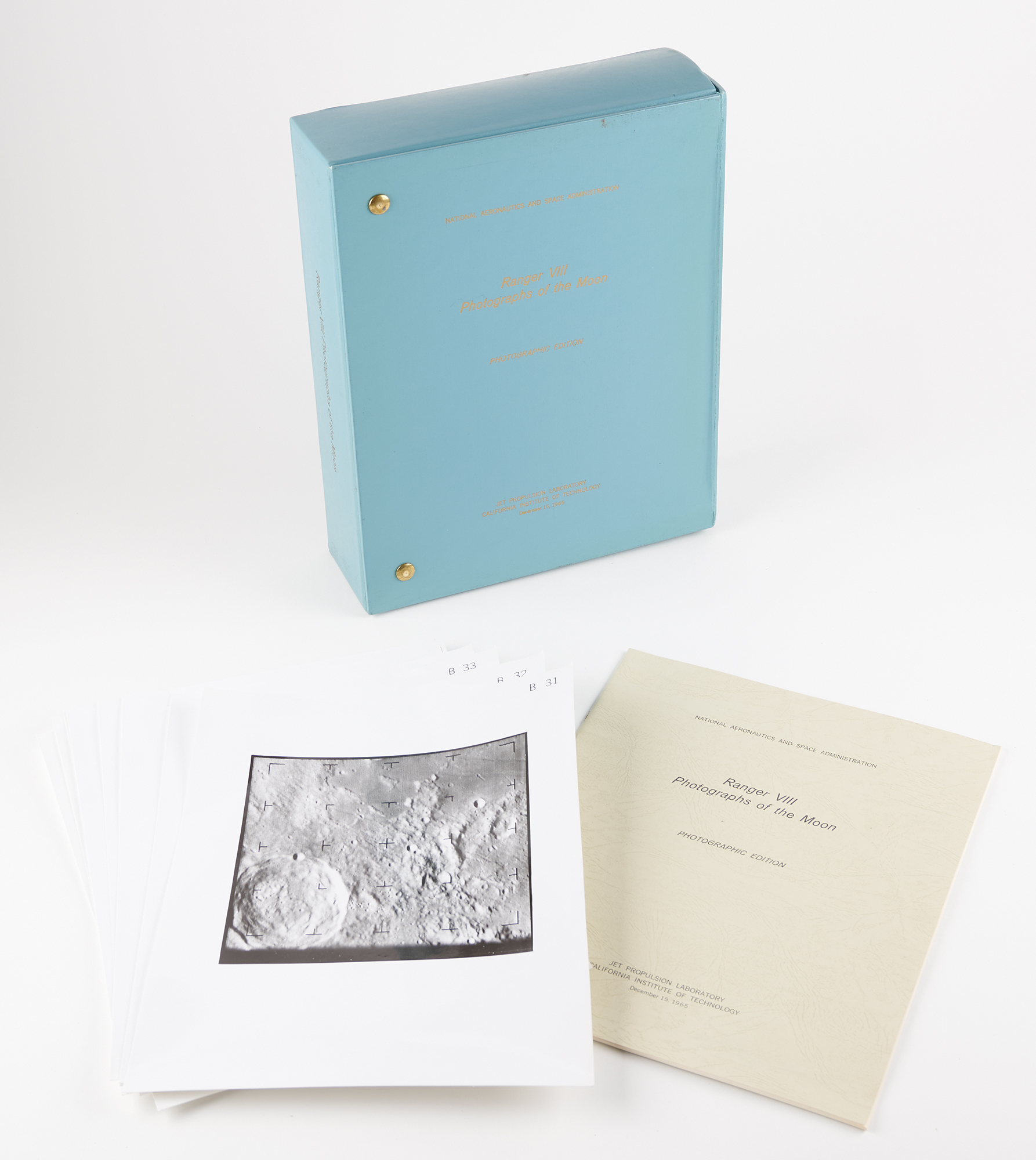
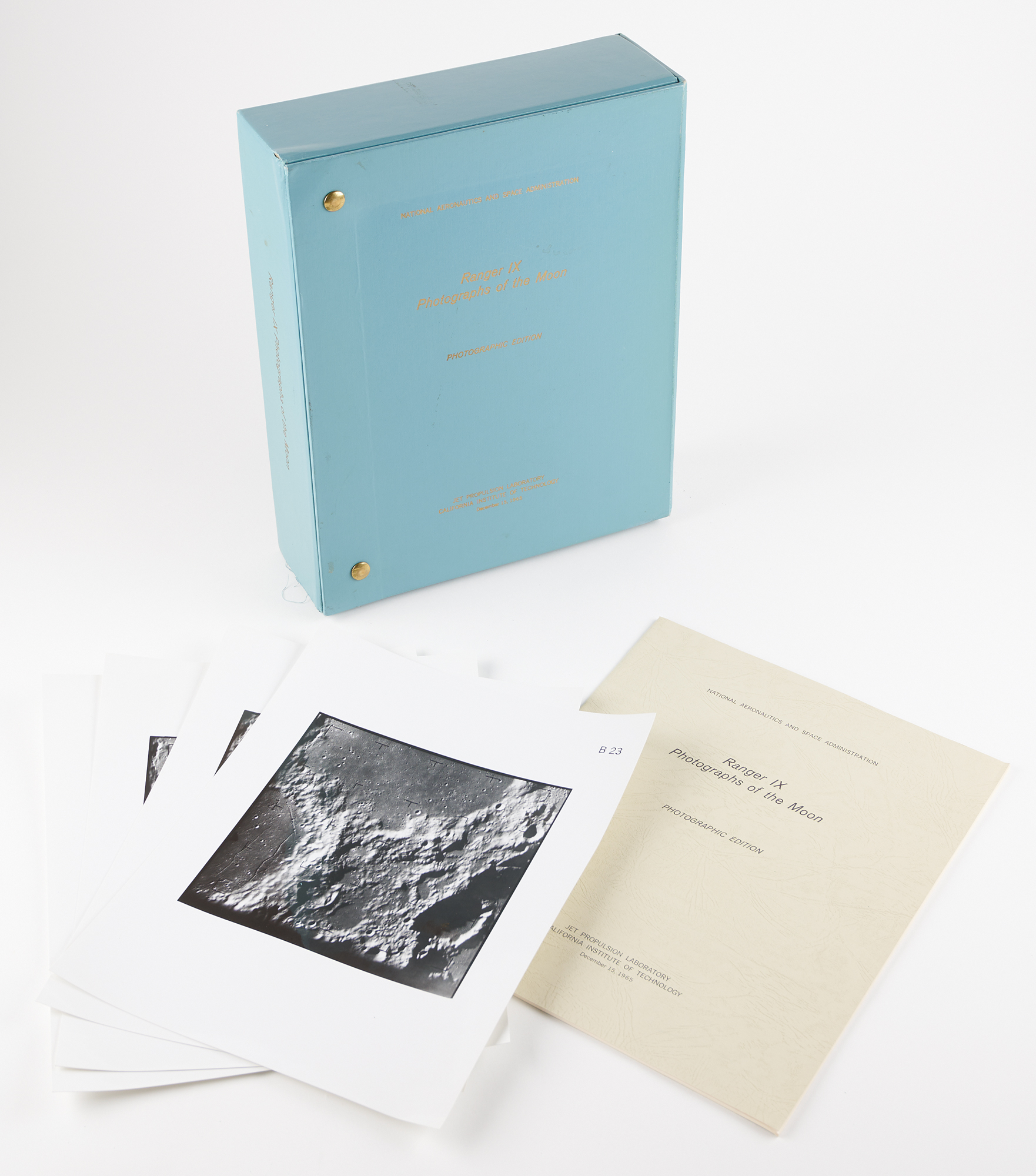
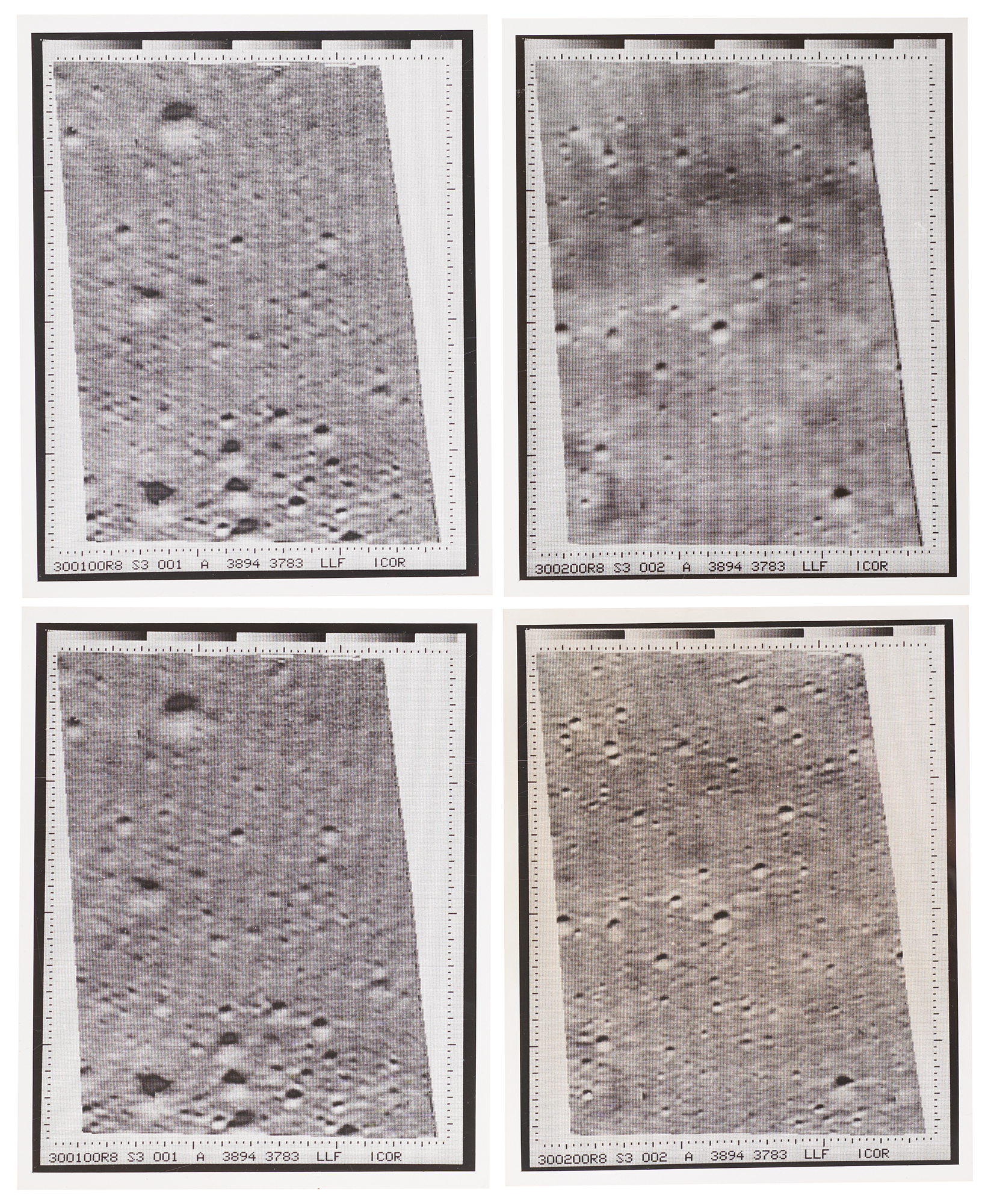
Three-volume ‘photographic edition’ set containing 550 lunar images taken by Ranger impact probes 7, 8, and 9 during the program’s successful Block 3 missions between July 1964 and March 1965. The glossy double-weight photographs, each 11 x 14, are numbered and housed accordingly in their original 11.75 x 14.5 x 4 snap-button slipcases, issued as “Photographs from the Moon” and prepared by NASA and the Jet Propulsion Laboratory at the California Institute of Technology, with each slipcase also including the original information booklet specific to the mission and photographic series. The volumes are as follows:
Ranger VII, Part 2: Camera ‘B’ Series, dated December 15, 1964, containing 200 photographs, each showing a single image of the lunar surface. Also included is the booklet for the “Part 1: Camera ‘A’ Series.’” The Ranger 7 probe reached the moon on July 31, 1964, and during the final 17 minutes of its flight transmitted over 4,300 photographs before impacting at Mare Cognitum, an area between Mare Nubium and Oceanus Procellarum near the lunar equator. Both the Surveyor 3 lander and the Apollo 12 crew landed near its northern shore, with the crew of Apollo 14 landing at an outcrop of the Fra Mauro formation, which is also in close proximity to Mare Cognitum.
Ranger VIII, dated December 15, 1965, containing 180 photographs with tabbed separators marked A, B, and P; each photo showing a single image of the lunar surface. The Ranger 8 probe reached the moon on February 20, 1965, and during the final 23 minutes of flight, transmitted over 7,100 photographs before making impact at Mare Tranquillitatis, or the Sea of Tranquility. After the Surveyor 5 landed there on September 11, 1967, Mare Tranquillitatis served as the historic landing site for the crew of Apollo 11 and the Lunar Module Eagle.
Ranger IX, dated December 15, 1965, containing 170 photographs with tabbed separators marked A, B, and P; each photo showing a single image of the lunar surface. Included with the folder are eight glossy 8 x 10 photos of the lunar surface; the reverse of all but one is stamped with numbers, and three are annotated “SWRF.” The Ranger 9 probe reached the Moon on March 24, 1965, and during the final 20 minutes of flight transmitted over 5,800 photographs before impacting in Alphonsus crater, one of the primary alternate landing sites considered for both the Apollo 16 and Apollo 17 missions.
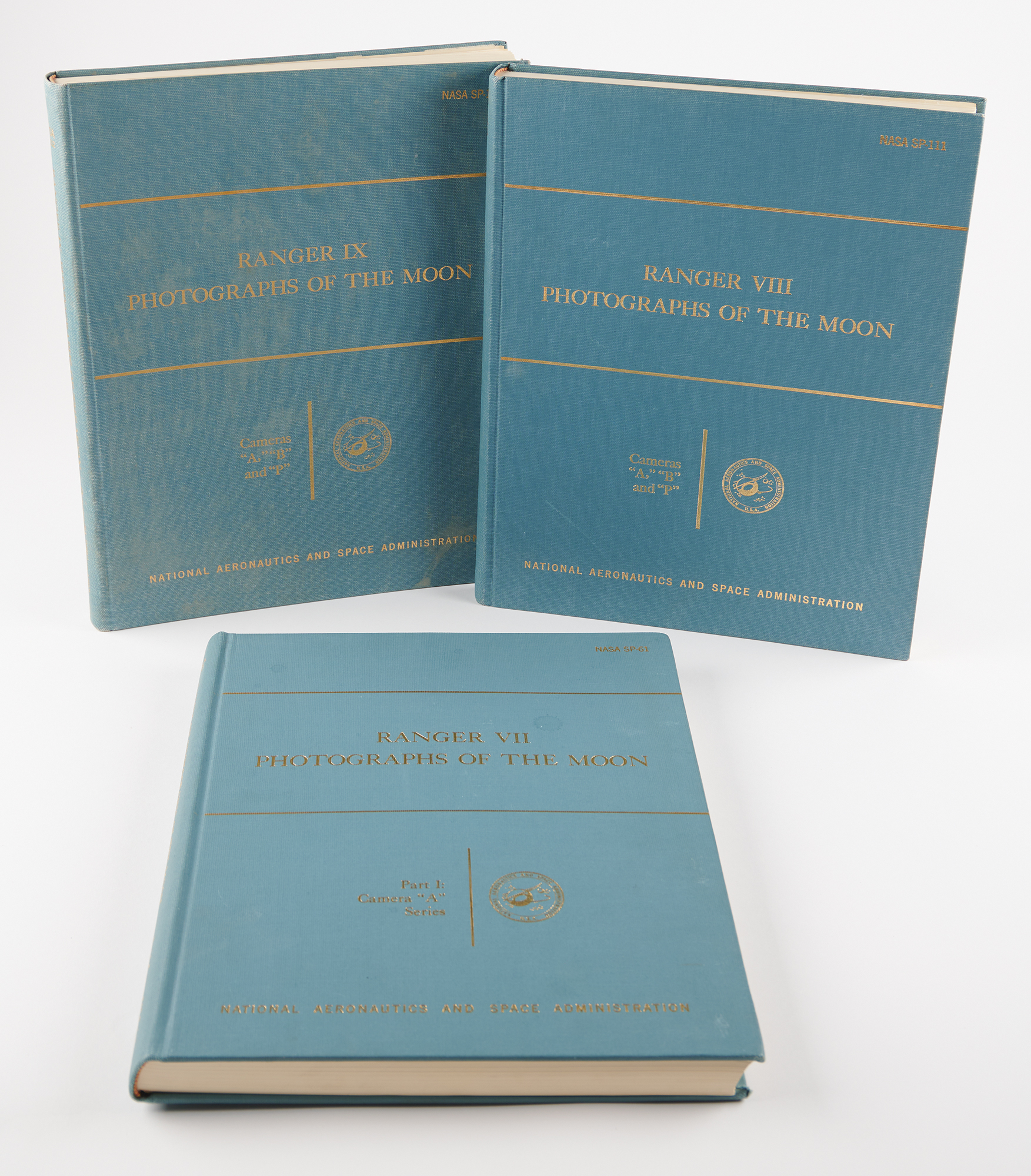
Includes three hardcover NASA photograph books for Ranger probes 7, 8, and 9 — Ranger VII, Photographs of the Moon - Part I: Camera ‘A’ Series (NASA SP-61); Ranger VIII, Photographs of the Moon - Cameras ‘A,’ ‘B,’ and ‘P’ (NASA SP-111); and Ranger IX, Photographs of the Moon - Cameras ‘A,’ ‘B,’ and ‘P’ (NASA SP-112).
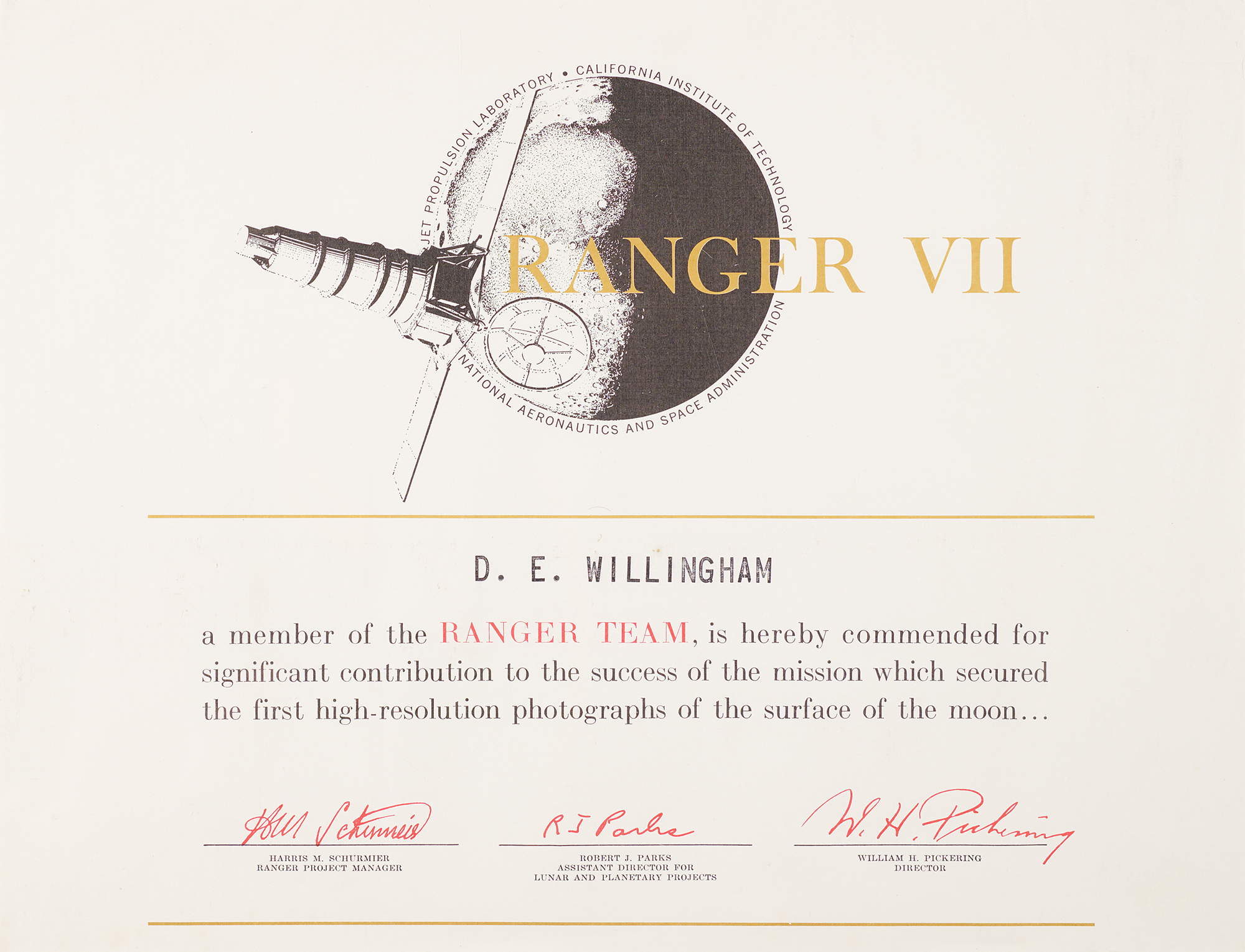
In overall fine to very good condition, with only a handful of photos exhibiting wear or creasing; some staining to booklets and hardcover books; and scattered soiling and wear to slipcases, namely some splitting to the binding of Ranger VII. Accompanied by a ‘Ranger VII’ certificate of commendation presented to “D. E. Willingham, a member of the Ranger Team,” who is “commended for significant contribution to the success of the mission which secured the first high-resolution photographs of the surface of the moon.”
In the early 1960s, NASA developed the Ranger program and a series of impact probes designed to take high-quality pictures of the moon and then transmit them back to Earth. They were programmed to head directly to the moon and capture close-range images before crashing into the lunar surface; the images were used primarily for scientific study, as well as for selecting landing sites for the forthcoming Apollo missions. After failed attempts on the first six spacecraft, the Block 3 missions of Rangers 7, 8, and 9 proved remarkably successful, with transmitted images 1000 times better than those attained by Earth-based telescopes. A superb assemblage of lunar photography deriving from the program that helped lay the foundation for the Apollo program.
Donald E. Willingham was a NASA Jet Propulsion Laboratory (JPL) scientist and engineer who played a key role in early lunar exploration, including the Ranger and Surveyor missions. He contributed to the first successful moon photography (Ranger), soft-landing technology (Surveyor), and later worked on Pioneer, analyzing ultraviolet data to measure hydrogen/helium ratios.