The 30 Minute Rule begins April 23 at 7:00 PM EDT. An Initial Bid Must Be Placed By April 23 at 6:00 PM EDT To Participate After 6:00 PM EDT
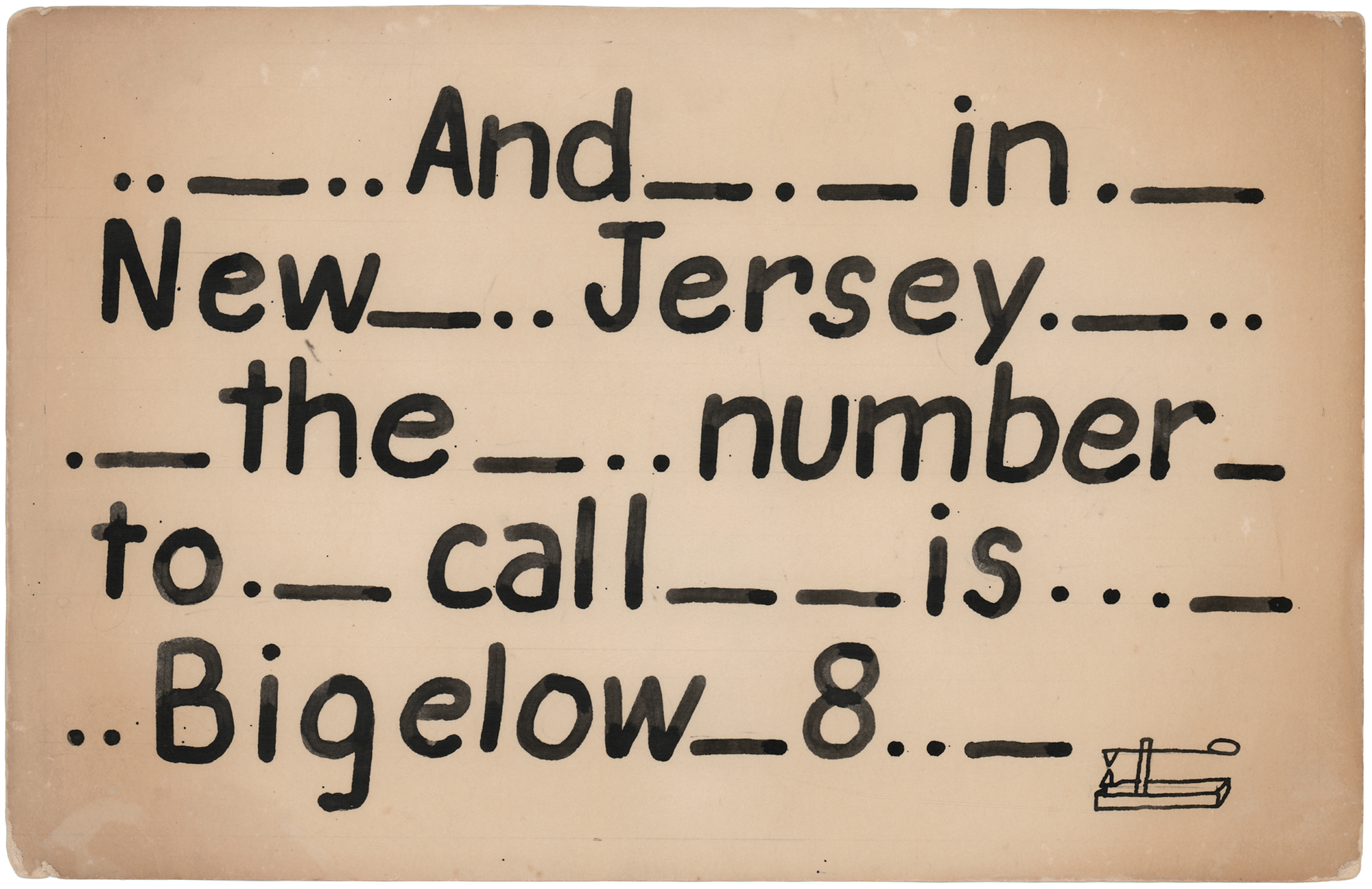
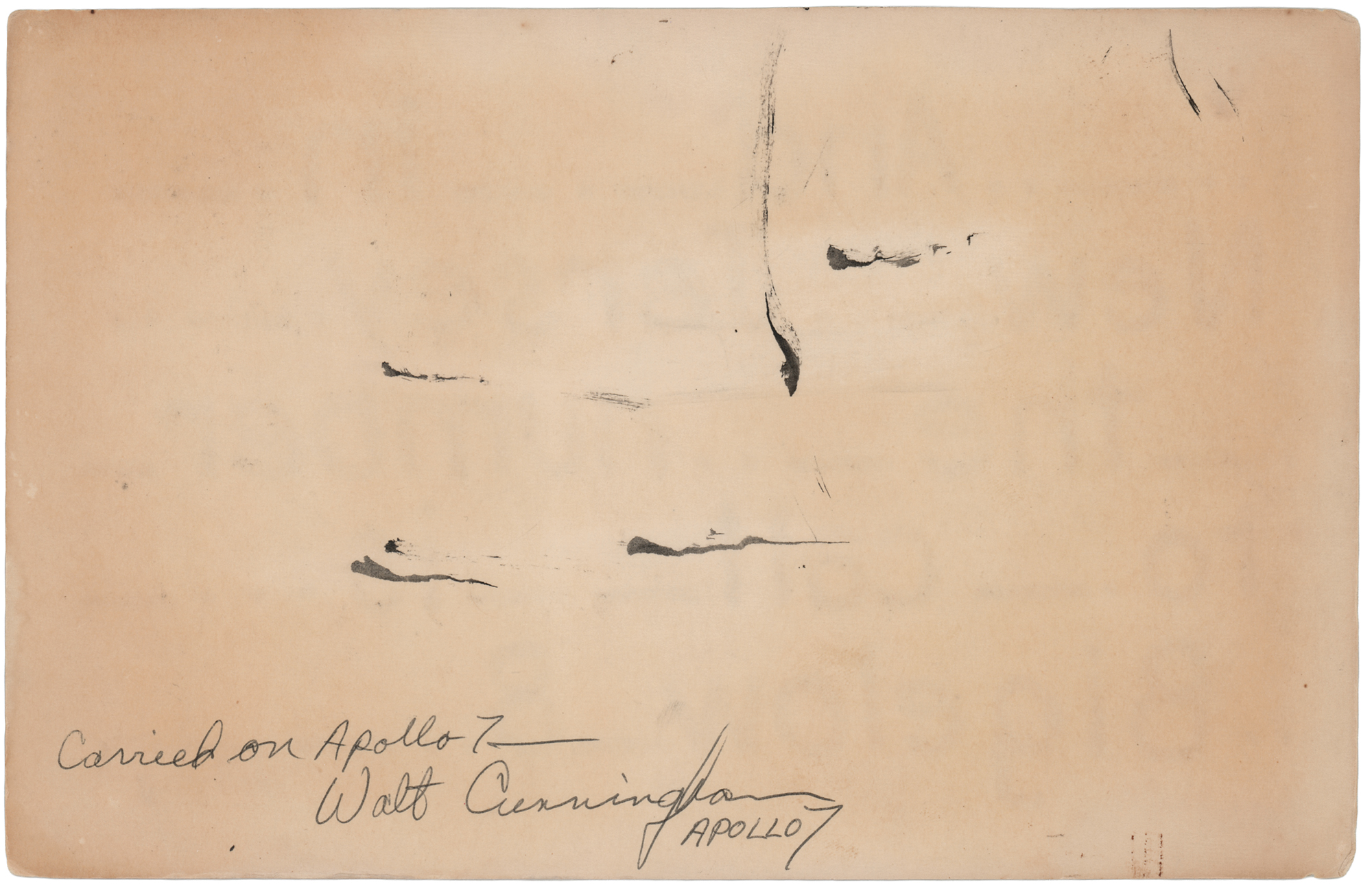
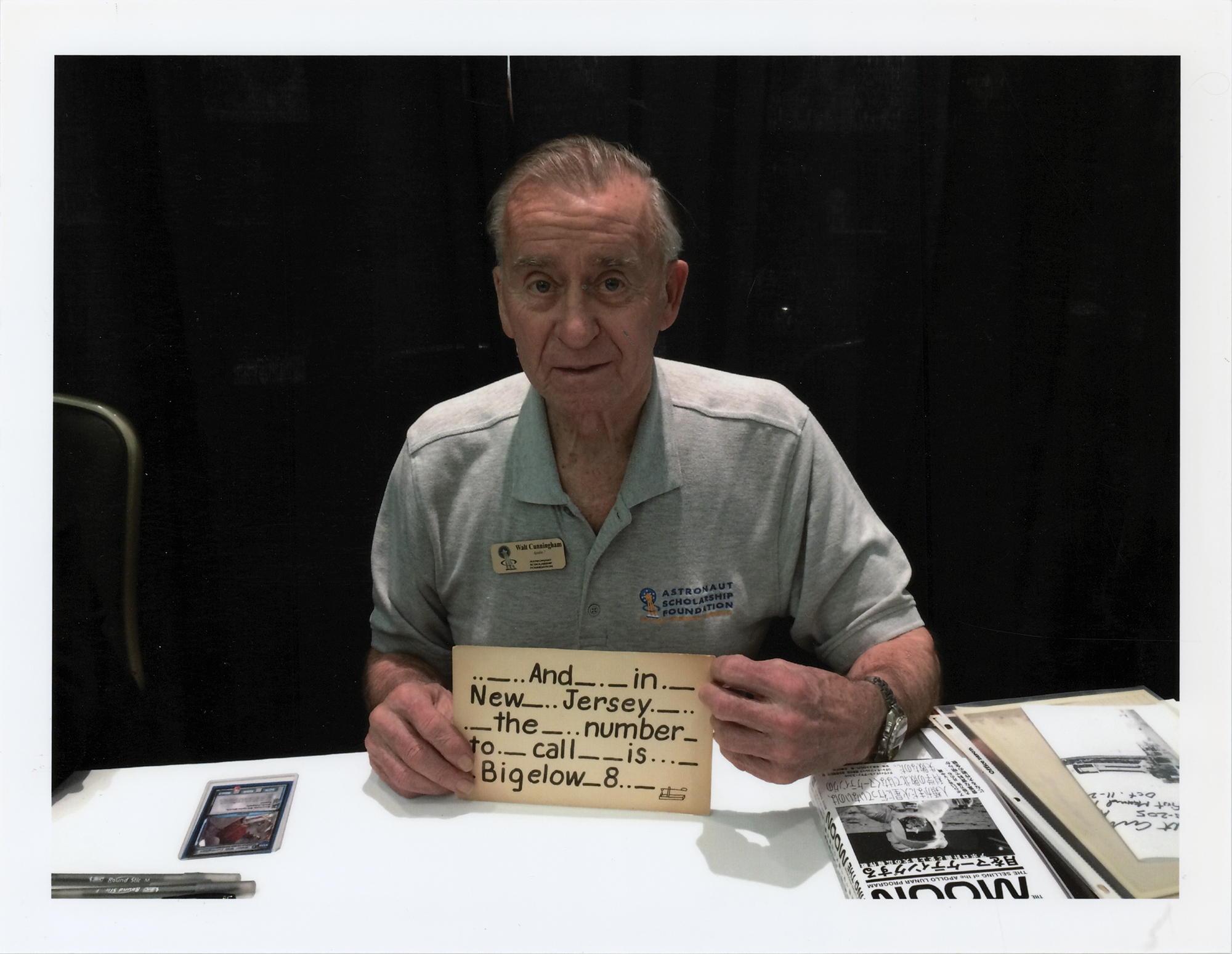
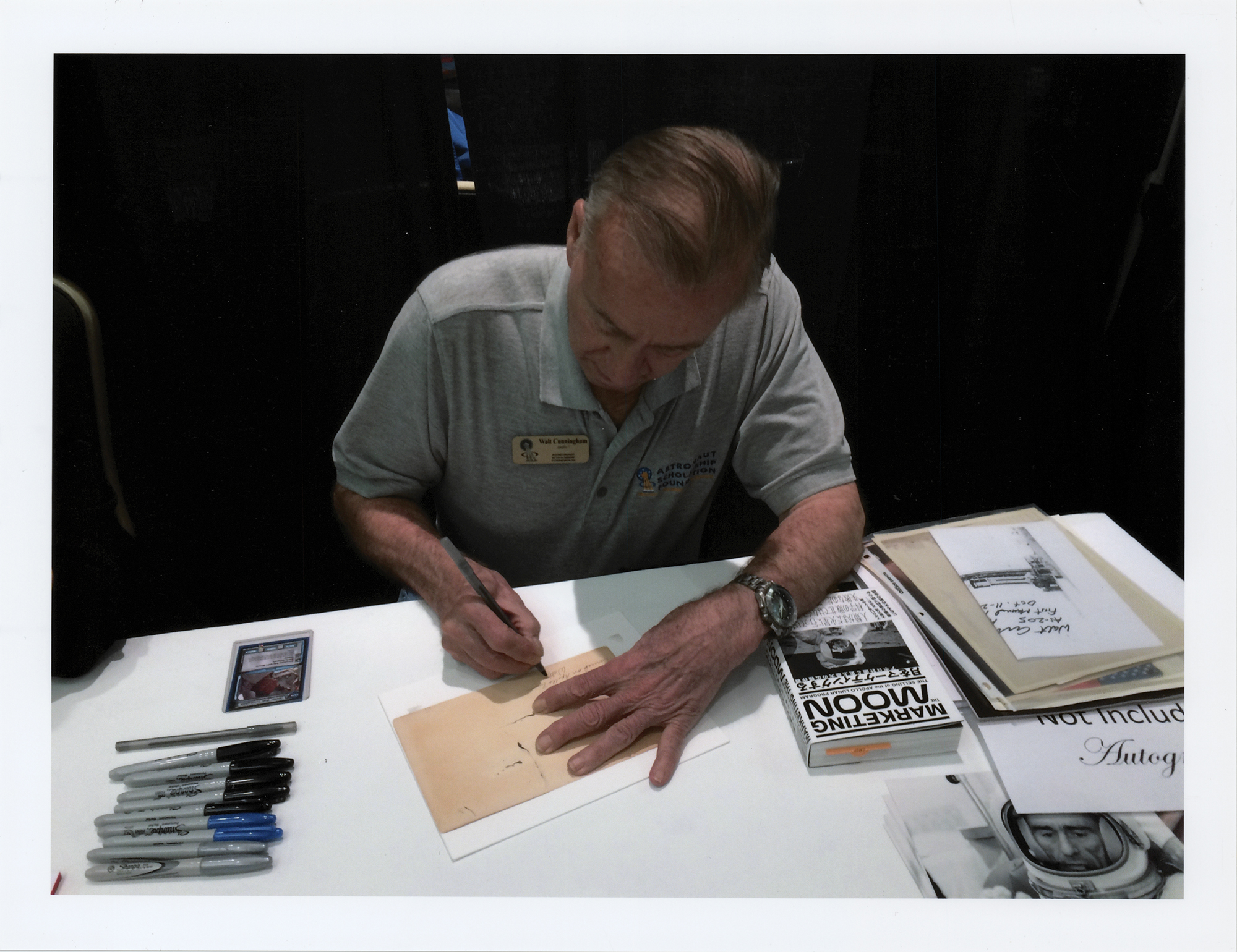
Flown television cue card from the historic flight of the Apollo 7 mission, which transmitted the first live television broadcast aboard a crewed American spacecraft on October 14, 1968. The cue card, 8.5 x 5.5, which features a blend of English text and Morse code in black felt tip, and reads: “._. And _._ in ._ New _. Jersey ._…_ the _. Number _ to ._ call _ _ is …_. Bigelow _ 8 _ ._,” with the lower left corner featuring a small sketch of a telegraph sounder. The reverse is signed and flight certified in black ballpoint, “Carried on Apollo 7, Walt Cunningham, Apollo 7.” In fine condition, with some light toning. Accompanied by two modern photo prints of Cunningham holding and signing the offered flown cue card.
The historic Apollo 7 mission set the gold standard for all future space flights when it launched from Cape Canaveral on October 11, 1968. The mission was marked with a series of successful ‘firsts,’ including the premiere of a three-man crew, the debut launch of a Saturn IB rocket, the first full test of the Command and Service Module (CSM) in orbit, and the first live television broadcast from an American spacecraft. Throughout the 11-day mission, there were a total of seven live television broadcasts from the spacecraft, which were later collectively dubbed as The Wally, Walt, and Donn Show. These record-breaking TV transmissions, which provided viewers on Earth with live footage and commentary from the crew, were must-see events for an American public still reeling from the Apollo 1 tragedy.
For the broadcast to happen, the Apollo 7 spacecraft was equipped with an RCA black-and-white slow-scan TV camera. Because the craft remained in Earth’s orbit, television transmissions were limited to the few minutes that they were in range of the MSFN tracking stations at Corpus Christi in Texas and Merritt Island in Florida; these stations were the only ones equipped with early versions of the RCA scan converter, which converted the slow scan TV to U.S. commercial standard television.
With tens of millions watching, the first broadcast aired on October 14, 1968, and allowed viewers their first glimpse inside the cabin of an Earth-orbiting spacecraft. As a way of inserting some creative humor into the event, the astronauts prepared cue cards for the home audience to read. Before the fifth TV broadcast, CDR Schirra made a prophetic comment that the crew was ‘going to try for an Emmy for the best weekly series.’ Indeed, in 1969, the Apollo 7 crew of Wally Schirra, Walt Cunningham, and Donn Eisele received a special Emmy Award for their epic TV transmissions from space.