The 30 Minute Rule begins April 23 at 7:00 PM EDT. An Initial Bid Must Be Placed By April 23 at 6:00 PM EDT To Participate After 6:00 PM EDT
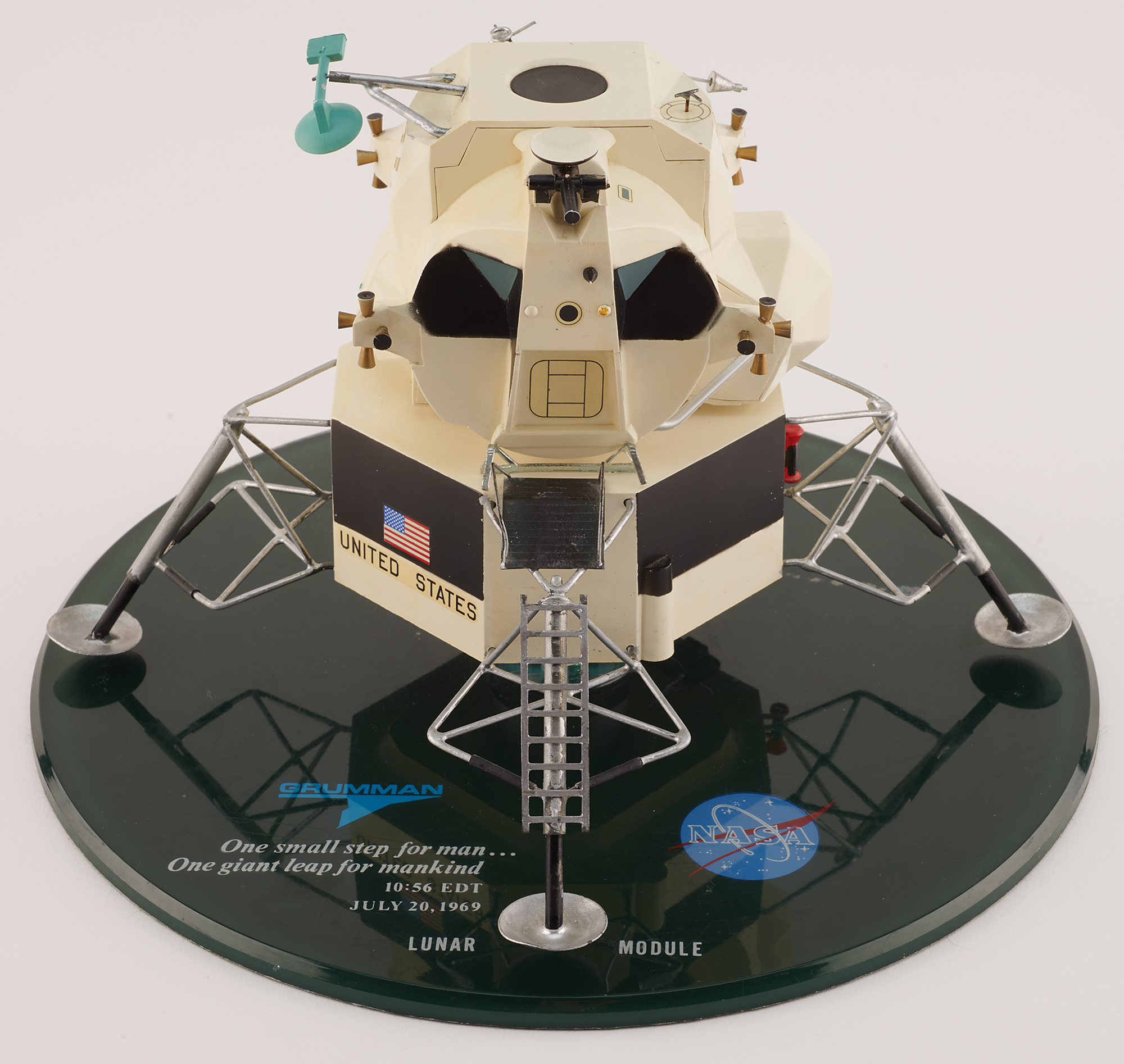
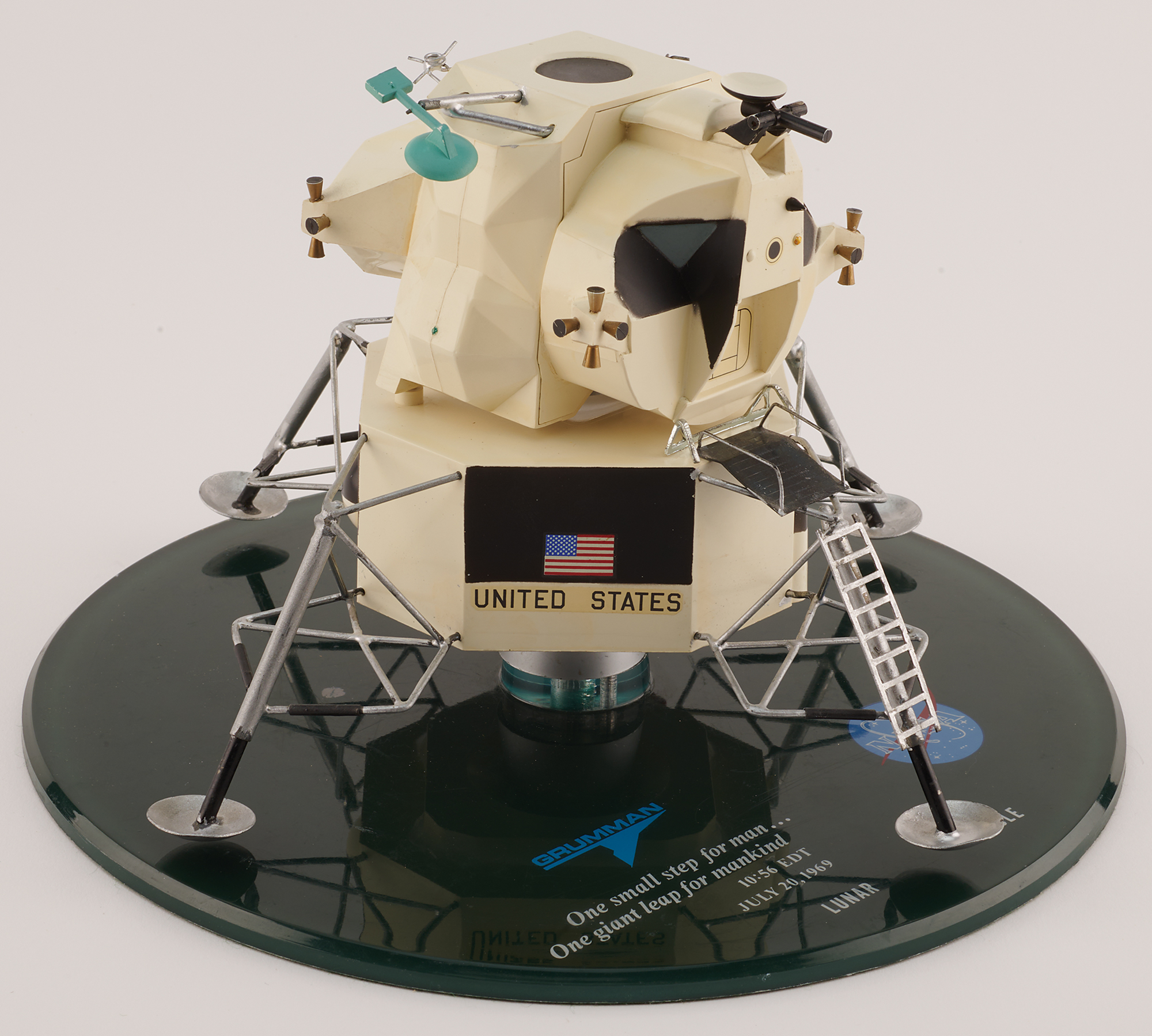
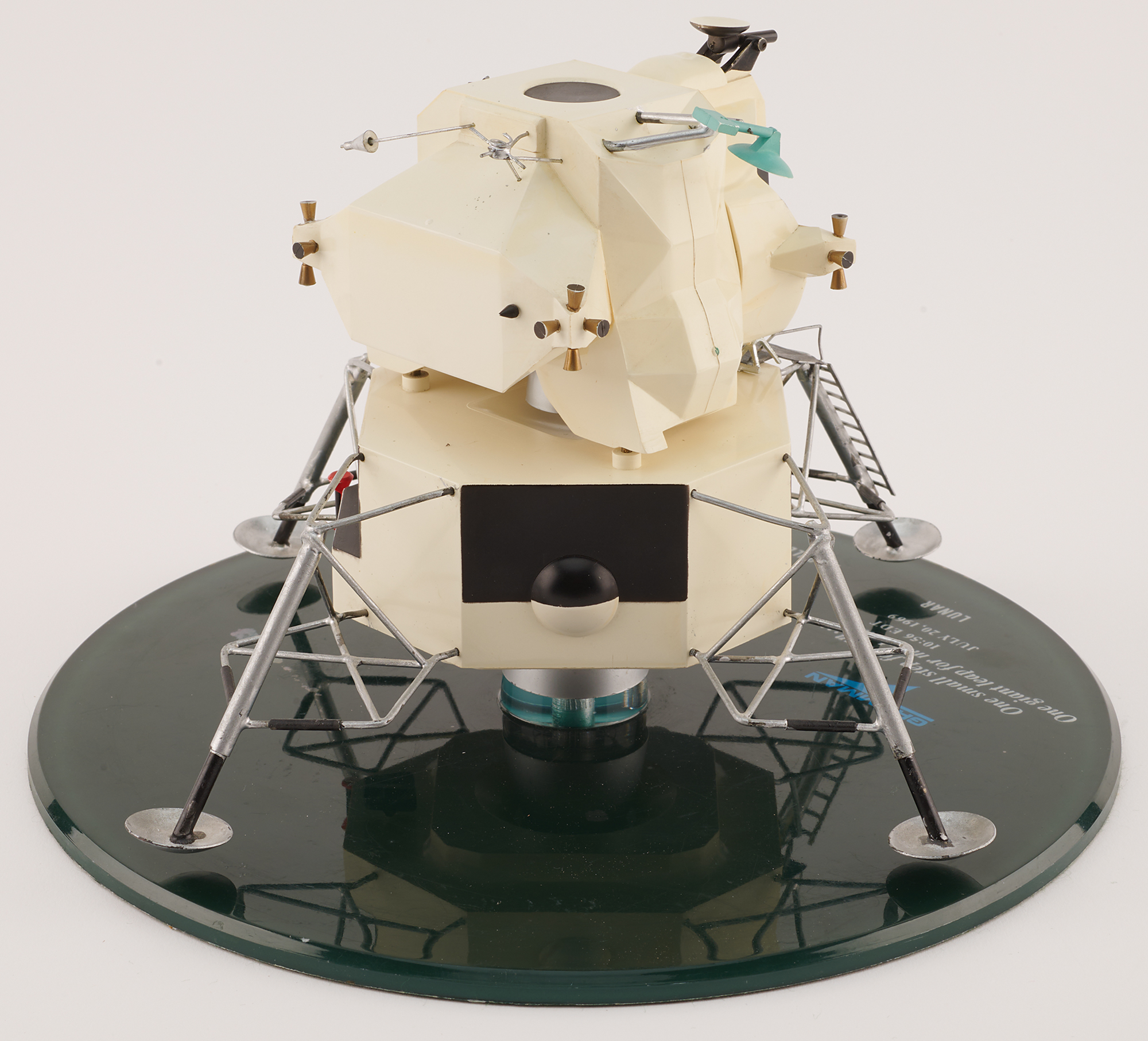
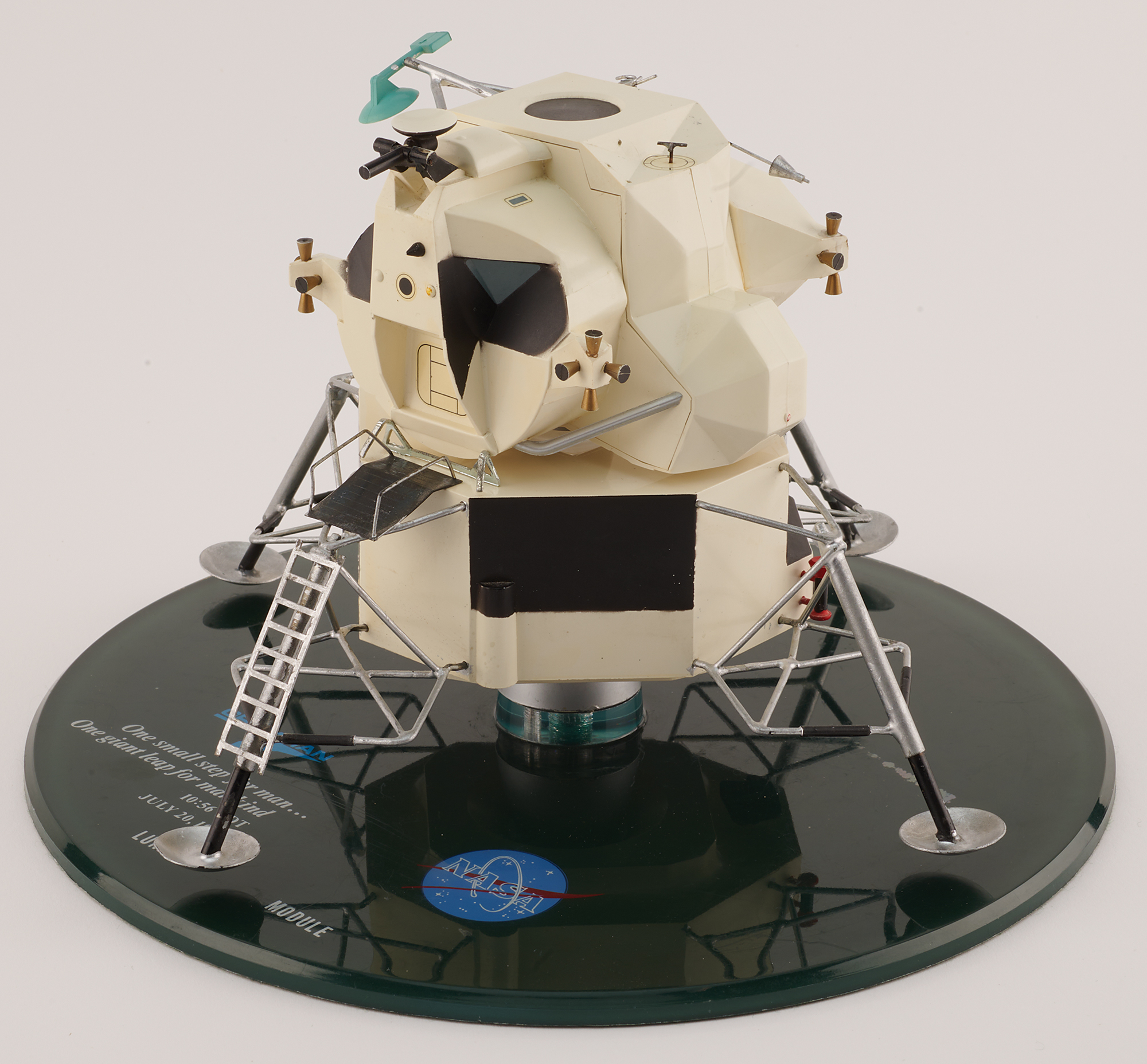
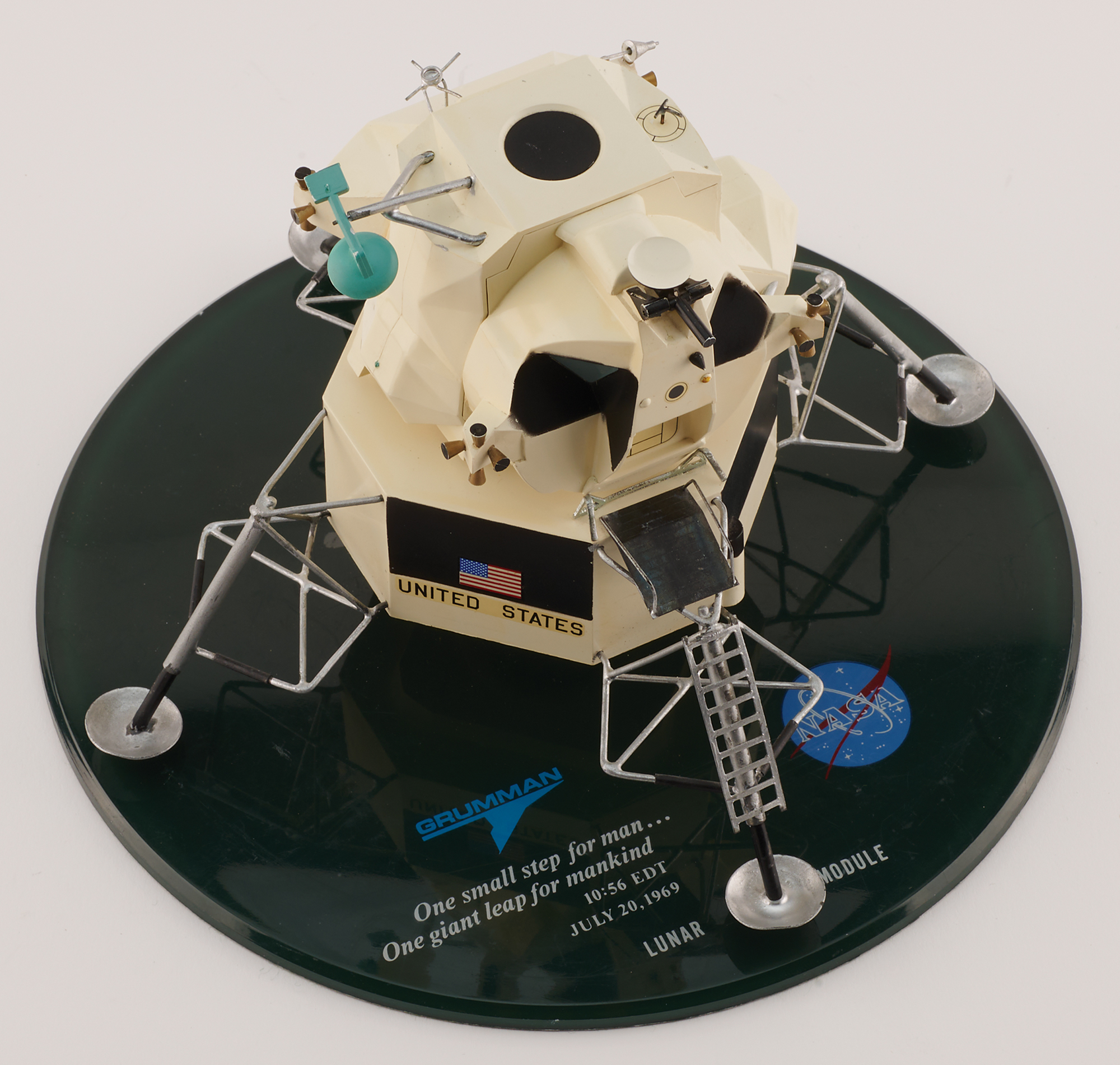
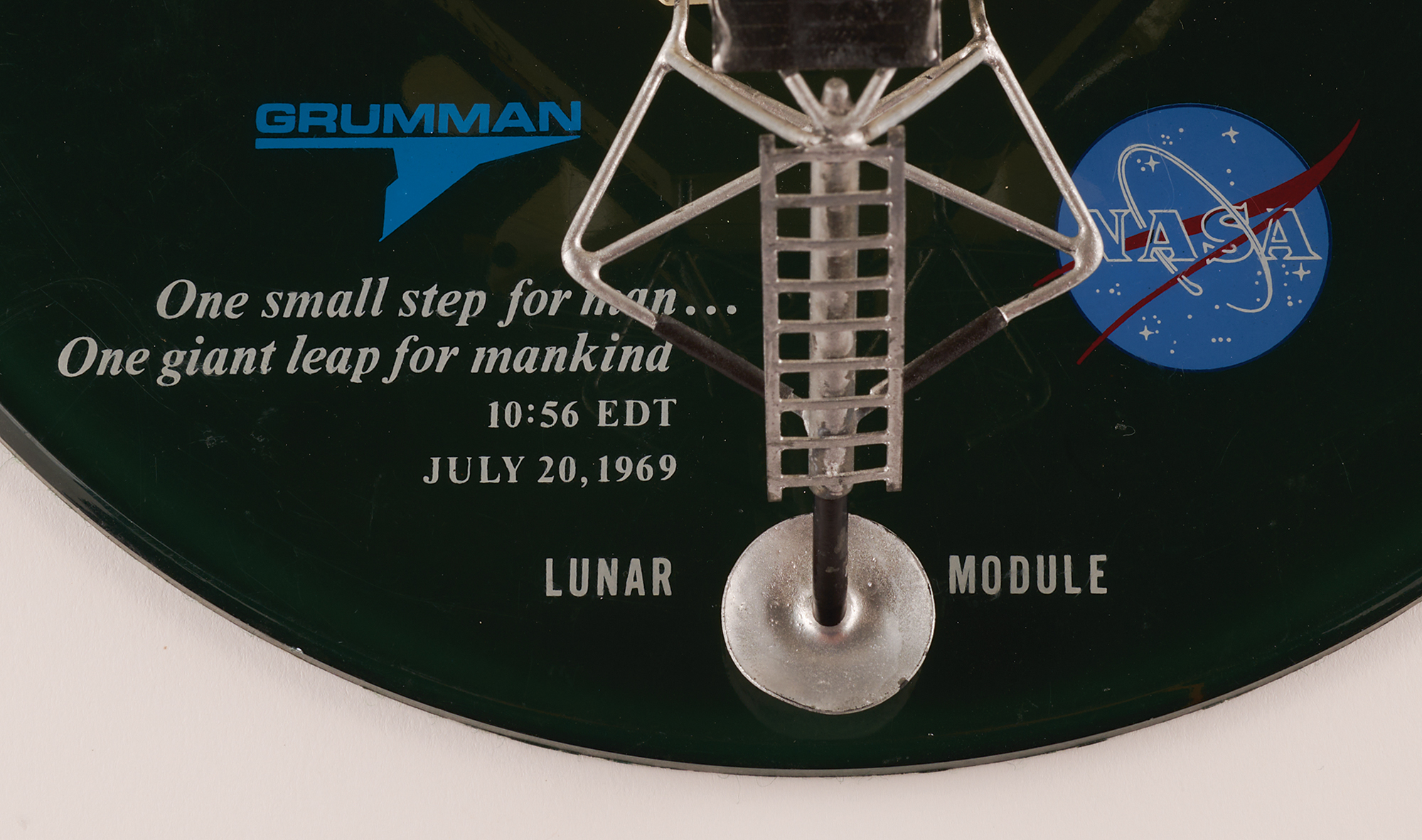
Vintage Apollo lunar module contractor’s model, made of injection-molded plastic and measuring approximately 6.5" tall and 10" across. The two-piece LM is removable from the base, separates into ascent and descent stages, and has numerous tiny projecting parts. Includes the original 10.25" diameter black base, with color logos of both Grumman and NASA, as well as the text "Lunar Module" printed near the edge; this particular base also features an uncommon quote from Apollo 11 Commander Neil Armstrong: “One small step for man…One giant leap for mankind, 10:56 EDT, July 20, 1969.” In fine condition, with some wear to paint and stickers, and one of the VHF antennas is missing.
From the collection of Leopold DeMarinis, an engineer in Grumman’s Mechanical Systems Department (Bethpage, NY) from 1961–1973. He helped design the simulator for the first lunar module used by John Glenn and others, later created an air table to simulate outer space conditions for instruments, and ultimately contributed to the mechanical construction and design of the Lunar Excursion Module’s attitudinal jets (cone-shaped landing rockets), used on Apollo 11’s 1969 moon landing and all subsequent Apollo missions. Accompanied by a copy of the book The Feathers of Fortunato, written by his daughter, which details the life and career of DeMarinis.
Below are a few amusing quotes from DeMarinis, recalling his time at Grumman:
‘We were sitting around the lunchroom trying to figure out a landing gear issue, when someone got frustrated and squashed his Coke can flat under his foot. That's it! Aluminum was the perfect material…lightweight, and collapsible. Then we had to overcome the problem of cutting a sheet of aluminum into a round shape without destroying it. My team came up with the idea of making an aluminum honeycomb that could be filled with water and then frozen. After we cut the tube shapes we needed, we just melted the water out. Voila!
Another time, we were struggling with an idea for material to use as an emergency food source in case the astronauts got stranded on the moon while awaiting a rescue mission. One guy mentioned that his baby's pabulum had to be scraped off the floor after being missed in the prior night's kitchen clean-up. He said it was as hard as a pegboard. From that idea sprung the sheets of baked oatmeal and graham crackers that could be drilled and used as instrument panels on board. That concoction never got off the ground with a mission, but I thought it was spectacular.
My greatest claim to fame, however, came along by accident. When the astronaut's spacesuit was to be tested, they brought in a Naval Air Pilot. These guys were usually small-framed for their job. So, when the spacesuit was inflated, the helmet's neck ring kept rising up to his chin. Grumman scrambled to find a guy who would be the perfect fit. Amazingly, my measurements were the perfect fit, and I was the one they picked to be the first to wear the astronaut's spacesuit, fully inflated, and climb up the ladder and through the lunar module hatch. I guess you could say I got it ready for Neil Armstrong.’