The 30 Minute Rule begins April 23 at 7:00 PM EDT. An Initial Bid Must Be Placed By April 23 at 6:00 PM EDT To Participate After 6:00 PM EDT
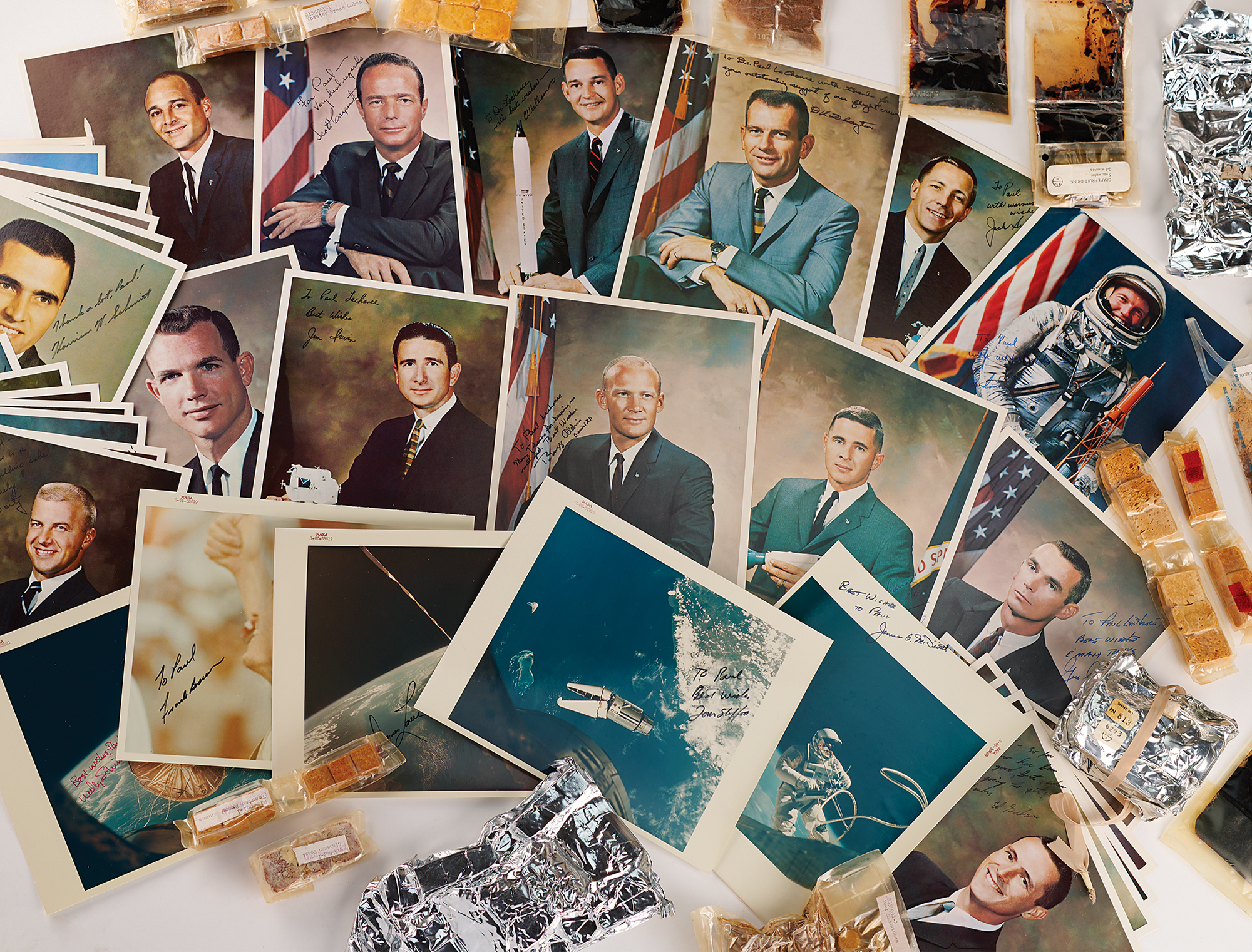
Exceptional archive of early NASA astronaut-signed photographs and Gemini- and Apollo-era space food packages from the estate of Rev. Dr. Paul A. Lachance, NASA’s first Flight Food and Nutrition Coordinator and architect of the Gemini and Apollo food systems. In that role, Lachance established the strict microbiological and nutritional standards that safeguarded astronauts in space and laid the groundwork for the HACCP food safety system now used worldwide.
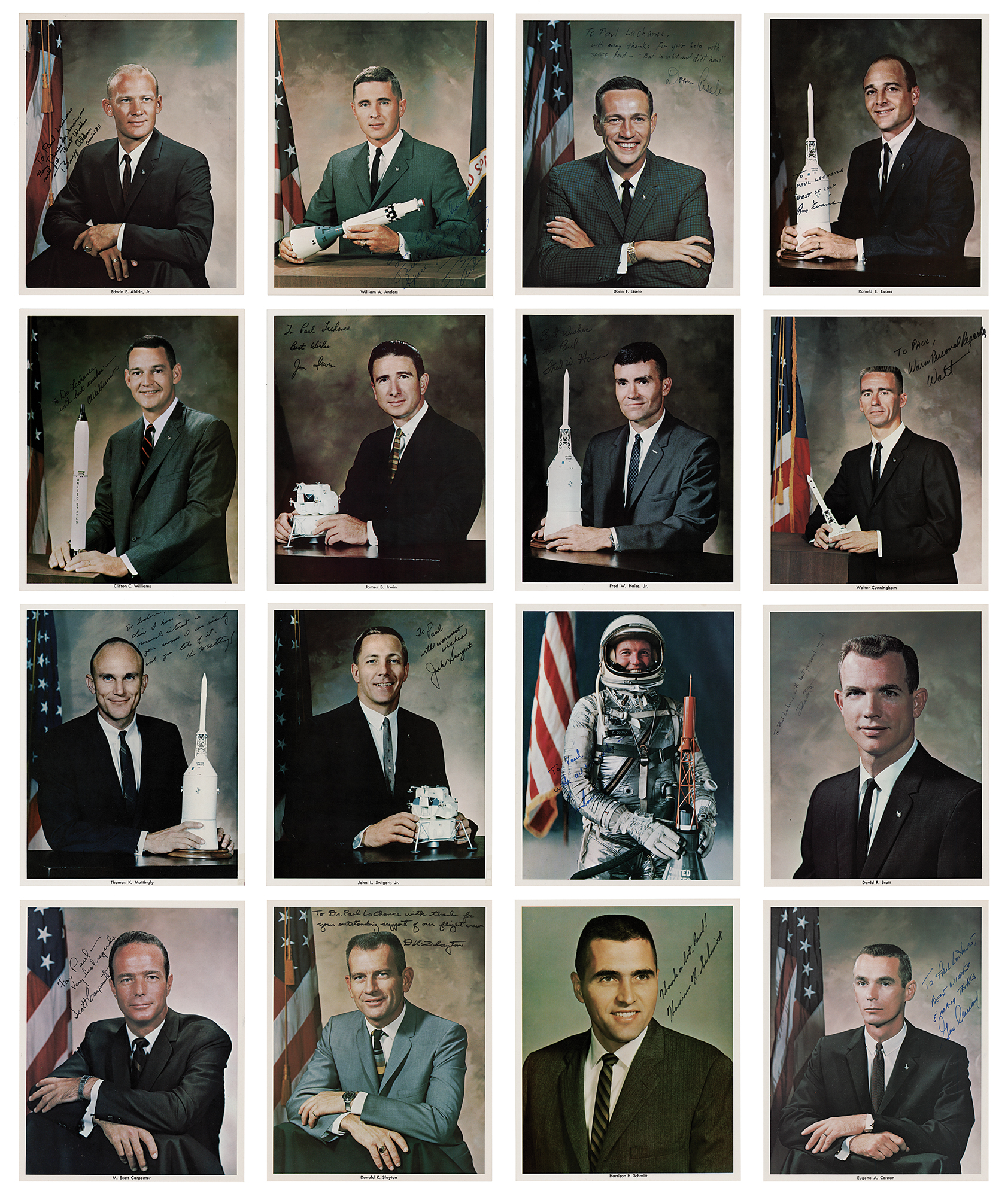
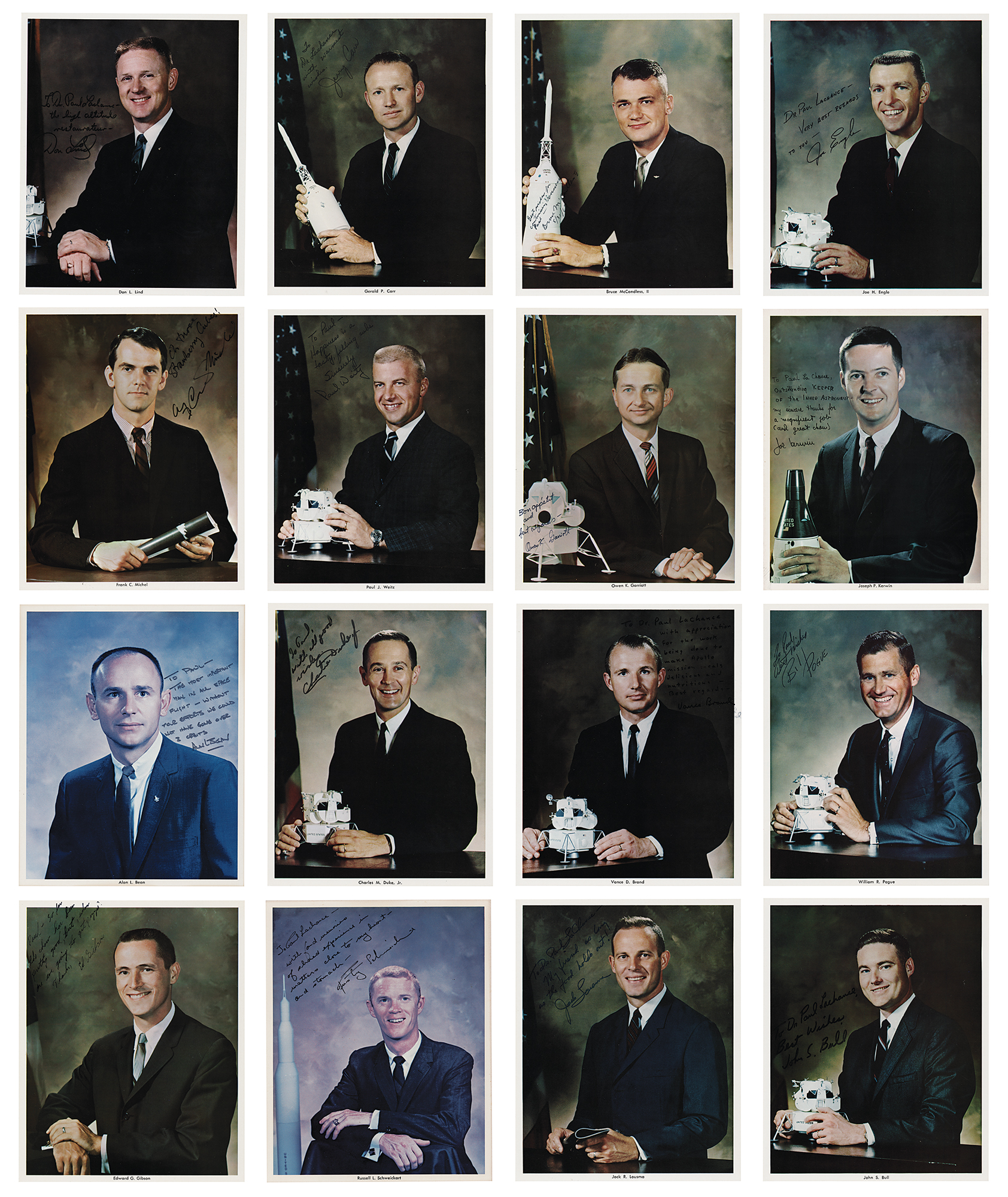
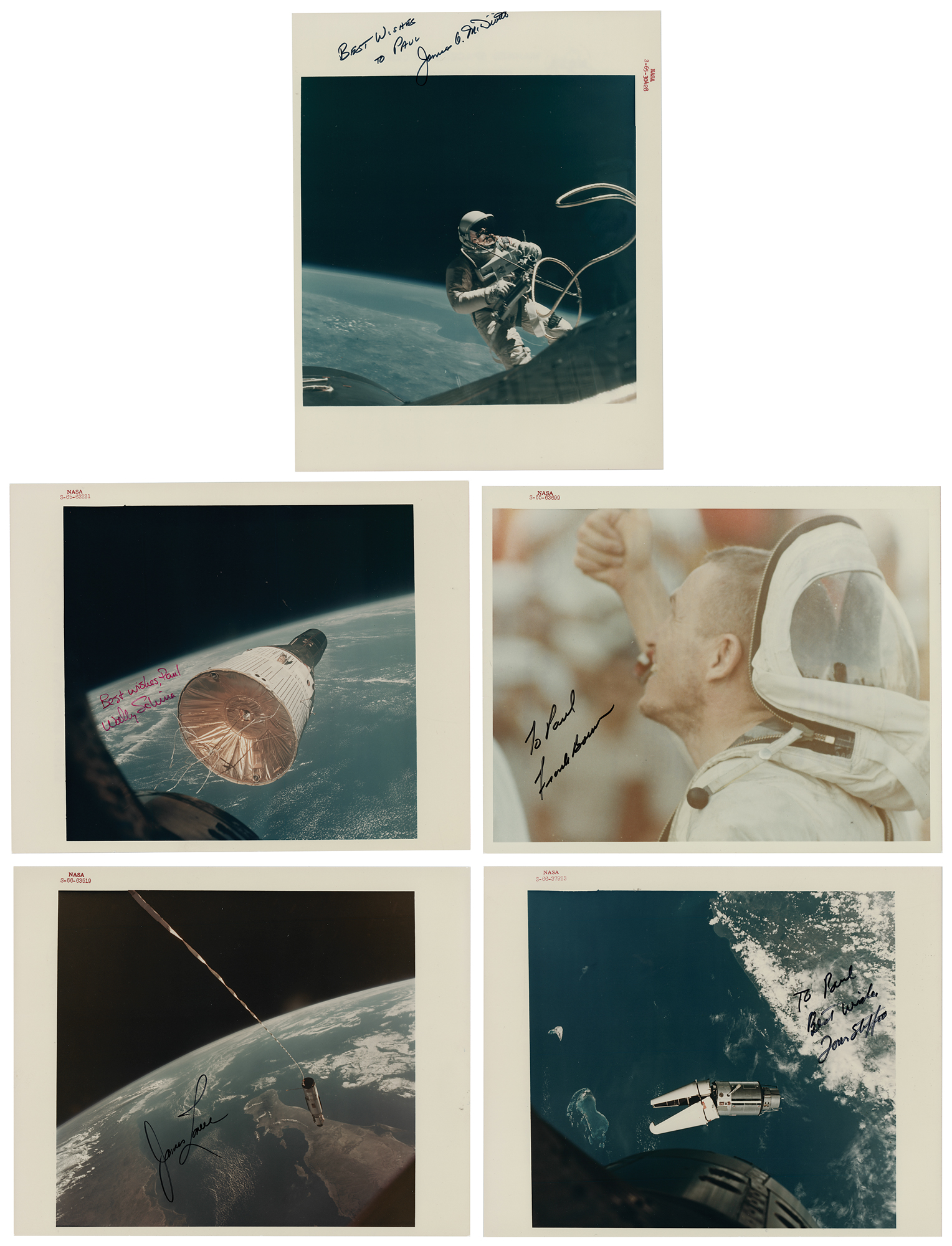
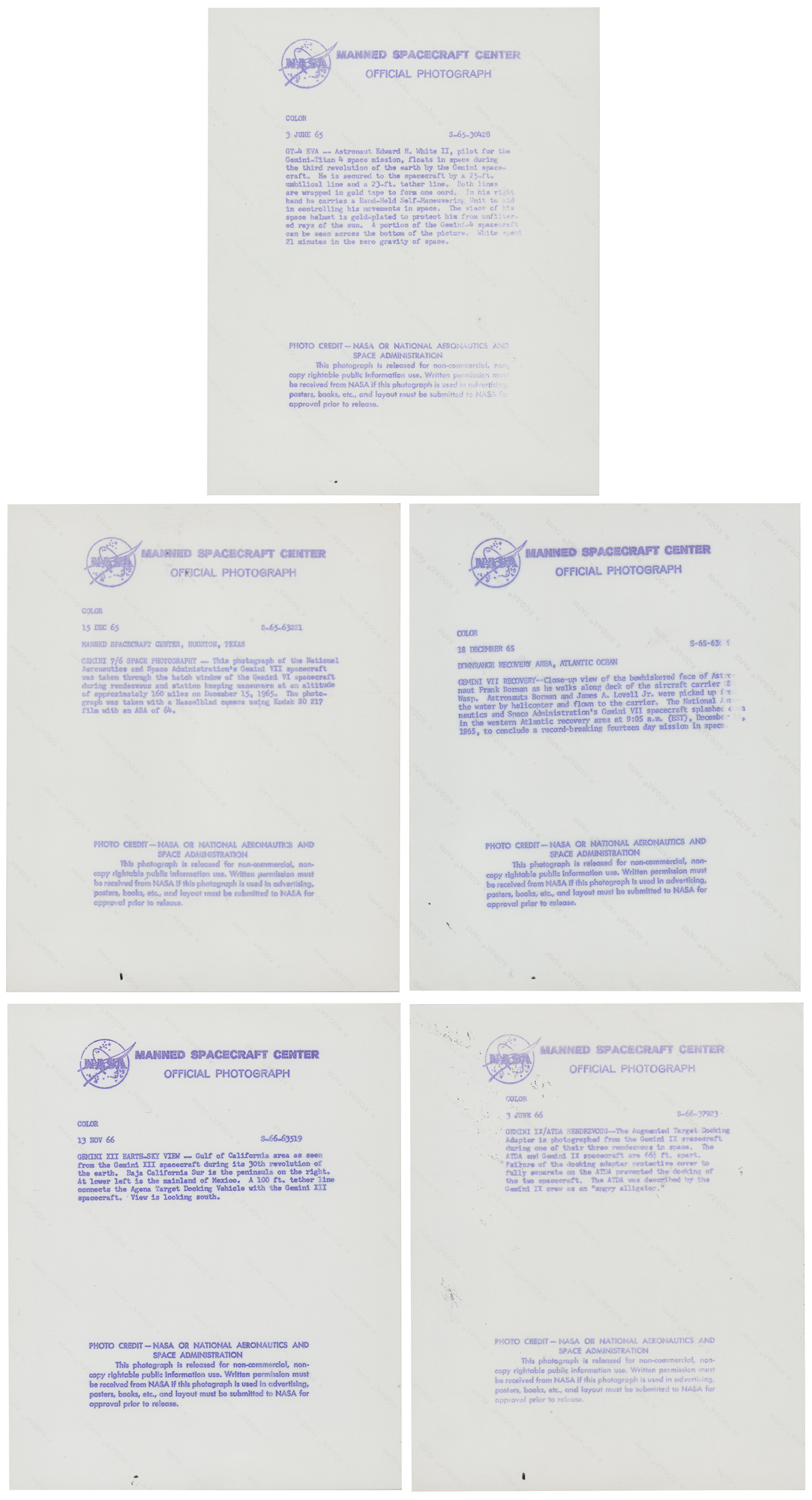
The archive features 37 vintage NASA color lithographs and photographs (8 x 10 and 10 x 8), individually signed and inscribed to Lachance by nearly 40 astronauts from the Mercury, Gemini, Apollo, Skylab, and early Shuttle eras. Of these, 32 are early NASA portrait lithographs, with the balance comprised of official glossy red-numbered ‘Type 1’ photographs bearing the appropriate NASA identifiers on the reverse. The signees, by format, are as follows (alphabetical):
Early NASA portraits
Buzz Aldrin, Bill Anders, Alan Bean, Vance Brand, John S. Bull, Scott Carpenter, Jerry Carr, Gene Cernan, Gordon Cooper (Mercury space suit), Walt Cunningham, Charlie Duke, Donn Eisele, Joe Engle, Ron Evans, Owen K. Garriott, Ed Gibson, Fred Haise, Jim Irwin, Joe Kerwin, Don Lind, Jack Lousma, Ken Mattingly, Bruce McCandless II (dated May 31, 1967), Curt Michel, Bill Pogue, Harrison Schmitt, Rusty Schweickart, Dave Scott, Deke Slayton, Jack Swigert, Paul Weitz, and Clifton Williams.
Red-numbered
Frank Borman, James Lovell, Jim McDivitt, Wally Schirra, and Tom Stafford
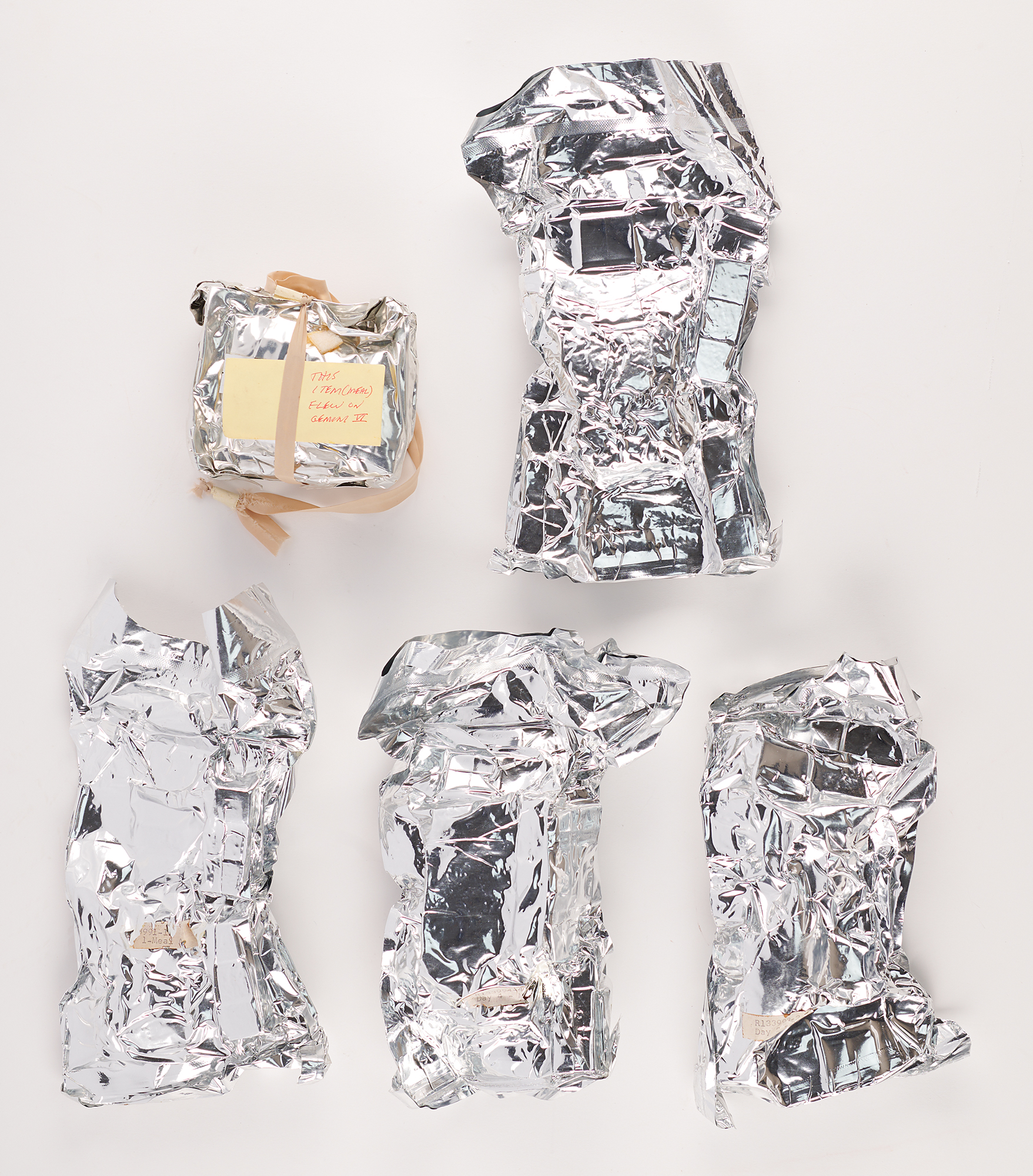
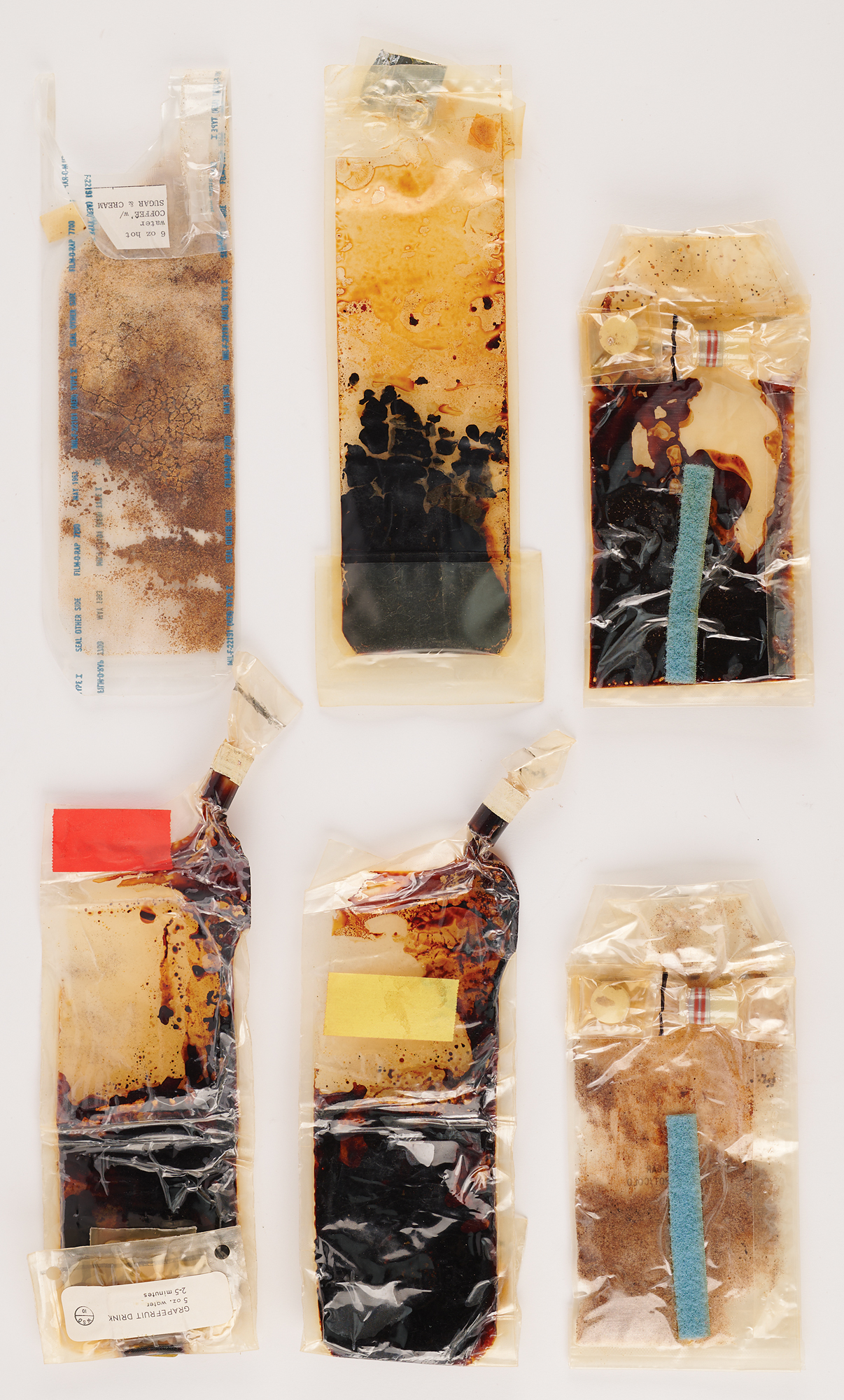
The archive is complemented by the rare presence of 22 packets of NASA-issued space food and beverage approved for use under the guidance of Lachance as Flight Food and Nutrition Coordinator, a group highlighted by a 4˝ x 3.5˝ x 2.25 package labeled “Day-7 Meal-C,” which the consignor states accompanied Wally Schirra and Tom Stafford on the Gemini 6 mission (December 15-16 1965); the reverse bears an affixed Velcro swatch and two parts labels: “Serial No. FN 813” and “6293, WDP/11,” the latter a quality assurance stamp by the Whirlpool Space Division.
The remaining packages, which range in size from 3.5˝ x 1.5˝ to 13.5˝ x 3.5˝, contain sundry meals and/or food and beverage options, with the majority retaining portions of their original label. The first four, which feature the same style Gemini-era laminate pouch as above, bear the following labels: “…991-1, [Da]y 1 - Meal A,” “R133993-2, Day 2 - Me[al],” “R133994-2, Day 2 - Meal D,” and “R133994-4, Day 4- M[eal].”
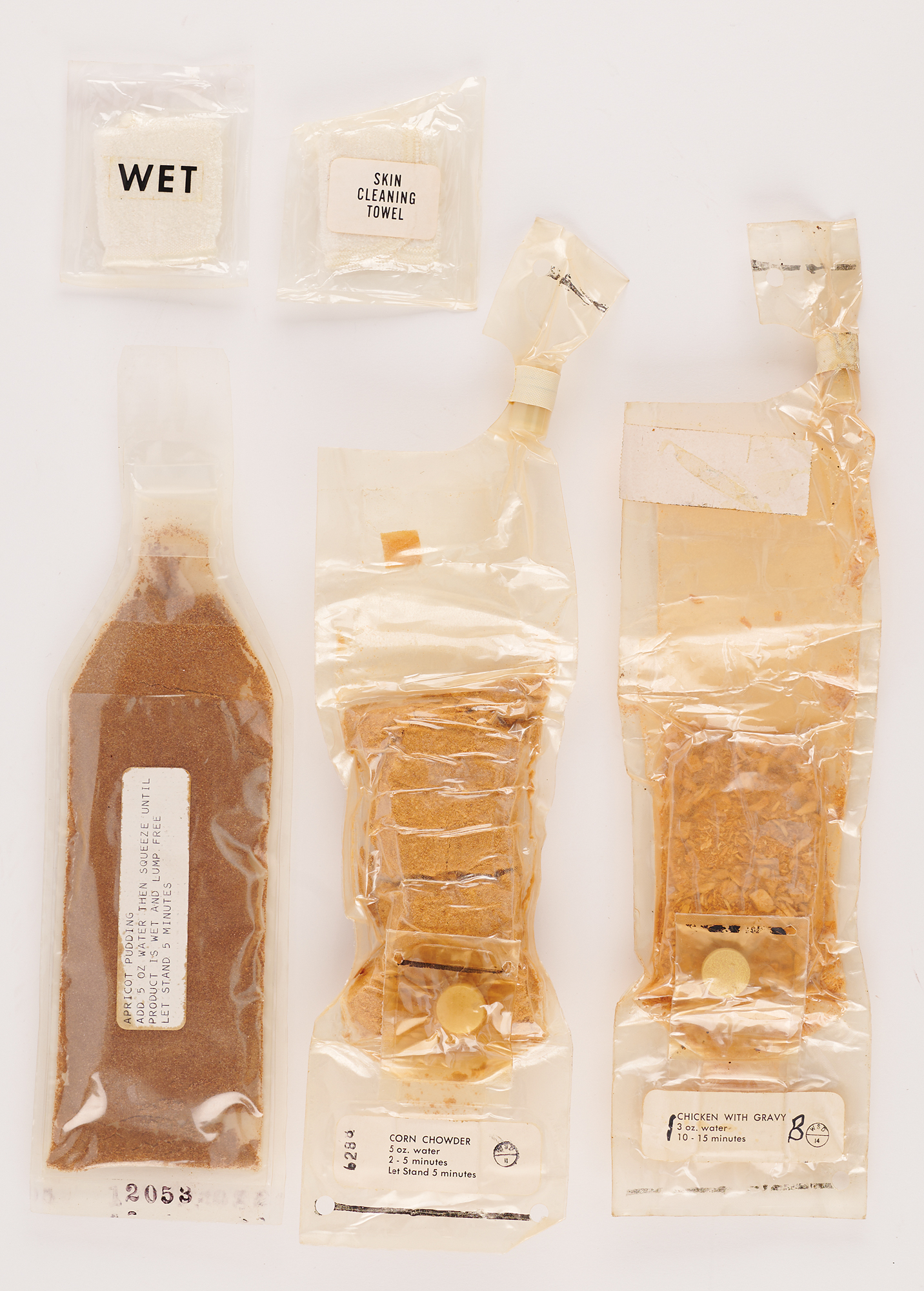
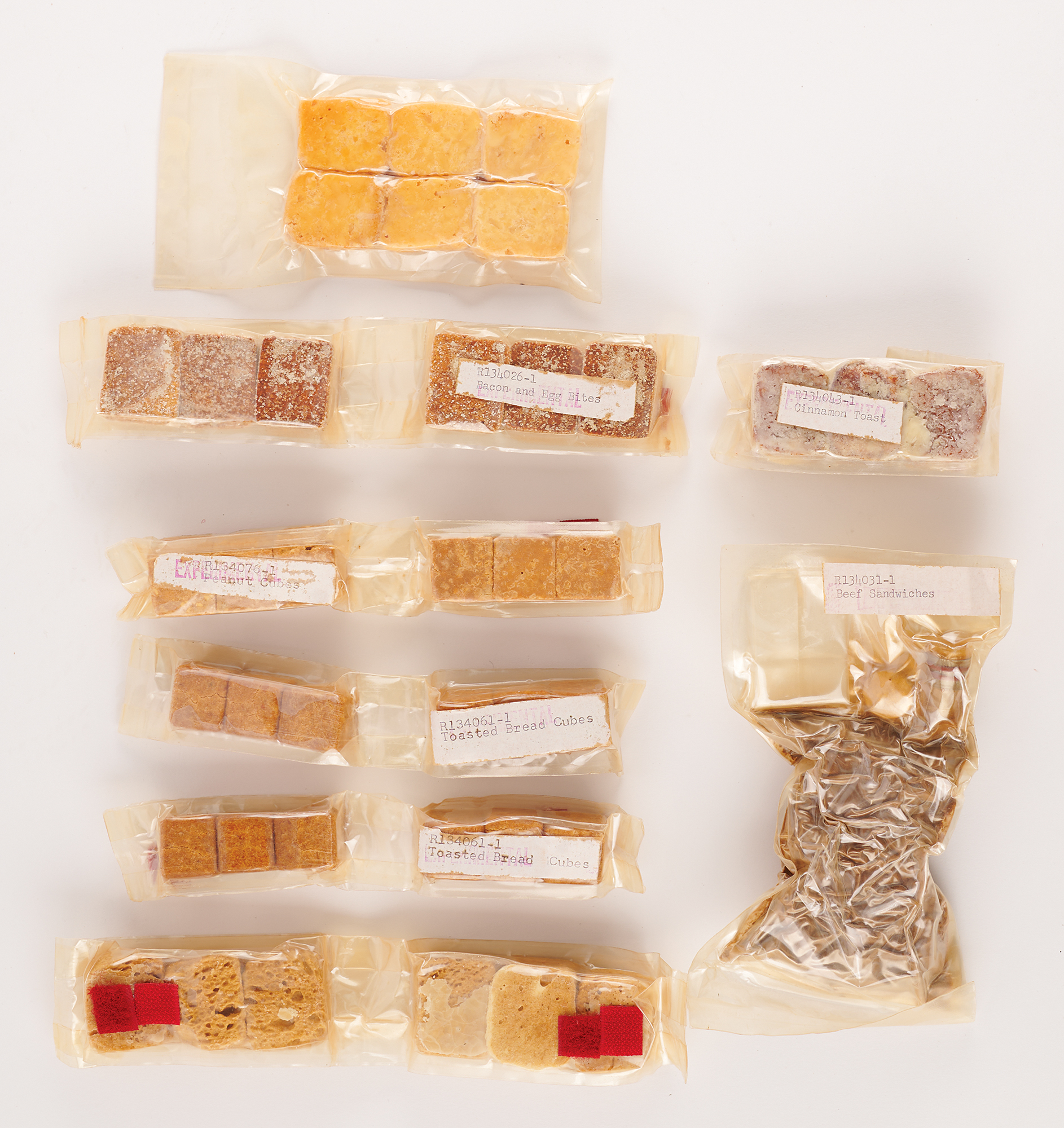
Labels to six early Apollo-era food packages are stamped “Experimental,” and contain the following: “Toasted Bread Cubes” (2), “Bacon and Egg Bites,” “Peanut Cubes,” “Beef Sandwiches,” and “Cinnamon Toast.” The remaining food/beverage labels read: “Apricot Pudding,” “Chicken with Gravy,” “Corn Chowder,” “Tea and Sugar,” “Pineapple Juice,” “Orange Grapefruit Drink,” “Grapefruit Drink” (2), and “Coffee w/ Sugar & Cream.” Several packages bear serial numbers and/or affixed Velcro swatches. Also included are sealed packages of ‘Skin Cleaning Towels.’ In overall fine condition, with a swatch of tape to the lower right corner of the Mattingly and Swigert lithos, and two food packages missing their labels.
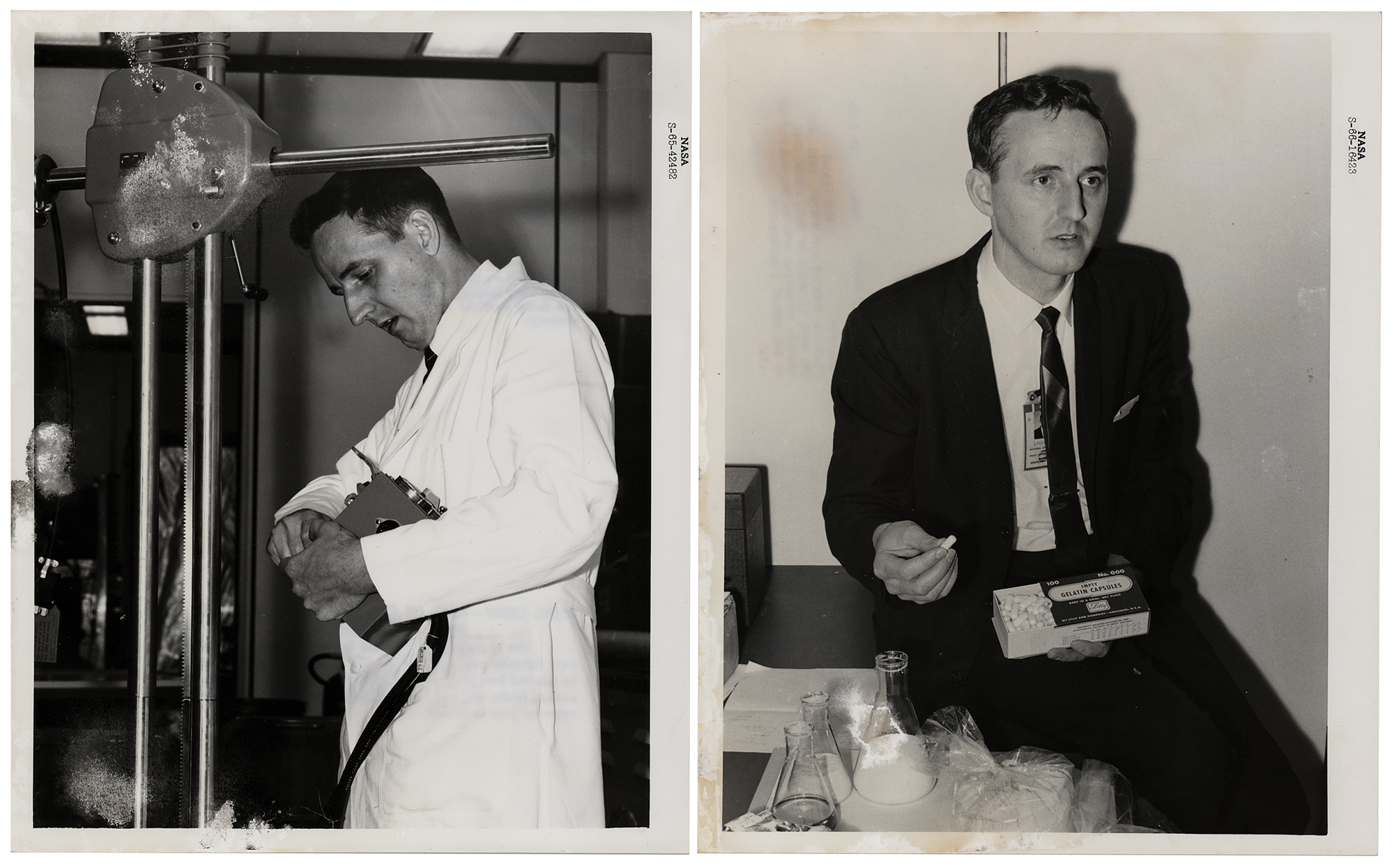
Accompanied by two official vintage glossy 8 x 10 NASA photos of Dr. Lachance (1933-2017), who served as the lead scientist responsible for the research and development of aerospace flight food and astronaut nutrition at NASA’s Manned Spacecraft Center in Houston. A former U.S. Air Force Aerospace Food and Nutrition Scientist at Wright-Patterson Air Force Base, he supported Project Mercury preflight feeding and U-2 pilot nutrition before being recruited by NASA in 1963. As NASA’s first Flight Food and Nutrition Coordinator, he established and supervised the Gemini, Apollo, and early Skylab food systems, writing the specifications that all contractors were required to meet.
Recognizing the dangers posed by microbiological, chemical, and physical contaminants in spaceflight food, Dr. Lachance imposed unprecedented pathogen-control standards and developed the Quality Control Critical Control Point (CCP) requirements that evolved into the HACCP (Hazard Analysis and Critical Control Points) system, in collaboration with the U.S. Army Natick Laboratories and industry partners, including Pillsbury. Originally created to safeguard astronauts — whose immune systems could be compromised under spaceflight stress — the HACCP system became one of NASA’s most significant technological spinoffs and is now the global standard for food safety. No astronaut suffered foodborne illness under his oversight.
In addition to food systems engineering, Dr. Lachance conducted pioneering biomedical research, including the first NASA studies on bone mineral loss, muscle atrophy, calcium balance, electrolyte and nitrogen balance, and total energy expenditure in microgravity — research that remains foundational to long-duration human spaceflight. He also helped develop early waste management and recycling concepts and participated in hazardous experimental testing in support of astronaut safety.