The 30 Minute Rule begins April 23 at 7:00 PM EDT. An Initial Bid Must Be Placed By April 23 at 6:00 PM EDT To Participate After 6:00 PM EDT
The Moon, lunar feldspathic breccia
Sahara Desert, Mauritania
59 x 62 x 60 mm (2.33 x 2.5 x 2.5 in.)
211.9 grams (0.5 lbs)
Lunar meteorites, i.e., pieces of the Moon ejected off the Moon’s surface following asteroid impacts (and nearly all of the craters on the Moon are the result of such impacts), are among the rarest material on Earth. There are less than 2000 kilograms of lunar meteorites known to exist, and all of it would fit in the back of a pick-up truck. Much of this material is off limits to the public as it’s in museums and research institutions, as is every single bit of the nearly 400 kilograms of Moon rocks returned to Earth from NASA’s Apollo missions.
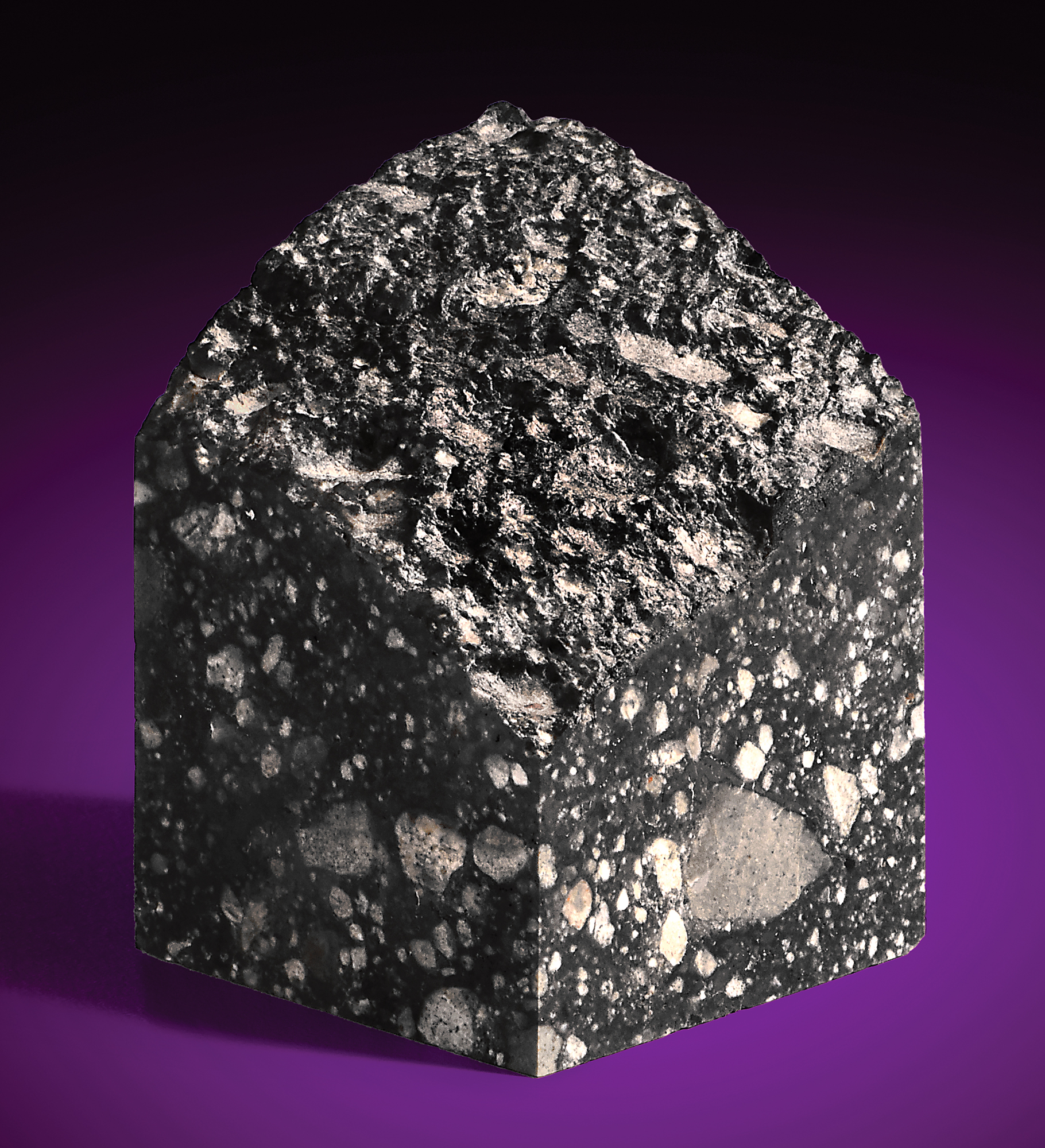
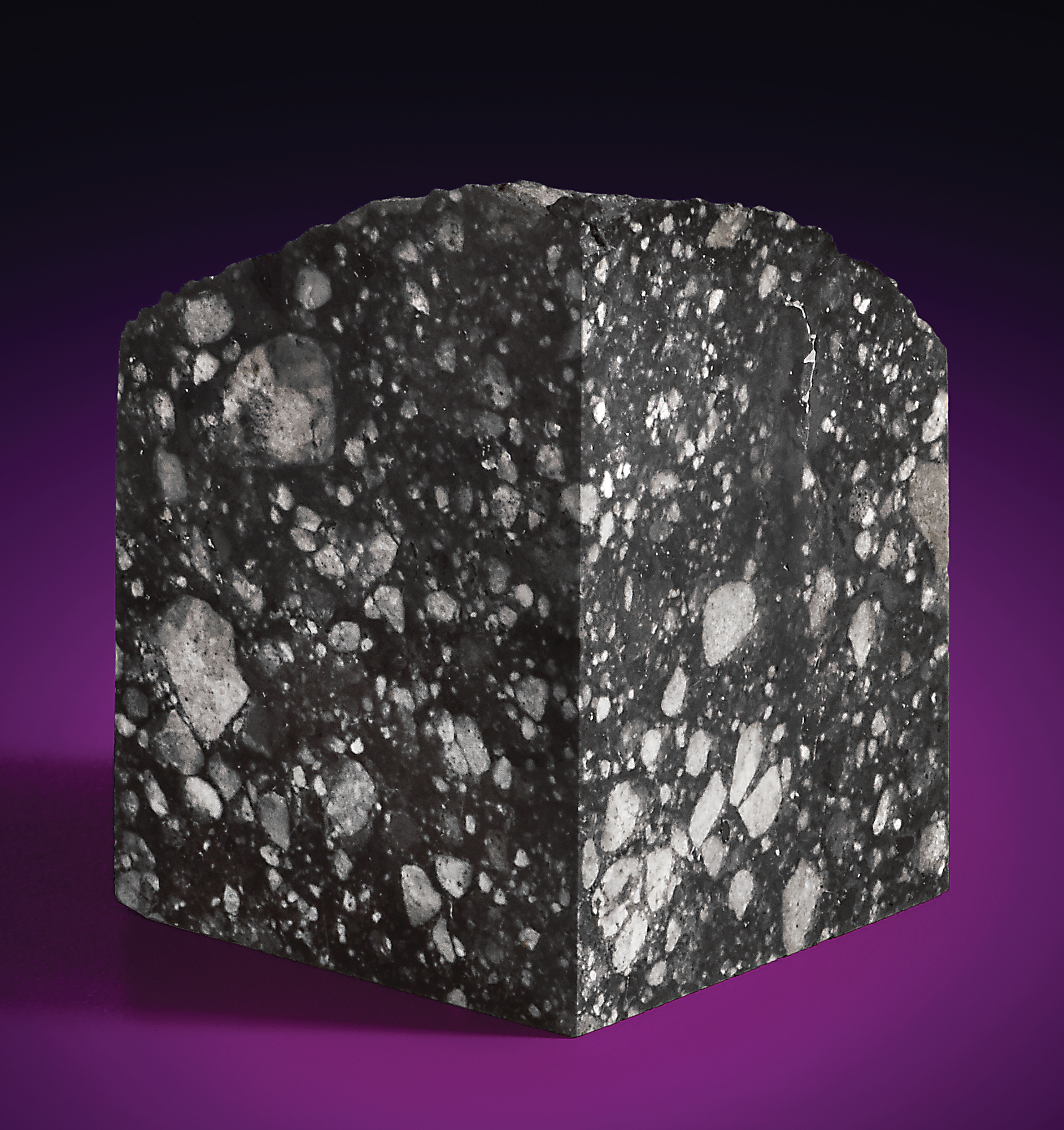
Scientists are readily able to identify Moon rocks by analyzing a rock's texture, mineralogy, chemistry and isotopes. Moon rocks also contain gases from the solar wind, and those gases have different isotope ratios than terrestrial rocks. This chunk of the Moon is a lunar breccia, which means it contains different fragments of different lunar materials that were 'cemented' together as a result of the pressure and heat generated from repeated impacts on the lunar surface. The prominent white clasts seen are anorthite, which is very rare on Earth but not on the Moon.
For a meteorite to be “official” it must be published in the Meteoritical Bulletin, the scientific journal of record. The scientist who did the analysis of this lunar sample, Dr. Anthony Irving, has an international reputation for classifying lunar and Martian meteorites. His analysis was peer reviewed by scientists on the Nomenclature Committee of the Meteoritical Society before publication — and the Committee needs to come up with a name. Meteorites are named after the places from where they are recovered — a geological feature or name of a town or county — but if found in the desert where there are no features, meteorites are given the names of the designated desert grid where they were found followed by a sequential number. So, NWA 12691 is the 12,691th meteorite to be recovered, analyzed and approved for publication following its recovery in what had been designated as the North West African grid of the Sahara Desert.
As one might expect, NWA 12691 looks extremely similar to some of the Moon rocks returned to Earth by the Apollo missions. Angular shards of signature anorthite of all sizes are suspended in dark lunar regolith. Cut and polished on five sides and featuring one oblique surface of the specimen’s natural exterior surface, now offered is what is among the rarest objects on Earth, a quintessential specimen of the Moon.
Provenance: Dr. Lawrence Stifler Collection of Meteorites, Brookline, MA.
The analysis of this meteorite was conducted by Dr. Anthony Irving. The classification was published in the 108th edition of the Meteoritical Bulletin — the official registry of meteorites — which accompanies this offering.