The 30 Minute Rule begins April 23 at 7:00 PM EDT. An Initial Bid Must Be Placed By April 23 at 6:00 PM EDT To Participate After 6:00 PM EDT
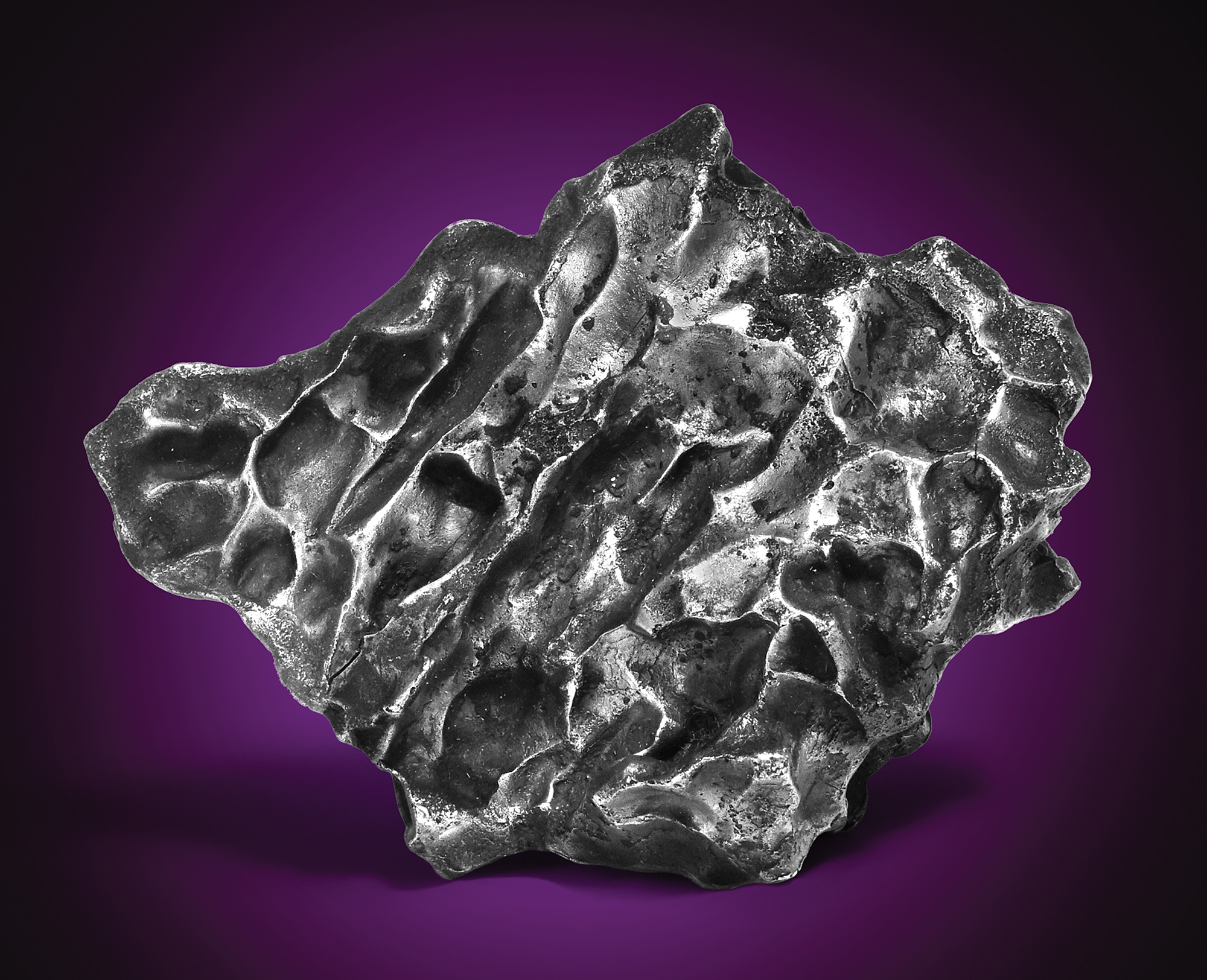
Iron meteorite, coarse octahedrite – IIAB
Maritime Territory, Siberia, Russia
52 x 50 x 27 mm (2 x 2 x 1 in.)
237.2 grams (0.5 lbs)
The Sikhote-Alin meteorite shower is among the largest meteorite showers since the dawn of civilization. It was 320 million years ago an iron mass from the core of asteroid broke away from a larger mass and roamed interplanetary space traveling at a cosmic velocity of more than eight miles a second until it encountered Earth — and specifically far-Eastern Siberia — at 10:30 AM on February 12, 1947. First, there was a fireball brighter than the Sun — i.e., it created moving shadows in broad daylight. And then sonic booms were heard, and as far as hundreds of kilometers away. As a result of the pressure generated when impacting Earth’s atmosphere, small individual meteorites broke off a large mass. A massive chunk, however, continued earthward, and when it was only six kilometers above Earth’s surface it exploded into thousands of pieces of shrapnel.
The pressure wave from this explosion uprooted trees, shattered windows and crumbled chimneys. Many of the larger fragments produced impact craters and hundreds were catalogued with the largest being 26 meters in diameter. Gratefully, there were few inhabitants in the area and no one was hurt, but those who witnessed the foregoing were terrified and went on record as having believed the world was coming to an end.
As referenced above, there are two types of Sikhote-Alin meteorites: shrapnel-shaped specimens from the explosive low altitude airburst and the “complete individual” meteorites which broke apart in Earth’s upper atmosphere. This specimen is a more sought-after “complete individual” and it’s an enthralling, exemplary example. Both sides of this meteorite are covered in regmaglypts (thumbprint-like artifacts which result from frictional heating while penetrating Earth’s atmosphere); patches of fusion crust which result from having reached temperatures of more than 5,000° F while burning through Earth’s atmosphere are also seen.
Convex on the reverse, this is a superior meteorite originating from one of the largest and most historic meteorite showers of modern times.